Join us on a literary world trip!
Add this book to bookshelf
Grey
Write a new comment Default profile 50px
Grey
Subscribe to read the full book or read the first pages for free!
All characters reduced
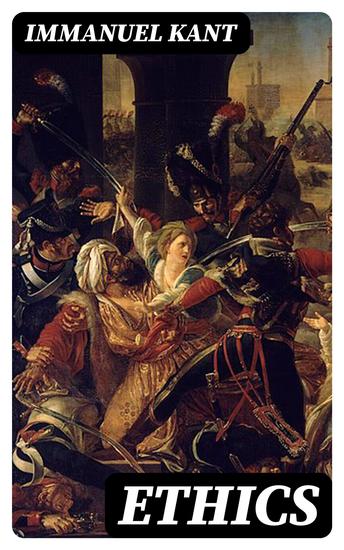
Ethics - cover

Ethics

Immanuel Kant

Translator Thomas Kingsmill Abbott, William Hastie

Publisher: DigiCat

  • 0
  • 0
  • 0

Summary

In "Ethics," Immanuel Kant presents a revolutionary framework for moral philosophy, articulating the principles of deontological ethics, which emphasize duty and the inherent dignity of individuals. Written with clarity and rigor, this seminal work delves into the nature of moral imperatives, arguing that actions are morally right only when they can be universally applied. Kant's literary style is characterized by precise language and logical exposition, situating his ideas within the broader Enlightenment context that sought to ground morality in rationality rather than tradition or religious dogma. Immanuel Kant, a prominent figure of the German Enlightenment, profoundly influenced modern philosophy through his exploration of ethics, metaphysics, and epistemology. His background in rationalist thought and critical engagement with both empirical and metaphysical paradigms led him to challenge existing moral frameworks, emphasizing the role of autonomy and reason in ethical decision-making. His commitment to principles that transcend mere consequence showcases a significant evolution from utilitarian thought, anchoring contemporary discussions on moral philosophy. "Ethics" is an essential read for anyone interested in moral philosophy, offering deep insights into the importance of duty and moral law. Kant's articulation of the categorical imperative remains profoundly relevant, providing a timeless guide for ethical reasoning in today's complex moral landscape. Engage with Kant's ideas to enrich your understanding of ethics and the foundations of moral responsibility.
Available since: 10/11/2022.
Print length: 805 pages.

Other books that might interest you

  • Infinite Mind - An exploration of psi and the capabilities of the human mind - cover

    Infinite Mind - An exploration...

    Kim Forrester

    • 0
    • 0
    • 0
    Relive incredible stories. Explore incredible possibilities. During the Boer War, a young journalist’s hunch leads him to safety in the midst of treacherous enemy territory. In urban USA, a young nurse obeys a voice in her head and narrowly escapes death. In downtown New York, a Wall Street magnate earns a fortune on a single, intuitive impulse. Throughout history, and around the world, millions of people have experienced psi (psychic) insights and inspiration. For centuries, these experiences have been ignored, ridiculed or, worse, condemned people to torture or death. But in recent decades scientists have begun to validate – and unravel – these elusive experiences. Infinite Mind is an award-winning collection of true psi experiences and the modern research that is beginning to explain these phenomena. It is written for the intelligent explorer; those who seek a greater truth about psi experience and how it fits into our modern world.
    Show book
  • Leadership - outdated theories and emerging non-traditional leadership - cover

    Leadership - outdated theories...

    Dr. Warren Martin

    • 0
    • 0
    • 0
    Qualitative Leadership study that examined outdated leadership theories and the phenomenon of organizational leaders transitioning from academically recommended leadership theories to their own non-traditional leadership practices. Continual change was identified as an ongoing phenomenon. Current leadership theories are outdated and not keeping pace with continual change, vast technological advancements, and expectations by stakeholders for transparency. 
    An eye opener for leadership and management professionals.
    Show book
  • Celtic History: An Enthralling Overview of the Celts - cover

    Celtic History: An Enthralling...

    Billy Wellman

    • 0
    • 0
    • 0
    Have you ever wondered about the ancient Celts of Ireland and what made them who they were? Did you know that Halloween originated with them, that they invented the harp, or that they wielded swords reaching lengths of three feet?  
    In this audiobook, you’ll discover Celtic historical facts like these and so much more. Whether you’re already familiar with the Celts or whether you’ve never even heard of them, this audiobook is for you. If you would like to delve into their lives, culture, and modern Ireland’s Celtic heritage, you can find all of that in this comprehensive, captivating guide. 
    In our introduction to Celtic history, you can introduce yourself to all aspects of Celtic life in an easily accessible way, complete with visuals and easy-to-read language (no academic jargon here!). 
    We will take you through Celtic history by explaining the following:Where the Celts came from and who they wereHow they settled in IrelandEssential Celtic myths, gods, goddesses, legends, and heroesTheir seasonal festivals and celebrationsKey stories influencing the Celts and the modern IrishCeltic art and its glorious evolution and influence through the agesCeltic rituals, past and presentHow Christianity affected Celtic societyThe rise of Christianity in Ireland and the decline of paganismWhy the Celts matterAnd so much more! 
     Scroll up and click the “add to cart” button to begin learning about the Celts today!
    Show book
  • Avars and Magyars The: The History of the Medieval Ethnic Groups that Settled in Hungary - cover

    Avars and Magyars The: The...

    Editors Charles River

    • 0
    • 0
    • 0
    The Avars entered Eastern Europe from the Central Asian steppes in the 6th century, and like the Huns before them and the Cumans and Magyars after them, the Avars were raiders and warriors who lived on their horses. The Avars’ impact on Europe was immediately felt, and from the Byzantine Empire to the Merovingian Kingdom in Gaul, some of Europe’s strongest powers had to learn how to deal with these new people through a combination of diplomacy and warfare. Eventually, the Avars established themselves in what is today Hungary and played an important role in the development of European history during its transitional period by earning a reputation as a fearsome and sometimes avaricious group. The medieval sources described the Avars as efficient and brutal horseback warriors who could devastate entire kingdoms in a matter of days and leave just as quickly. 
    Of all the steppe peoples in the medieval period, perhaps none were more important to European history than the Magyars. Like the Huns and Avars before them and the Cumans and Mongols after them, the Magyars burst into Europe as a destructive, unstoppable horde, taking whatever they wanted and leaving a steady stream of misery in their wake. They used much of the same tactics as the other steppe peoples and lived a similar, nomadic lifestyle. The Magyars also had many early cultural affinities with other steppe peoples, following a similar religion and ideas of kingship and nobility, among other things. That said, as similar as the Magyars may have been to other steppe nomads before and after them, they were noticeably different in one way: the Magyars settled down and became a part of Europe and Western Civilization in the Middle Ages. The Magyars exploded onto the European cultural scene in the late 9th century as foreign marauders, but they made alliances with many important kingdoms in less than a century.
    Show book
  • CIA’s Most Controversial Operations The: The History of the Central Intelligence Agency’s Notorious Activities in the 20th Century - cover

    CIA’s Most Controversial...

    Editors Charles River

    • 0
    • 0
    • 0
    Though it might be hard to believe, the Americans did not have a covert operations organization when they joined World War II, and like the British, it took them some time to realize it could be a powerful tool. As a result, the Office of Strategic Services (OSS) was not established until June 13, 1942, six months after the attack on Pearl Harbor. Nevertheless, during World War II, all the hard work in the United States led to the growth of the OSS into an organization with over 13,000 staff and 40 offices scattered across the world. Its purposes were initially similar to that of Britain’s Special Operations Executive, including espionage, sabotage, and intelligence assessments, but with time and experience, it expanded to include economic, psychological, and guerrilla warfare, as well as counter-intelligence work. And of course, it would all chart a path for the early days of America’s most famous intelligence agency, the CIA.  
    The agency has done some good things, and it has inarguably done some bad things. Naturally, people tend to remember the most controversial operations, from CIA-funded revolutions to the Bay of Pigs and domestic experiments such as the mysterious Project MK-Ultra. Many decisions were made, either by the agency or by those elected to give the agency direction, in the raw emotions of the Cold War, and this also colored many of the decisions. Regardless, well after Allen Dulles’ tenure as the CIA’s director, investigations uncovered the facts that the CIA did not merely operate overseas, but also conducted several operations against American citizens, which Dulles both knew about and approved.  
    This book looks at the operations that continue to fascinate, confuse, and disgust modern society, from the people who managed the operations to the results.
    Show book
  • From Zero to Published - How to Sell Your First Book Without an Email List or a Budget - cover

    From Zero to Published - How to...

    Jason Hamilton

    • 0
    • 0
    • 0
    Dreaming of becoming a published author but don't know where to start? 
    Self-publishing can seem daunting when you're starting from scratch. But it doesn't have to be! 
    This book is here to guide you through the maze of self-publishing without the usual prerequisites.Every day, aspiring authors are told they need an email list, a marketing budget, or an existing audience to succeed. But what if you're starting with nothing?Thousands of potential writers are discouraged before they even begin, believing they lack the resources to compete in today's crowded market.This is frustrating for talented storytellers who have brilliant ideas but feel stuck in a catch-22: needing an audience to sell books, but needing to sell books to build an audience. 
    The conflicting advice out there is overwhelming. You're told to invest in expensive marketing strategies, build a massive email list, or already have a strong social media following. It's enough to make any new author feel like they're already behind before they've even started. 
    This book is different. 
    From Zero to Published is your roadmap to success when you're starting from ground zero. Jason has been where you are, facing the same challenges and overcoming the same obstacles that you're encountering right now. 
    He's made the mistakes so you don't have to. 
     
    Show book