Join us on a literary world trip!
Add this book to bookshelf
Grey
Write a new comment Default profile 50px
Grey
Subscribe to read the full book or read the first pages for free!
All characters reduced
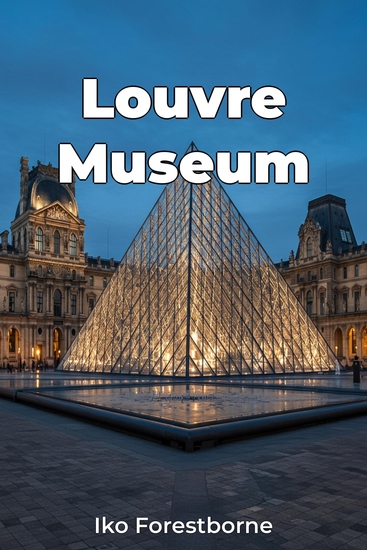
Louvre Museum - cover

Louvre Museum

Iko Forestborne

Translator A AI

Publisher: Publifye

  • 0
  • 0
  • 0

Summary

The Louvre Museum is more than a building filled with art; it's a historical artifact that reflects the evolution of Western culture. This book explores the transformation of the Louvre from a medieval fortress and royal palace to a public museum, highlighting its architectural changes and the stories embedded in its walls.

 
Did you know the Louvre was initially built as a fortress in the 12th century? Or that the French Revolution played a pivotal role in turning the palace into a space for public art? The book examines the museum's iconic art collection with famed pieces like the Mona Lisa and Venus de Milo while also investigating the controversial addition of I.M. Pei's glass pyramid in the 1980s, sparking debates about modern architecture versus historical designs.

 
It traces the Louvre's architectural and cultural journey across its chapters, offering a comprehensive view for art enthusiasts, architecture buffs, and history lovers alike.
Available since: 02/19/2025.
Print length: 56 pages.

Other books that might interest you

  • Delhi Sultanate - Muslim Dynasties That Shaped Medieval India - cover

    Delhi Sultanate - Muslim...

    Rolf Hedger

    • 0
    • 0
    • 0
    The Delhi Sultanate was a defining era in Indian history, marking the establishment of Muslim rule in northern India. Its rise was shaped by a series of invasions, strategic conquests, and the formation of a centralized administration. The foundation of the Sultanate can be traced back to the late 12th century when Muslim forces, primarily from Central Asia, began making inroads into the Indian subcontinent. These incursions set the stage for a new political order that would influence the region for centuries. 
    One of the earliest significant Muslim invasions was led by Mahmud of Ghazni in the 11th century. Although he did not establish permanent rule, his raids weakened Indian kingdoms and demonstrated the vulnerability of the region. However, it was Muhammad Ghori in the late 12th century who laid the groundwork for the Delhi Sultanate. Unlike Mahmud, Ghori aimed for long-term control rather than mere plundering. His victory over Prithviraj Chauhan at the Second Battle of Tarain in 1192 was a turning point, allowing Muslim forces to establish a foothold in northern India. 
    Following Ghori’s assassination in 1206, his general, Qutb al-Din Aibak, took control of his Indian territories and proclaimed himself the first Sultan of Delhi. Aibak, originally a slave who rose through the ranks, became the founder of the Mamluk or Slave Dynasty. He consolidated his rule by strengthening administrative structures and commissioning architectural marvels like the Qutb Minar, which symbolized the establishment of Muslim rule. However, his reign was short-lived, and his successor, Iltutmish, played a more crucial role in shaping the Delhi Sultanate into a powerful and stable empire.
    Show book
  • Echoes of My Life - cover

    Echoes of My Life

    Rose Khalatyan

    • 0
    • 0
    • 0
    Step into the world of Vardenik “Rose” Khalatyan as she recounts the triumphs, challenges, and pivotal moments that shaped her extraordinary life. From humble beginnings to unparalleled success, this autobiography unveils the untold stories and hidden truths that have defined Rose’s legacy. Through the power of sound, you'll be transported to pivotal moments in history, witness the impact of her groundbreaking achievements, witness the impact of her groundbreaking achievements, and feel the emotions that permeated her journey. Immerse yourself in the voices of those who knew Rose best as she shares personal anecdotes and insights that reveal the true essence of this remarkable individual. As you read, you'll be inspired by Rose’s resilience, determination, and unwavering spirit. Her story transcends boundaries, reminding us of the potential within each of us to overcome obstacles and leave a lasting impact on the world. Whether you're a long-time admirer or discovering Rose for the first time, this autobiography offers a unique and intimate perspective on her life. Prepare to be captivated, moved, and inspired as you embark on this extraordinary journey.
    Show book
  • A Rare Recording of Albert Woolson Last Surviving Veteran of the American Civil War - cover

    A Rare Recording of Albert...

    Albert Henry Woolson

    • 0
    • 0
    • 0
    Albert Henry Woolson (February 11, 1850 - August 2, 1956) was the last known surviving member of the Union Army who served in the American Civil War; he was also the last surviving Civil War veteran on either side whose status is undisputed. Woolson was born in Antwerp, New York, in Jefferson County. His father, Willard Woolson, who enlisted in the Union Army, was wounded at the Battle of Shiloh and later transported to an Army hospital in Windom, Minnesota, where he would die of his wounds. Albert and his mother moved to Windom to accompany his father. Soon after, Albert enlisted as a drummer boy in Company C, 1st Minnesota Heavy Artillery Regiment on October 10, 1864. However, the company never saw action, and Albert Woolson was discharged on September 7, 1865. Woolson returned to Minnesota, where he lived the rest of his life as a carpenter and, later, as a member of the Grand Army of the Republic (G.A.R.), a powerful political organization made up of Civil War veterans where he became Senior Vice Commander-in-Chief in 1953. The following interview was recorded in 1954.
    Show book
  • Medieval Architecture and Legacy - Building the Medieval World (3 in 1) - cover

    Medieval Architecture and Legacy...

    Harris Ropes

    • 0
    • 0
    • 0
    These three works highlight how architecture and intellectual ambition shaped the heart of the Middle Ages and left a legacy that endures to this day. 
    Begin with The Gothic Cathedral, a stunning symbol of spiritual devotion and engineering genius. Soaring spires, flying buttresses, and luminous stained glass windows combined to create sacred spaces that lifted hearts and minds toward heaven. These architectural marvels not only defined the skyline of medieval Europe but also reflected the era’s complex religious and social structures. 
    Next, delve into The Carolingian Renaissance, a revival of learning, literacy, and classical influence under Charlemagne's rule. This movement sparked architectural innovation, preserved ancient knowledge, and laid the foundations for a more cohesive European identity during a time of fragmentation and uncertainty. 
    Conclude with The Italian City-States, hubs of commerce, culture, and politics. Their wealth and rivalry fueled a vibrant civic life and groundbreaking urban planning that blended practicality with beauty. From Florence to Venice, these city-states bridged the medieval and Renaissance worlds, forever changing the course of European history. 
    Together, these works offer a window into how medieval people built not only physical structures—but also enduring cultural legacies.
    Show book
  • The Inward Stage - A Performer's Notes On Presence and Meaning - cover

    The Inward Stage - A Performer's...

    Alexander Beresford

    • 0
    • 0
    • 0
    The Inward Stage is not a memoir. It is not a manual. It is not a book of secrets. 
    It is a quietly luminous document, part philosophical journal, part poetic confession, written by a mindreader who spends his life performing illusions for others while quietly unraveling deeper truths for himself. 
    Drawn from times spent backstage, between cities, between minds, and between silences, these pages reveal the reflections of a man who reads thoughts not for applause, but for understanding. He writes of wonder, failure, silence, intimacy, and the sacred art of disappearing at just the right moment. 
    This is a book for those who have performed, on stages or in life, and for anyone who has ever longed to be understood beneath the surface. 
    Written in fragments, aphorisms, and meditations, The Inward Stage is a love letter to mystery, a witness to the sacredness of connection, and a guide for those who find themselves standing quietly at the edge of the visible world.
    Show book
  • Art History Renaissance art - cover

    Art History Renaissance art

    Victoria Charles

    • 0
    • 0
    • 0
    The Renaissance began at the end of the 14th-century in Italy and had extended across the whole of Europe by the second half of the 16th-century. The rediscovery of the splendour of ancient Greece and Rome marked the beginning of the rebirth of the arts following the break-down of the dogmatic certitude of the Middle Ages. A number of artists began to innovate in the domains of painting, as well as sculpture and architecture. Depicting the ideal and the actual, the sacred and the profane, the period provided a frame of reference which influenced European art over the next four centuries. Leonardo da Vinci, Michelangelo, Botticelli, Fra Angelico, Giorgione, Mantegna, Raphael, Dürer and Bruegel are among the artists who made considerable contributions to the art of the Renaissance.
    Show book