Join us on a literary world trip!
Add this book to bookshelf
Grey
Write a new comment Default profile 50px
Grey
Subscribe to read the full book or read the first pages for free!
All characters reduced
Letters to Hypatia and Related Works - Illustrations - cover

We are sorry! The publisher (or author) gave us the instruction to take down this book from our catalog. But please don't worry, you still have more than 500,000 other books you can enjoy!

Letters to Hypatia and Related Works - Illustrations

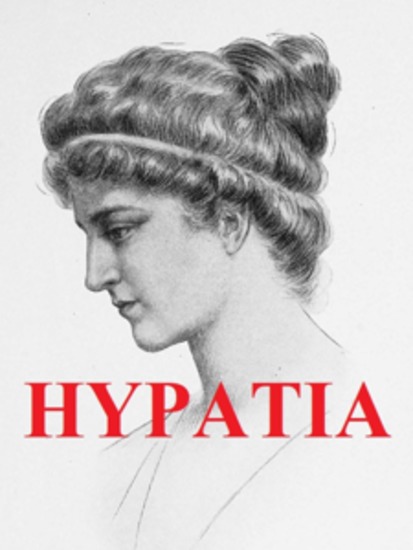
Hypatia

Publisher: Youcanprint

  • 0
  • 0
  • 0

Summary

Hypatia was a Neoplatonist philosopher, astronomer, and mathematician who lived in Alexandria, Egypt. She was a prominent thinker and she taught philosophy and astronomy. Ancient sources record that Hypatia was widely beloved by pagans and Christians alike and that she established great influence with the political elite in Alexandria. Toward the end of her life, Hypatia advised Orestes, the Roman prefect of Alexandria, who was in the midst of a political feud with Cyril, the bishop of Alexandria. Rumors spread accusing her of preventing Orestes from reconciling with Cyril and, in March 415 AD, she was murdered by a mob of Christians led by a lector named Peter.
Available since: 02/05/2025.

Other books that might interest you

  • The Case for Animal Rights - Updated with a New Preface - cover

    The Case for Animal Rights -...

    Tom Regan

    • 0
    • 0
    • 0
    When The Case for Animal Rights was published in 1983 it rapidly became an acknowledged classic of moral philosophy, and its author, Tom Regan (1938–2017), was recognized as an intellectual leader within the animal rights movement. Twenty years later, Case was reissued with a new and fully considered preface, in which Regan responded to his critics and defended the book's revolutionary position. Now, forty years after its original publication, this foundational text is available as an audiobook. In addition to the complete text of the revised 2002 edition, the audiobook includes a recording made by Tom Regan in 2001, in which he reflects on why he wrote The Case for Animal Rights, how it compares with Peter Singer's Animal Liberation, and how his thinking evolved as he was writing the book. The audiobook also features an essay by philosopher Gary Comstock on Tom Regan's contribution to, and place within, the history of thinking about our obligations to nonhuman animals over the last half-century. 
    The audiobook of The Case for Animal Rights is a production of the Culture & Animals Foundation, a nonprofit co-founded by Tom Regan in 1985. Both the book and the e-book of Case are available from the University of California Press. 
    "Unquestionably the best work yet to appear in its field, surpassing even Peter Singer's famous Animal Liberation in originality, thoroughness, and rigor."—Choice  
    "The Case for Animal Rights is beyond question the most important philosophical contribution to animal rights and is a major work in moral philosophy."—Animal Law Review
    Show book
  • The Divine Comedy Purgatory - cover

    The Divine Comedy Purgatory

    Dante Alighieri

    • 0
    • 0
    • 0
    Purgatorio (Italian: [purɡaˈtɔːrjo]; Italian for "Purgatory") is the second part of Dante's Divine Comedy, following the Inferno, and preceding the Paradiso. The poem was written in the early 14th century. It is an allegory telling of the climb of Dante up the Mount of Purgatory, guided by the Roman poet Virgil, except for the last four cantos at which point Beatrice takes over as Dante's guide.Purgatory in the poem is depicted as a mountain in the Southern Hemisphere, consisting of a bottom section (Ante-Purgatory), seven levels of suffering and spiritual growth (associated with the seven deadly sins), and finally the Earthly Paradise at the top. Allegorically, the Purgatorio represents the penitent Christian life. In describing the climb Dante discusses the nature of sin, examples of vice and virtue, as well as moral issues in politics and in the Church. The poem outlines a theory that all sins arise from love – either perverted love directed towards others' harm, or deficient love, or the disordered or excessive love of good things.
    Show book
  • Homer and Classic Psychology - cover

    Homer and Classic Psychology

    Friedrich Nietzsche

    • 0
    • 0
    • 0
    "Homer and Classical Psychology" by Friedrich Nietzsche is a philosophical work that delves into the psychological insights found within the writings of Homer, particularly in "The Iliad" and "The Odyssey." Nietzsche explores the characterizations, motivations, and behaviors of the epic heroes and how they reflect fundamental aspects of human psychology. Through his analysis, Nietzsche provides a deeper understanding of both Homer's works and the nature of human consciousness.
    Show book
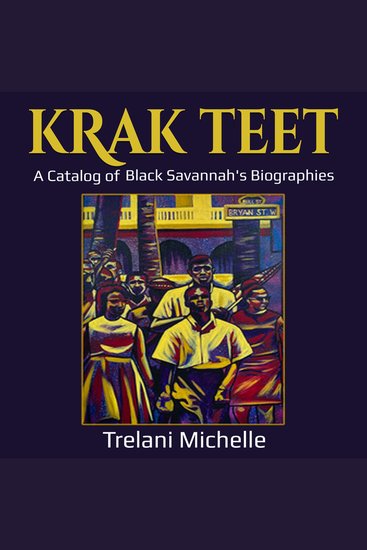
  • Krak Teet - A Catalog of Black Savannah Biographies - cover

    Krak Teet - A Catalog of Black...

    Trelani Michelle

    • 0
    • 0
    • 0
    Narrated by Trelani Michelle 
    Krak Teet is a Gullah Geechee phrase meaning “to speak.” This audiobook preserves the voices of Savannah’s Black elders—grandchildren of the enslaved who laid the city’s cobblestone roads and introduced its famous red rice and deviled crabs. 
    These first-hand accounts share stories of struggle—Ms. Madie’s family fleeing after her father sold a pig without permission, Mr. Roosevelt packing his mother’s stab wounds with cobwebs, Ms. Florie marching Broughton Street twice a day to protest segregation—and stories of triumph—Queen Elizabeth Butler becoming the first Black woman in Savannah to own a car, Ms. Sadie earning $500 a week running numbers, and the city desegregating months before the Civil Rights Act. 
    Krak Teet repositions Savannah’s Black history as central to the American story, not a sidebar.
    Show book
  • Regifted An Adoptee's Memoir of True Belonging - cover

    Regifted An Adoptee's Memoir of...

    Candi Byrne

    • 0
    • 0
    • 0
    A raw, often wry, memoir of mothers, mysteries, and miracles. 
    Surrendered at birth in a closed adoption, Candi Byrne's biology and ethnicity are a secret. The impending arrival of her first grandchild ignites an urgency to identify potential genetic time bombs and confirm her ancestry. Due to arcane privacy laws, Candi is repeatedly denied access to the one person who could provide that information--her biological mother. 
    After years of failed attempts, she resigns herself to never learning the truth about her roots; that is, until her ninety-year-old Aunt Delores has a vision and insists Candi resume efforts to find her birth family. Candi is gobsmacked when an internet search she's performed thousands of times before suddenly reveals her birth mother's identity. Within hours, she ends up on the doorstep of her birth mother--a place she's sworn never to visit. 
    After a series of guilt-driven interactions with "Those People," as she refers to her maternal birth family, Candi terminates contact. Although the reunion proves disastrous, it opens her eyes to truths about her relationship with her adoptive mother, Delphine. Though their relationship was difficult and contentious during Delphine's life, a series of miraculous experiences after her death guides Candi home to herself--where, she learns, she has belonged all along.
    Show book
  • Innovating Victory - Naval Technology in Three Wars - cover

    Innovating Victory - Naval...

    Leonard R. Heinz, Vincent P. O'Hara

    • 0
    • 0
    • 0
    Innovating Victory studies how the world's navies incorporated new technologies into their ships, their practices, and their doctrine. It does this by examining six core technologies fundamental to twentieth-century naval warfare including new platforms, new weapons, and new tools. Each chapter considers the state of a subject technology when it was first used in war and what navies expected of it. It then looks at the way navies discovered and developed the technology's best use, in many cases overcoming disappointed expectations. It considers how a new technology threatened its opponents, not to mention its users, and how those threats were managed. Innovating Victory shows that the use of technology is more than introducing and mastering a new weapon or system. Differences in national resources, force mixtures, priorities, perceptions, and missions forced nations to approach the problems presented by new technologies in different ways. Navies that specialized in specific technologies often held advantages over enemies in some areas but found themselves disadvantaged in others. Vincent P. O'Hara and Leonard R. Heinz present new perspectives and explore the process of technological introduction and innovation in a way that is relevant to today's navies, which face challenges and questions even greater than those of 1904, 1914, and 1939.
    Show book