Join us on a literary world trip!
Add this book to bookshelf
Grey
Write a new comment Default profile 50px
Grey
Subscribe to read the full book or read the first pages for free!
All characters reduced
Rough Erotic Stories - Volume 1 - 120 Explicit Hot Taboo Stories - cover

Rough Erotic Stories - Volume 1 - 120 Explicit Hot Taboo Stories

Hunter Anderson

Publisher: Naughty Notions Publishing

  • 0
  • 0
  • 0

Summary

Rough Erotic Stories – Volume 1: 120 Explicit Hot Taboo Gay Tales
 
Hard men. Dirty secrets. No limits.
 
This explosive collection of 120 gay erotica stories dives deep into the world of rough encounters, taboo cravings, and raw, unapologetic pleasure between men. From dominant power plays to forbidden trysts, each story is crafted to shock, arouse, and satisfy your darkest fantasies.
 
Aggressive. Unfiltered. Addictively filthy. These stories don’t ask—they take.
Available since: 04/09/2025.
Print length: 1300 pages.

Other books that might interest you

  • Viking - From Norway to America - cover

    Viking - From Norway to America

    Rasmus sen

    • 0
    • 0
    • 0
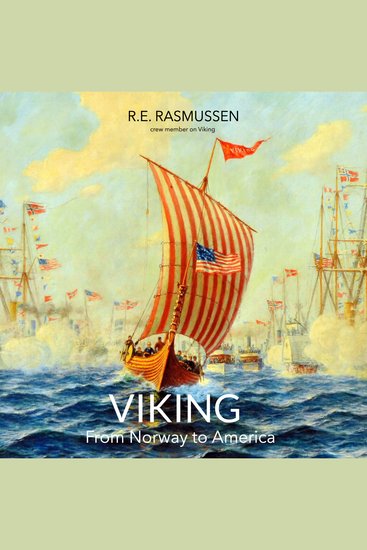
    In his book, Rasmus Rasmussen provides a full account of the Viking's [1893] journey from Norway to Chicago from a crew-member's point of view. The trip was not without peril and hardship. Their accommodations were crude. The weather, at times, threatened their very lives. Most cities rolled out the red carpet to meet them, but one rolled out the paddy wagon. All together, an informative journal and a delightful read, and one that compels reflection and awe of the exploits of our Viking ancestors. - Paul A. Anderson, Honorary Norwegian Consul General 
    Rasmussen's diary recounts the historic journey made by twelve courageous seamen aboard Viking and includes his personal experiences during and after the Fair [1893 Chicago World's Fair]. Viking is the first Viking ship to sail in nearly 1,000 years, showing the world that Leif Erikson could have reached the New World almost 500 years before Columbus. 
    The Addendum continues the story of Viking and brings the reader up to date on the most recent preservation accomplishments. - Friends of the Viking Ship, NFP
    Show book
  • Decolonization Movements - The Struggle for Independence and Post-Colonial Challenges - cover

    Decolonization Movements - The...

    Arlo Holders

    • 0
    • 0
    • 0
    Decolonization refers to the process through which colonies gained independence from colonial powers, transitioning from subjugation to self-rule. This process unfolded across the globe, but particularly after the end of World War II, when the political, economic, and social landscapes of the world were rapidly changing. Decolonization was not merely a political transition; it also involved profound shifts in cultural, economic, and social structures. It marked the end of European empires, the dismantling of colonial systems, and the establishment of new nation-states. The effects of decolonization were not only seen in the immediate transfer of power but also in the long-lasting impacts on national identity, social cohesion, and global politics. 
    Historically, colonialism began in the 15th century as European powers, driven by the desire for resources, land, and global dominance, began to expand across the world. Colonies were established in Africa, Asia, the Middle East, and the Americas, often resulting in the exploitation and oppression of indigenous populations. Colonialism shaped the economies and cultures of colonized countries, as the colonial powers imposed their own systems of governance, language, and religion. 
    World War II played a significant role in the rise of decolonization movements. The war weakened the colonial powers, both economically and militarily, while at the same time igniting new ideas about self-determination and sovereignty. The brutal realities of war exposed the contradictions of imperialism, and the idea of a free and independent world began to gain ground. Additionally, the United Nations (UN) emerged after the war as an international body that championed the principles of self-determination and human rights, further encouraging movements for independence.
    Show book

  • A Rare Recording of Amelia Earhart - cover

    A Rare Recording of Amelia Earhart

    Amelia Earhart

    • 0
    • 0
    • 0
    Amelia Mary Earhart, an American aviation pioneer and author, was born on July 24, 1897. During an attempt to make a circumnavigational flight of the globe, Earhart and her navigator disappeared over the central Pacific Ocean near Howland Island on July 2, 1937. She was declared dead January 5, 1939. Earhart was the first female aviator to fly solo across the Atlantic Ocean. She set numerous other aviation records, wrote best-selling books about her flying experiences, and was instrumental in the formation of The Ninety-Nines, an organization for female pilots. The following is a recording of her famous 1935 radio-broadcast speech: A Woman's Place In Science.
    Show book
  • The Second Brain - AI and the Human Right to Intelligence - cover

    The Second Brain - AI and the...

    G S Steele

    • 0
    • 0
    • 0
    Discover The Second Brain: AI and the Human Right to Intelligence, a groundbreaking audiobook by author and narrator G S Steele, published by Audiobook Publishing Services. In a world where artificial intelligence (AI) is transforming every aspect of life, this thought-provoking work argues that access to AI should be a fundamental human right. 
    As the divide between those who control advanced technology and those left behind grows, The Second Brain exposes the risks of AI monopolization, warning against its potential to become a tool of exploitation rather than empowerment. Drawing on historical examples of technological inequality, G S Steele reveals how societies have long been divided by access to knowledge and power. 
    With AI now acting as a "second brain," capable of enhancing human intelligence beyond natural limits, the stakes have never been higher. This visionary audiobook explores how equitable access to AI could liberate individuals, offering a pathway to global intelligence that transcends economic, social, and political barriers. 
    Narrated by the author himself, G S Steele, this compelling audiobook challenges listeners to envision a future where intelligence is not a privilege of the elite but a right for all. The Second Brain is a call to action, providing a bold framework for harnessing AI's potential to uplift humanity and create a just, equitable future. 
    Perfect for fans of AI ethics, technology, and social justice, this audiobook is a must-listen for anyone passionate about the future of intelligence and equality. Published by Audiobook Publishing Services, The Second Brain is your guide to understanding why the right to intelligence is essential for a fair and empowered world.
    Show book
  • How to Survive in Ancient Greece - cover

    How to Survive in Ancient Greece

    Robert Garland

    • 0
    • 0
    • 0
    What would it be like if you were transported back to Athens 420 BCE? This time-traveler's guide is a fascinating way to find out . . . 


    Imagine you were transported back in time to Ancient Greece and you had to start a new life there. What would you see? How would the people around you think and believe? How would you fit in? Where would you live? What would you eat? What work would be available, and what help could you get if you got sick? 


    All these questions, and many more, are answered in this engaging blend of self-help and survival guide that plunges you into this historical environment—and explains the many problems and strange new experiences you would face if you were there.
    Show book
  • Corporal Cannon - A Female Marine in Afghanistan - cover

    Corporal Cannon - A Female...

    Savannah Cannon

    • 0
    • 0
    • 0
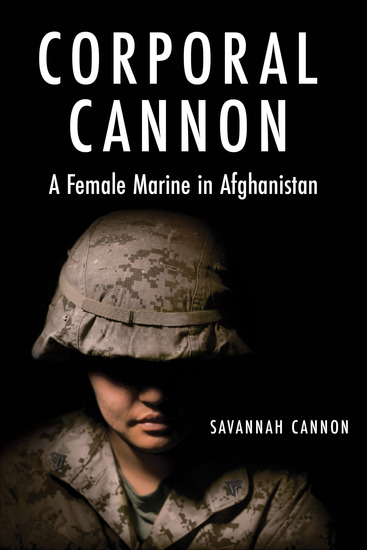
    One woman’s dramatic account of her stint in the U.S. Marine Corps, exploring the prejudice and mistreatment of women in combat zones. Not even old enough to drink, Corporal Savannah Cannon is a young enlisted United States Marine deployed to support Operation Enduring Freedom in Afghanistan in 2010. As a tactical data networking specialist, she is sent away from everyone she knows and attached to a Regimental Combat Team where women are not allowed to repair communications. Her experiences over the next few months shed light on the unique and difficult positions women are placed in when supporting combat roles, while offering a raw look at the painful choices women must sometimes make. Cannon finds herself in a combat zone, ostracized from family, friends, and even her fellow Marines as the men are told to avoid her. The connections she makes are born from trauma and desperation and the choices she makes will echo throughout many lives. Corporal Cannon is not the story of a heroine; it is the hard-hitting account of just one of the flawed individuals who make up the United States’ fighting forces. Mistakes in the battlefield can have dire consequences, personally and professionally. Reflecting on her time in service, the author weaves a story of past and present, and the healing that can come with admitting our mistakes and moving past them.
    Show book