The Woman from Outside
Hulbert Footner
Publisher: Classica Libris
Summary
A woman goes on a secret errand into the far Northwest. Before it is accomplished the usual characters come into the story—Indians, mounted police, and the villain.
Publisher: Classica Libris
A woman goes on a secret errand into the far Northwest. Before it is accomplished the usual characters come into the story—Indians, mounted police, and the villain.
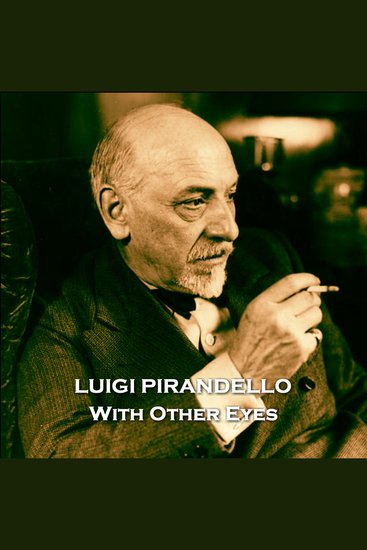
Luigi Pirandello was born on 28th June 1867 into an upper-class family in Agrigento, in Sicily. In 1880, the family moved to Palermo and there he completed high school and thence to the University of Palermo, at that time the centre of what became the Fasci Siciliani movement. Although not an active member he had close friendships with many of its leading ideologists. Pirandello then completed his university studies in Rome and Bonn, receiving his Doctorate in March, 1891. His time in Rome had provided him with the opportunity to visit its many theatres. "Oh the dramatic theatre! I will conquer it. I cannot enter into one without experiencing a strange sensation, an excitement of the blood through all my veins..." 1894 brought marriage, at his father's suggestion, to a shy, withdrawn girl: Mara Antonietta Portulano. The marriage encouraged his studies and writings and, the following year, the first part of the ‘Dialoghi tra Il Gran Me e Il Piccolo Me’ was published. In 1903 the flooding of the sulphur mines in which his father had invested the family capital and Antonietta's dowry, brought financial catastrophe. She, on hearing the news, was mentally broken. Pirandello would now work a full day and then watch over his troubled wife at night. Somehow he found time to write ‘The Late Mattia Pascal’. It was an immediate and resounding success. In 1909, Pirandello began his collaboration with the prestigious Corriere della Sera. Whilst his fame as a writer was increasing his private life was poisoned by the suspicion and jealousy of Antonietta who now turned physically violent. His plays were now being regularly performed but, within a decade, Antonietta had to be placed into an asylum from which she never left. In 1921, in Rome his play, ‘Six Characters in Search of an Author’ debuted. It was a failure. However, when presented in Milan it was a great success, as it also was in London and New York. In 1925, Pirandello, with Mussolini’s help, assumed the artistic direction and ownership of the Teatro d'Arte di Roma. He now described himself both as ‘a Fascist because I am Italian’ and ‘I'm apolitical, I'm only a man in the world...’ However his later conflicts with fascist leaders meant he fell under close surveillance by the OVRA, the secret police. In 1934 he won the Nobel Prize but asked that the medal be melted down for Italy’s occupation of Abyssinia Campaign to which he had given his support. Pirandello's canon stretches across novels, short stories, poetry, essays and some 40 plays. His tragic farces are often cited as forerunners of the Theatre of the Absurd. Luigi Pirandello died on the 10th December 1936 at his home at Via Bosio, Rome, Italy. He was 69.Show book
This audiobook is narrated by an AI Voice. "Jane Eyre" is a timeless classic by Charlotte Brontë about love, ethics, independence and resilience. After surviving the cruel regime of a harsh charity school, orphan Jane Eyre takes a job as a governess at Thornfield Hall. She finds herself increasingly attracted to her enigmatic master, Mr Rochester. However, Jane's peaceful existence is shattered when she experiences strange events. The story follows her journey in life through hardship, love and moral challenges. The novel includes romance, with a strong-willed woman who inspires readers with her courage and steadfast determination. From her harsh upbringing under a cruel aunt to her education at Lowood School and her role as governess at Thornfield Hall, Jane’s life is a testament to a strong woman's independent nature. The novel explores themes of love, morality, self-determination and the struggle for equality.Show book
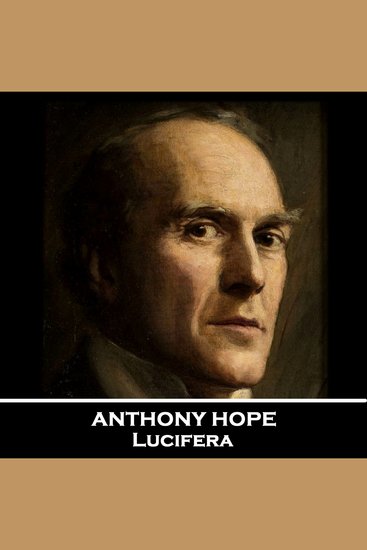
Sir Anthony Hope Hawkins was born on 9th February 1863 in Clapton, London. He was educated at St John's School, Leatherhead, Marlborough College and Balliol College, Oxford. Hope trained as a lawyer and barrister and was called to the Bar by the Middle Temple in 1887. Despite what was thought to be a promising legal career he had literary ambitions and wrote in his spare time. His early works appeared in various periodicals of the day but for his first book ‘A Man of Mark’ (1890), with no publisher interested, he published with his own resources. More novels and short stories followed, including the mildly successful ‘Mr Witt's Widow’ in 1892. Hope even found time to run as the Liberal candidate for Wycombe in the election that same year but was unsuccessful. His first major literary success came with ‘The Dolly Dialogues’, a collection of previously published magazine pieces followed very quickly by his instant classic, ‘The Prisoner of Zenda’. He now gave up the vestiges of his legal career to pursue writing full-time. Despite never again reaching the same pinnacle of success he was popular and wrote prolifically across novels, plays and of course, short stories though his writing output rapidly diminished after the war. In 1918 he was knighted for his contribution to propaganda efforts during World War I. His short stories are delicate, mannered and often surprising with their wit, humour and interplay of characters who say one thing and usually mean another. He was very definitely a writer of escapist rather than serious fare but they are no less enjoyable for that. Anthony Hope died of throat cancer on 8th July 1933 at his country home, Heath Farm at Walton-on-the-Hill in Surrey. He was 70.Show book
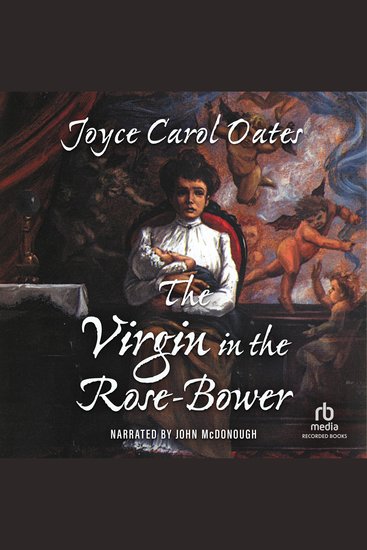
Joyce Carol Oates, bestselling author of American Appetites, has won national acclaim, awards from the National Institute of Arts and Letters, and a National Book Award for her carefully crafted tales. The Virgin in the Rose-Bower is a Gothic tale of monstrous deeds and heart-stopping suspense. With its mesmerizing visions of dark forces, it takes its place among chilling stories like those of Edgar Allan Poe. One May morning, news of a “hideous catastrophe” sweeps through the sleepy town of Winterthurn. In an ornate bed chamber of gloomy Glen Mawr Manor, a babe sleeping in his mother’s arms has been cruelly murdered. Joyce Carol Oates has turned to shadowy 19th-century New England for this spellbinding foray into the macabre. Part one in a trio of compelling mysteries, The Virgin in the Rose-Bower introduces the hero: handsome amateur detective Xavier Kilgarvan.Show book
First published in 1912, "A Princess of Mars" is the debut novel in Edgar Rice Burroughs' Barsoom series. It follows the story of John Carter, a former Confederate captain, who inexplicably finds himself on the Red Planet, known to its inhabitants as Barsoom. There, he encounters strange alien races, including the Tharks, tall four-armed green beings, and the more humanoid Red Martians. John Carter is taken prisoner, proves himself in gladiatorial combat, and ultimately befriends Tars Tarkas, a Thark chieftain. As the tale unfolds, Carter meets and falls in love with Dejah Thoris, a princess of the Red Martian city of Helium. Together, they face numerous challenges in their quest for peace and unity on Barsoom.Show book
"Cleopatra" is a historical novel by the German Egyptologist and writer Georg Ebers, published in the late 19th century. Ebers, renowned for his knowledge of ancient Egyptian culture and history, paints a vivid portrait of the legendary Queen Cleopatra. The novel delves into her relationships, particularly with the Roman leaders Julius Caesar and Mark Antony, and showcases the political and personal struggles she faced as one of history's most iconic rulers. Ebers intertwines accurate historical facts with fictional details, providing readers with an immersive glimpse into ancient Egypt and Rome.Show book