Join us on a literary world trip!
Add this book to bookshelf
Grey
Write a new comment Default profile 50px
Grey
Subscribe to read the full book or read the first pages for free!
All characters reduced
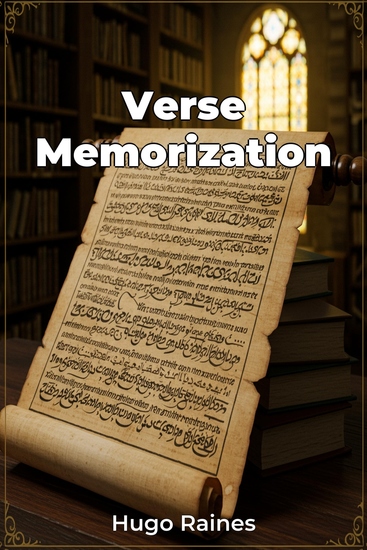
Verse Memorization - cover

Verse Memorization

Hugo Raines

Translator A AI

Publisher: Publifye

  • 0
  • 0
  • 0

Summary

Verse Memorization explores the profound connection between music, language, and memory, revealing how poetic forms are intentionally crafted mnemonic devices designed for oral retention. It delves into why certain rhymes and songs stick with us, while other information fades. The book examines the structural elements of poetry, such as rhythm and rhyme, and their roles in facilitating memorization. It further investigates how diverse cultures throughout history have utilized these elements to transmit knowledge. The book's unique approach lies in viewing poetic form not merely as an artistic expression but as a sophisticated "mnemonic technology." It provides a holistic view, beginning with an introduction to core poetic elements and then exploring specific poetic traditions from various cultures. For instance, it covers oral epics of ancient Greece and complex verse structures of Sanskrit literature to emphasize how different societies optimized poetic forms to meet their mnemonic needs. Ultimately, Verse Memorization synthesizes these observations to demonstrate how modern education and communication can benefit from these ancient techniques, incorporating insights from musical theory, language acquisition, and cognitive psychology. The book progresses from foundational concepts to cultural case studies, culminating in practical applications for contemporary learning.
Available since: 05/06/2025.
Print length: 75 pages.
Other books that might interest you

  • Predator - A Memoir a Movie an Obsession - cover

    Predator - A Memoir a Movie an...

    Ander Monson

    • 0
    • 0
    • 0
    In his first memoir, Ander Monson guides listeners through a scene-by-scene exploration of the 1987 film Predator, which he has watched 146 times. Some fighters might not have time to bleed, but Monson has the patience to consider their adventure, one frame at a time. He turns his obsession into a lens through which he poignantly examines his own life, formed by mainstream, white, male American culture. Between scenes, Monson delves deeply into his adolescence in Michigan's Upper Peninsula and Riyadh, his role as a father and the loss of his own mother, and his friendships with men bound by the troubled camaraderie depicted in action and sci-fi blockbusters. Along with excursions into the conflicted pleasures of cosplay and first-person shooters, he imagines himself beside the poet and memoirist Paul Monette, who wrote the novelization of the movie while his partner was dying of AIDS. 


    A sincere and playful book that lovingly dissects the film, Predator also offers questions and critiques of masculinity, fandom, and their interrelation with acts of mass violence. In a stirring reversal, one chapter exposes Monson through the Predator's heat-seeking vision, asking him, "What do you know about the workings of the hidden world?" As Monson brings us into the brilliant depths of the film and its universe, the hunt begins.
    Show book
  • 2001 - A Space Odyssey - The Ultimate Trivia Collection - From The Movie Directed By Stanley Kubrick - cover

    2001 - A Space Odyssey - The...

    Film Trivia Metaverse

    • 0
    • 0
    • 0
    2001: A SPACE ODYSSEY 
    THE ULTIMATE TRIVIA COLLECTION 
      
    FROM THE MOVIE DIRECTED BY STANLEY KUBRICK 
      
    CREATED BY FILM TRIVIA METAVERSE 
      
    ABOUT THE FILM 
    2001: A Space Odyssey is a groundbreaking science fiction film directed by Stanley Kubrick and based on a story by Arthur C. Clarke. The film explores humanity's evolution, from the dawn of man to the exploration of space. It follows the crew of the spaceship Discovery One as they journey to Jupiter, investigating the mysterious monolith discovered on the Moon. The film delves into themes of artificial intelligence, extraterrestrial life, and the nature of existence, with a focus on humanity's quest for knowledge and transcendence. Its iconic visuals, minimal dialogue, and classical music make it a timeless cinematic masterpiece. 
      
    TRIVIA SAMPLES: 
      
    “At the premiere screening, 241 people walked out, including Rock Hudson, who exclaimed, ‘Will someone tell me what the hell this is about?’ Arthur C. Clarke later explained that the film was meant to raise more questions than it answered.” 
      
    “Katharina Kubrick revealed that Stanley Kubrick himself provided the breathing sound effects for the spacesuits.” 
      
    “Stanley Kubrick calculated that it would take 13 years for one person to hand-paint all the mattes needed for space scenes, so he hired 12 people to complete the task in one year.” 
      
    “Stanley Kubrick sought insurance to protect against the discovery of extraterrestrial intelligence before the movie's release, but Lloyds of London refused the policy.”
    Show book
  • The Written World - Essays & Reviews - cover

    The Written World - Essays &...

    Kevin Power

    • 0
    • 0
    • 0
    Art honours the world, and criticism honours art, even – perhaps especially – when the critic sets out to destroy. The bad review is hardly ever written out of mere spite. In most cases, the motivation is disappointed idealism. Critics are people who love art and who hate to see it traduced. Hence the critic's sempiternal cry: You're doing it wrong. What the critic wants is for you to do it better.
    Since 2008, acclaimed novelist Kevin Power has reviewed almost three hundred and fifty books. Power declares, 'Even now, cracking open a brand-new hardback with my pencil in my hand, I feel the same pleasure, and the same hope. That's the great secret: every critic is an optimist at heart.'
    Art that thinks and feels at the same time – 'good art' – requires explication. The writing of criticism in response to such art is an activity that has taken place since Aristotle first sat down to figure out what made tragedy work. It is in the pursuit of this question – what makes good art 'good' – that Kevin Power found his vocation. During a ten-year stint as a regular freelance reviewer for the Sunday Business Post, Power fell in love with the writing of criticism, and with the reading of it, too, particularly by talented novelists who review books on the side. His conclusion is that criticism is absolutely an art. But it is never more so than when practiced by an actual artist.
    These pieces, ranging from reviews of Susan Sontag to the meaning of Greta Thunberg, apocalyptic politics, and literary theory, represent a decade's worth of thinking about books; a record of the author's attempts to honour art, and through art, the world. In The Written World, Power explains how he became a critic and what he thinks criticism is. It begins and ends with a long personal essays, 'The Lost Decade', written especially for this collection, about his mental and writing block after publishing Bad Day in Blackrock and his decade-long journey to White City. The pieces gathered by Power are connected by a theme – this is a book about writing, seen from various positions, and about growth as an artist and a critic.
    Show book
  • Autonomous - Mankind's Greatest Helper Is Now Its Greatest Threat - cover

    Autonomous - Mankind's Greatest...

    Terence A. McSweeney

    • 0
    • 0
    • 0
    January 12, 2115, was the day the robots took over. It was not a violent insurrection. In fact, no one actually took notice of it at all. There were no threats of bodily harm. No one died in humanity's defense. The movies had it all wrong. We walked through that door voluntarily. We abdicated with our increasing reliance on convenience. It was not convenient to read so we submitted to be read to. It was not easy to drive, too much stress, so we invented self-driving vehicles. Finally, we did not have to leave our homes because everything was at the tips of our fingers. We surrendered without a shot. We chose to be slaves because it was easier than thinking." Tobias Smithwater would not submit and that made him dangerous. The bots will not stop until they have him in the fold and they will use every resource. Together with his half-bot, half-human wife, and adopted son he will dare to escape across the roughest terrain in North America.
    Show book
  • Hollywood Stage - Captain Blood - The golden age of cinema brought to your ears - cover

    Hollywood Stage - Captain Blood...

    Various Authors

    • 0
    • 0
    • 0
    Hollywood is indelibly printed in our minds as the ‘go-to place for entertainment and has been for decades.  When there really did seem to be more stars in Hollywood than in Heaven Hollywood Stage had them performing films as radio plays – on the sponsors dime of course – right here…..
    Show book
  • The Unofficial Hannah Montana Trivia Book - cover

    The Unofficial Hannah Montana...

    Gina Meyers

    • 0
    • 0
    • 0
    Title summary 
    "Be in the spotlight, be a star and grab your guitar while you test your Hannah Montana trivia skills. In The Unofficial Hannah Montana Trivia book, you get the best of both worlds with fun trivia and sweet niblet recipes. Enjoy Achey Jackey Heart Crumb Squares, G.N.O. Sundae, MnM Shake, Grandma Ruthie's Cake Recipe and tons more!"
    Show book