Join us on a literary world trip!
Add this book to bookshelf
Grey
Write a new comment Default profile 50px
Grey
Subscribe to read the full book or read the first pages for free!
All characters reduced
The cremation of the dead - From an aesthetic sanitary religious historical medico-legal and economical standpoint - cover

The cremation of the dead - From an aesthetic sanitary religious historical medico-legal and economical standpoint

Hugo Erichsen

Publisher: Good Press

  • 0
  • 0
  • 0

Summary

In "The Cremation of the Dead," Hugo Erichsen delves into the complex interplay between death rituals and societal values, exploring the historical evolution of cremation practices. The book employs a rigorous academic style, seamlessly weaving together empirical research with poignant anecdotes that illuminate the cultural significance of cremation across various civilizations. Erichsen's analysis not only contextualizes cremation within the framework of religious and philosophical thought but also critiques modern attitudes toward death, challenging the reader to reconsider traditional burial customs in light of contemporary eco-consciousness and shifting societal norms. Hugo Erichsen, a distinguished cultural anthropologist and historian, draws upon his extensive background in the study of funerary practices to craft this insightful work. His previous research in archaeology and anthropology, coupled with personal experiences surrounding death within his community, have profoundly shaped his understanding of how societies navigate the loss of their members. This convergence of academic rigor and emotional intelligence lends authenticity to Erichsen's narrative, making it not just informative but deeply resonant. For readers fascinated by the intersection of culture, history, and human experience, "The Cremation of the Dead" is an essential read. It invites contemplation on the legacies we leave behind and the myriad ways we honor those who have passed. Erichsen's insightful scholarship will appeal to both academic audiences and general readers alike, allowing for a richer understanding of our collective relationship with mortality.
Available since: 10/31/2023.
Print length: 196 pages.

Other books that might interest you

  • The Story of Philosophy Plato - cover

    The Story of Philosophy Plato

    Will Durant

    • 0
    • 0
    • 0
    "The Story of Philosophy: Plato" by Will Durant is a captivating exploration of the life and philosophical ideas of the ancient Greek thinker, Plato. In this edition, Durant brings Plato's philosophy to life with vivid imagery that enhances the reader's understanding and engagement.
    Durant provides readers with a comprehensive overview of Plato's life, from his upbringing in ancient Athens to his establishment of the Academy, one of the earliest institutions of higher learning in the Western world. He delves into Plato's major philosophical works, such as "The Republic" and "The Symposium," offering insightful commentary on their significance and enduring relevance.
    Through clear and accessible prose, Durant unpacks Plato's key philosophical concepts, including the theory of forms, the allegory of the cave, and the concept of the philosopher-king. He explores Plato's ideas about justice, virtue, and the nature of reality, illuminating their impact on subsequent generations of thinkers.
    "The Story of Philosophy: Plato" is not only a biography of Plato but also a celebration of his enduring legacy. Durant's engaging storytelling and thoughtful analysis make this book a must-read for anyone interested in philosophy, history, or the timeless wisdom of the ancient Greeks.
    Show book
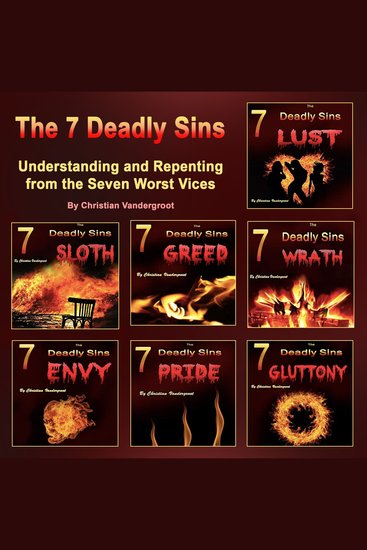
  • The 7 Deadly Sins - Understanding and Repenting from the 7 Worst Vices - cover

    The 7 Deadly Sins -...

    Christian Vandergroot

    • 0
    • 0
    • 0
    Seven titles in one book. All the seven deadly sins explained and analyzed. 
    Book 1: Envy 
    Envy is often something we point out in others, but if we face the facts and admit to being imperfect, finding it in ourselves can actually improve our lives, our attitude, and our happiness. When we figure out where our feelings are wrong, we can take action and change our mindset. So many people think of envy as a sin against others, but actually, we are doing this to ourselves. We create our own misery by looking at others and comparing ourselves to them. 
    Book 2: Gluttony 
    Gluttony has been mistaken for many things in the past. Some people judge others for being fat. Some are confused as to how far to go when indulging themselves in delicious foods. And others wonder if self-discipline in general is the underlying commandment that is related to the sin of gluttony. Understanding the sin, and the essence of it, can be life changing. It can mean the difference between a constant nagging feeling or urge to have more, and on the other hand, a divine feeling of contentment and a smile on your face. 
    Book 3: Greed 
    We’ve heard it before: The love of money is the root of all evil. Greed, or avarice, has caused many to “err from the faith” according to Paul, who wrote to Timothy. “Flee these things,” he said, urging him—and all of us—to concentrate on Christlike qualities instead of worldly possessions, and on treasures in heaven, not on earth. Greed is everywhere. It is almost unavoidable. If we let go of the possessions that so easily possess us, we can focus more on God and His purposes. 
      
    Other vices include lust, sloth, wrath, and pride. Listen to this eye-opening audiobook now! 
     
    Show book
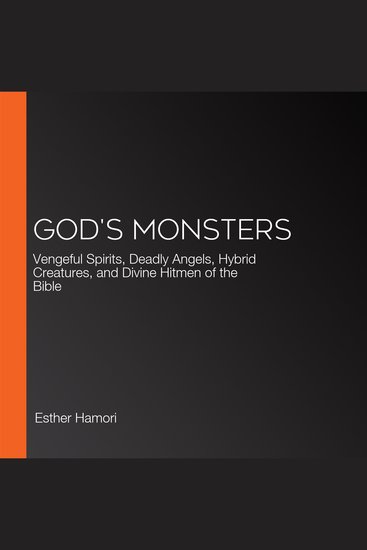
  • God's Monsters - Vengeful Spirits Deadly Angels Hybrid Creatures and Divine Hitmen of the Bible - cover

    God's Monsters - Vengeful...

    Esther Hamori

    • 0
    • 0
    • 0
    The Bible is teeming with monsters. Giants tromp through the land of milk and honey; Leviathan swims through the wine-dark sea. A stunning array of peculiar creatures, mind-altering spirits, and supernatural hitmen fill the biblical heavens. 


    Traditional interpretations of the creatures of the Bible have sanded down their sharp, unsavory edges, transforming them into celestial beings of glory and light—or chubby, happy cherubs. Those cherubs? They're actually hybrid guardian monsters, more closely associated with the Egyptian sphinx than with flying babies. And the seraphim? Winged serpents sent to mete out God's vengeance. Demons aren't at war with angels; they're a distinct supernatural species used by Satan and by God. The pattern is chilling. Most of these monsters aren't God's opponents—they're God's entourage. 


    Killer angels, plague demons, manipulative spirits, creatures with an alarming number of wings (and eyes all over)—these shapeshifters and realm-crossers act with stunning brutality, each reflecting a facet of God's own monstrosity. Confronting God's monsters—and the God-monster—may be uncomfortable, but the Bible is richer for their presence. For anyone interested in monsters, myths, folklore, demons, and more, God's Monsters is an entertaining deep dive into the creaturely strangeness of the Bible.
    Show book
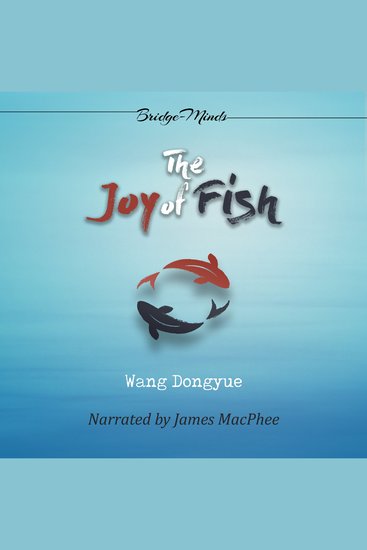
  • The Joy of Fish - cover

    The Joy of Fish

    Wang Dongyue, Translated by...

    • 0
    • 0
    • 0
    Do you know what truth or subsistence means to humanity? 
    What does wisdom or knowledge mean to humanity? 
    Do you really believe humanity has a choice for its future? 
    If you are unsure of the answers to these questions, the short essays in this book may give you a better idea. This book consists of thirty essays that talk about how civilized human beings think, believe, and behave toward truth, goodness, wisdom, and knowledge from different perspectives. These essays were written in a humorous style, allowing readers to easily get a glimpse of the author's philosophical ideas while avoiding difficult philosophical demonstrations.
    Show book
  • If Thought Cannot Achieve Why Should It Suffer? - Brockwood Park and Gstaad 1975 - Dialogue 7 - cover

    If Thought Cannot Achieve Why...

    Jiddu Krishnamurti

    • 0
    • 0
    • 0
    If thought cannot achieve, why should it suffer? - 18 July 1975  
    • How does science investigate the mysterious? 
    • If thought cannot achieve, why should it suffer? 
    • Can consciousness, which is filled with the things of thought, empty itself? 
    • Thought cannot possibly apprehend, comprehend or be aware of the whole. • Time. 
    • Krishnamurti’s early years.
    Show book
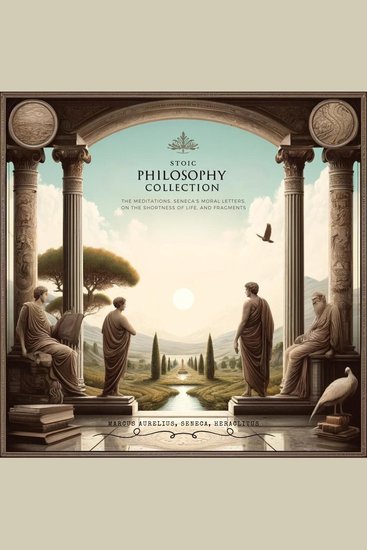
  • Stoic Philosophy Collection: The Meditations Seneca's Moral Letters On the Shortness of Life and Fragments - cover

    Stoic Philosophy Collection: The...

    Seneca Marcus Aurelius

    • 0
    • 0
    • 0
    Delve into the timeless wisdom of Stoic philosophy with this captivating audiobook collection featuring "The Meditations" by Marcus Aurelius, "Moral Letters" and "On the Shortness of Life" by Seneca, and "Fragments" by Heraclitus. 
    Narrated with clarity and depth, these philosophical masterpieces offer profound insights into living a life of virtue, resilience, and inner tranquility. Marcus Aurelius, Seneca, and Heraclitus guide listeners on a journey of self-discovery, teaching invaluable lessons on how to navigate life's challenges with grace and wisdom. 
    Whether you're seeking guidance on cultivating inner peace, overcoming adversity, or finding meaning in the midst of chaos, this collection provides the tools and inspiration to live a life of purpose and fulfillment. 
    Perfect for those interested in personal growth, mindfulness, or ancient wisdom, "Stoic Philosophy Collection" offers a treasure trove of timeless teachings that resonate across cultures and generations. 
    Don't miss the chance to enrich your life with the profound wisdom of Stoic philosophy. Start listening to "Stoic Philosophy Collection" today and embark on a transformative journey toward a life of greater clarity, resilience, and fulfillment.
    Show book