Join us on a literary world trip!
Add this book to bookshelf
Grey
Write a new comment Default profile 50px
Grey
Subscribe to read the full book or read the first pages for free!
All characters reduced
The Voyages of Doctor Dolittle - cover

The Voyages of Doctor Dolittle

Hugh Lofting

Publisher: E-Kitap Projesi & Cheapest Books

  • 0
  • 0
  • 0

Summary

The Voyages of Doctor Dolittle was the second of Hugh Lofting's Doctor Dolittle books to be published, coming out in 1922. It is nearly five times as long as its predecessor and the writing style is pitched at a more mature audience. The scope of the novel is vast; it is divided into six parts and the illustrations are also more sophisticated. It won the Newbery Medal for 1923. It was one of the novels in the series that was adapted into the film Doctor Dolittle.

The novel begins when Tommy Stubbins, the narrator of the story, finds a squirrel injured by a hawk. Matthew Mugg, the cat's meat man, informs him to get help from Doctor Dolittle, who can speak the language of animals. The Doctor is away on a voyage, but when he returns, he attends to the squirrel. Tommy is introduced to some of the strange animals in Dolittle's care, such as the Wiff-Waff fish, and those who care for his household, such as Dab-Dab the duck, and Jip the dog.

Polynesia the parrot arrives in Puddleby from Africa informs the Doctor that Bumpo is studying in Bullford. Tommy begins his studies with Doolittle, or rather with Polynesia who teaches Tommy the language of animals. Chee-Chee comes from Africa disguised as a lady and tells about his voyage to Puddleby. The Doctor acquires The Curlew and is thinking of taking Tommy, Polynesia, and Luke the Hermit. They find out from the hermit's dog, Bob, that he was sent to prison for murder but Bob is a witness so when the court is in the process the Doctor proves to the judge that he can talk to animals when this is settled he translates Bob's story to English. When the story is finished the judges conclude that the hermit is innocent.
Available since: 12/17/2023.
Print length: 400 pages.

Other books that might interest you

  • Rip Van Winkle - A Robin Reads Audiobook - cover

    Rip Van Winkle - A Robin Reads...

    Washington Irving

    • 0
    • 0
    • 0
    Washington Irving's classic tale of supernatural shenanigans involving the titular loveable layabout, Rip Van Winkle, who falls asleep in the mountains near his colonial village and wakes up in a new American nation. 
    First published in 1819. Narrated by Robin Reads.
    Show book
  • Eveline (Unabridged) - cover

    Eveline (Unabridged)

    James Joyce

    • 0
    • 1
    • 0
    James Augustine Aloysius Joyce (2 February 1882 - 13 January 1941) was an Irish novelist, short story writer, poet and literary critic. He contributed to the modernist avant-garde movement and is regarded as one of the most influential and important writers of the 20th century.
    EVELINE: She sat at the window watching the evening invade the avenue. Her head was leaned against the window curtains and in her nostrils was the odour of dusty cretonne. She was tired.
    Show book
  • Three Musketeers The - Audiobook - cover

    Three Musketeers The - Audiobook

    Alexandre Dumas, Classic...

    • 0
    • 0
    • 0
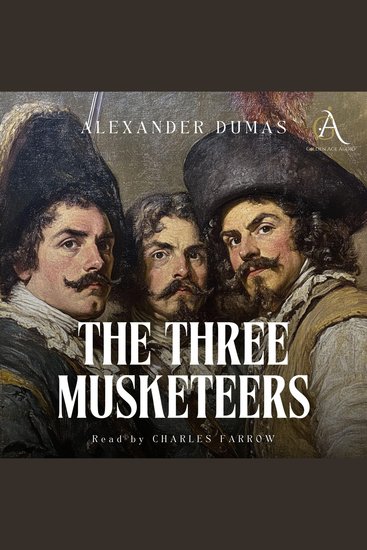
    The Three Musketeers by Alexandre Dumas is a swashbuckling historical adventure set in 17th-century France. The novel follows the brave and impulsive young d'Artagnan, who leaves his home in Gascony to join the King's Musketeers in Paris. There, he befriends the legendary trio of Athos, Porthos, and Aramis—three musketeers bound by loyalty, courage, and the famous motto: "All for one, and one for all."Together, they navigate a world of political intrigue, royal secrets, and deadly plots involving Cardinal Richelieu and the mysterious spy Milady de Winter. As battles rage and loyalties are tested, the four companions risk everything in the name of honor and friendship.Dumas' timeless classic combines action, romance, and humor with richly drawn characters and fast-paced storytelling. The Three Musketeers remains one of the most beloved adventure novels of all time.
    Show book
  • Babylon Revisited - Like his classic novel The Great Gatsby this story is set in the Jazz Age and much is based on Fitzgeralds own experiences - cover

    Babylon Revisited - Like his...

    F. Scott Fitzgerald

    • 0
    • 0
    • 0
    Francis Scott Key Fitzgerald was born on 24th September 1896 in Saint Paul, Minnesota into an upper-middle class family. Whilst his mother was pregnant with him, his two young sisters tragically died.  Fitzgerald once said this was when his destiny as a writer was ordained. 
     
    His intelligence and talent was recognised from an early age, with his first story, about a detective being published in the school magazine when he was just 13.   
     
    In 1913 he enrolled at Princeton but his devotion to his own literary pursuits resulted in him leaving and, rather bizarrely, joining the Army.  In 1918, stationed at Fort Sheridan near Montgomery, Alabama he met and became infatuated and then inseparable from Zelda Sayre.  Initially though she refused to marry him but with the success of ‘This Side of Paradise’, the fame and the flow of money enabled them both to begin a gilded life.  For them this was The Jazz Age.  For Fitzgerald he was already an alcoholic. 
     
    He continued to write with great mastery and the titles of his novels and many of his 164 short stories are household names.  The Great Gatsby, often cited as The Great American Novel was published to mixed reviews.  As America moved from the Great Depression to the slaughter of the Second World War his works and himself were seen as far too entwined with the decadent twenties. The world had moved on and he hadn’t.   
     
    Further tragedy was never far from his life. Zelda after years of erratic and now intolerable behaviour was committed to an institution in 1936.  His own sales began to decline and he became a hack for hire in Hollywood, dependent on increasing amounts of booze and the weekly pay check.  His drunken state had often resulted in arrest or hospitalisation, further imperiling his talents.   Despite his contribution to many MGM films he received only one credit. 
     
    The end came all too soon for one of America’s greatest ever writers.  On 21st December 1940, at only 44 years of age in Hollywood, F Scott Fitzgerald succumbed to a heart attack. 
     
    In this bittersweet story of a man who enjoyed the boom years of la dolce vita and now, in more straitened times, is unable to get what he really wants; the custody of his daughter.  He returns to Paris to meet the ghosts of those good times and to make amends for his past.
    Show book
  • Carmilla - cover

    Carmilla

    Joseph Le Fanu, J. Sheridan Le Fanu

    • 0
    • 0
    • 0
    Sink your teeth into the cult classic vampire novella that inspired Bram Stoker’s Dracula. Fear sweeps the countryside as people fall victim to a strange illness.  After a peculiar accident, beautiful Mircalla becomes a ward at Laura’s family home.  Soon, friendship blooms between the mysterious Mircalla and curious Laura.  Love is in the air, but so is something deadly.  Will Mircalla’s secret cost Laura her life? Carmilla, originally published in 1872, is one of the first vampire novels ever written, predating Dracula by twenty-six years. Carmilla, with its themes of vampirism and homosexuality, shocked the standards and stereotypes for women set in the Victorian era. Today, Carmilla is considered the original archetype of female and LGBTQ vampires, and Le Fanu’s influence is seen throughout vampire fiction.
    Show book
  • Araby (Unabridged) - cover

    Araby (Unabridged)

    James Joyce

    • 0
    • 0
    • 0
    James Augustine Aloysius Joyce (2 February 1882 - 13 January 1941) was an Irish novelist, short story writer, poet and literary critic. He contributed to the modernist avant-garde movement and is regarded as one of the most influential and important writers of the 20th century.
    ARABY: North Richmond Street, being blind, was a quiet street except at the hour when the Christian Brothers' School set the boys free. An uninhabited house of two storeys stood at the blind end, detached from its neighbours in a square ground. The other houses of the street, conscious of decent lives within them, gazed at one another with brown imperturbable faces.
    Show book