Join us on a literary world trip!
Add this book to bookshelf
Grey
Write a new comment Default profile 50px
Grey
Subscribe to read the full book or read the first pages for free!
All characters reduced
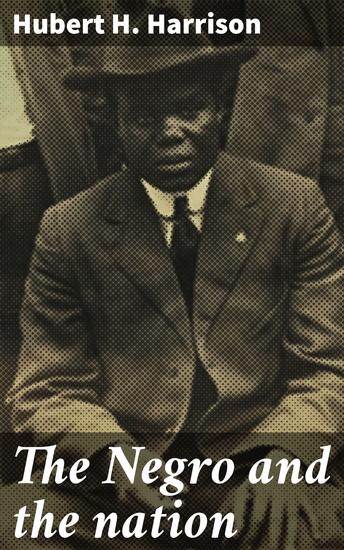
The Negro and the nation - Race Identity and Power in America - cover

The Negro and the nation - Race Identity and Power in America

Hubert H. Harrison

Publisher: Good Press

  • 0
  • 0
  • 0

Summary

Hubert H. Harrison's "The Negro and the Nation" stands as a seminal work in African American literature and political thought, probing the intricate relationship between African Americans and the broader American identity. Written during the early 20th century, a time of intense racial strife and burgeoning civil rights movements, Harrison employs a compelling blend of rhetorical flair and critical analysis. Through an examination of societal structures and cultural contributions, he challenges prevailing racial narratives and articulates the need for systemic change, making a case for Afrocentric pride and political empowerment. His eloquent prose resonates with urgency, framing the African American experience as a vital and indispensable part of the American narrative. Harrison, often referred to as the "Father of Harlem Renaissance," was profoundly influenced by his experiences as an educator and activist during the post-Reconstruction era. His insights stem from a lifetime of engagement with social justice issues, drawing from both personal suffering and collective struggle of African Americans. This background informs his argument that the oppression of Black citizens is enmeshed in the fabric of American history, thus requiring a reevaluation of national identity and values. "The Negro and the Nation" is not merely a historical treatise but a stirring call to action that speaks to contemporary social justice struggles. Its articulate critique and visionary proposals make it an essential read for anyone seeking to understand the ongoing dialogue surrounding race and identity in America. Harrison'Äôs work remains relevant, resonating with readers today as they confront and dismantle the enduring legacies of racism.
Available since: 07/10/2023.
Print length: 41 pages.
Other books that might interest you

  • Frazzlebrain - Break Free from Anxiety Anger and Stress Using Advanced Discoveries in Neuropsychology - cover

    Frazzlebrain - Break Free from...

    PhD Gina Simmons Schneider

    • 0
    • 0
    • 0
    If you feel frazzled, you dwell in good company. Racing between the demands of work, health, family, and friends, many people report feelings of worry, irritability, and increasing stress. While we often cannot control stressful life events, we can learn to control our brain's response to those circumstances and reduce our suffering. 


    Drawing from the latest research and more than twenty-five years of clinical experience, Dr. Gina Simmons Schneider explains the link between anxiety, anger, and stress and shares groundbreaking remedies from neuropsychology. These tools will strengthen your resilience and expand your capacity for happiness. 


    In Frazzlebrain, you'll discover how to: 


    ● Soften your response to stress 


    ● Overcome toxic self-criticism 


    ● Tame hostile and cynical thinking 


    Each chapter offers exercises, case examples, and self-improvement skills to help you achieve a calmer, happier, healthier lifestyle.
    Show book
  • Senility And the Brain Cells - Ojai 1980 - Dialogue 8 - cover

    Senility And the Brain Cells -...

    Jiddu Krishnamurti

    • 0
    • 0
    • 0
    Senility and the brain cells - 1 June 1980  
    • Is the human brain deteriorating? 
    • The human brain is not a particular brain, it doesn’t belong to me or to anyone 
    else, it is the human brain which has evolved for millions of years. 
    • Can the brain not only be aware of its own movement but can the brain itself 
    have enough energy to break all patterns and move out of it? 
    • Is psychological knowledge not in itself a factor of the shrinking of the brain? 
    • The ending of suffering comes about when the self, which is built up through 
    time, is no longer there. 
    • If there is an insight into the nature of time the very brain cells which are part 
    of time break down. The brain cells mutate, bring about a change in 
    themselves. 
    • Meditation is insight.
    Show book
  • The Basics of Growing a Child-Care Business - cover

    The Basics of Growing a...

    Marnie Forestieri

    • 0
    • 0
    • 0
    The Basics of Growing a Child-Care Business shows you how to stand out from the competition. The book offers clear strategies for growth: Charm: Grab the customer’s attention. Create a solid foundation for your marketing strategy. Advise: Establish yourself as an expert and set your sales goals. Delight: Design your customer experience, and create an ongoing sales pipeline. Track: Gather data, measure your results, and adjust your approach.  The third in the Basics of Child Care series, The Basics of Growing a Child-Care Business includes information on understanding your ideal customer, writing a marketing plan, creating a responsive service system, and tracking your performance. With key terms, case studies, key questions, and exercises to help you apply the concepts, this book will set you on your way to growing and strengthening your child-care business.
    Show book
  • Cleopatra - Her History Her Myth - cover

    Cleopatra - Her History Her Myth

    Francine Prose

    • 0
    • 0
    • 0
    A feminist reinterpretation of the myths surrounding Cleopatra casts new light on the Egyptian queen and her legacy 
     
    The siren passionately in love with Mark Antony, the seductress who allegedly rolled out of a carpet she had herself smuggled in to see Caesar, Cleopatra is a figure shrouded in myth. Beyond the legends immortalized by Plutarch, Shakespeare, George Bernard Shaw, and others, there are no journals or letters written by Cleopatra herself. All we have to tell her story are words written by others. 
     
    What has it meant for our understanding of Cleopatra to have had her story told by writers who had a political agenda, authors who distrusted her motives, and historians who believed she was a liar? Francine Prose delves into ancient Greek and Roman literary sources, as well as modern representations of Cleopatra in art, theater, and film. She challenges the common narratives driven by orientalism and misogyny and offers a new interpretation of Cleopatra’s history from the lens of our own era.
    Show book
  • Comic Book Punks - How a Generation of Brits Reinvented Pop Culture - cover

    Comic Book Punks - How a...

    Karl Stock

    • 0
    • 0
    • 0
    The influence of the comic book has never been greater, from movies to streaming and beyond, but the journey comics took from little-regarded kids' magazines to literary prize-winning books and global franchises turned on a highly unusual group of writers and artists. Few would have expected a small gathering of British comic book fans and creators in the early 'seventies to be a global cultural pivot-point, but this was the start of a disparate movement of punks, dropouts, and disaffected youths who reinvented a medium and became the imaginative heart of a global success story. 


    Based on years of interviews with a generation of leading writers, artists, and editors, Karl Stock reveals the true story of the wild times, passion, and determination that helped, hindered, and saw the reinvention of comics. 


    Stock brilliantly tells the story of the triumphs and disasters that rewrote the rulebook on what comics could be and who they should be for.
    Show book
  • The Black Man's President - Abraham Lincoln African Americans & the Pursuit of Racial Equality - cover

    The Black Man's President -...

    Michael Burlingame

    • 0
    • 0
    • 0
    In a little-noted eulogy delivered after Lincoln's assassination, Frederick Douglass called the president "emphatically the black man's president," the "first to show any respect for their rights as men." Douglass pointed not just to Lincoln's official acts and utterances, like the Emancipation Proclamation or the Second Inaugural Address, but also to the president's own personal experiences with Black people. 


    But Lincoln's description as "emphatically the black man's president" rests on more than his relationship with Douglass or on his official words and deeds. Lincoln interacted with many other African Americans during his presidency. His unfailing cordiality to them, his willingness to meet with them in the White House, to honor their requests, to invite them to consult on public policy, to treat them with respect whether they were kitchen servants or leaders of the Black community, to invite them to attend receptions, to sing and pray with them in their neighborhoods—all those manifestations of an egalitarian spirit justified the tributes paid to him by Frederick Douglass and other African Americans. 


    Historian David S. Reynolds observed that only by examining Lincoln's "personal interchange with Black people do we see the complete falsity of the charges of innate racism that some have leveled against him over the years."
    Show book