Join us on a literary world trip!
Add this book to bookshelf
Grey
Write a new comment Default profile 50px
Grey
Subscribe to read the full book or read the first pages for free!
All characters reduced
The Iroquois Book of Rites - cover

The Iroquois Book of Rites

Horatio Hale

Publisher: DigiCat

  • 0
  • 0
  • 0

Summary

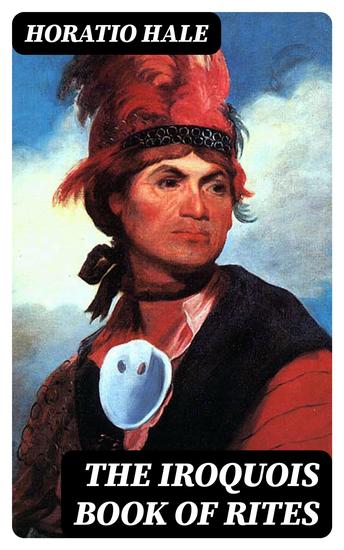
In "The Iroquois Book of Rites," Horatio Hale meticulously compiles and analyzes the rich tapestry of ritual practices and ceremonies of the Iroquois Confederacy. Richly woven with ethnographic detail and linguistic insights, Hale's work not only serves as a chronicle of indigenous customs but also engages in a nuanced exploration of the spirituality and philosophy embedded in Iroquois culture. The text stands out for its anthropological lens, bridging literary narrative and scholarly analysis, thus contributing significantly to the corpus of Native American studies and ethnology during the late 19th century. Horatio Hale, a prominent linguist and ethnographer of his time, brought to bear a profound appreciation for indigenous languages and cultures. His experiences with the Iroquois, coupled with his academic pursuits, shaped his understanding of the intricate bond between ritual practices and identity in Native American societies. Hale's prior work and participation in the study of languages uniquely positioned him to convey the depth and complexity of Iroquois rites, reflecting a deep respect for their cultural legacy. This book is essential for anyone interested in the intersection of anthropology, Native American history, and ritual studies. Scholars, students, and general readers alike will find Hale's work an invaluable resource that not only preserves but also interprets the vibrant traditions of the Iroquois, offering profound insights into their worldview and cultural significance.
Available since: 08/15/2022.
Print length: 171 pages.


Other books that might interest you

  • Am I Aware of the Process of Thinking? - Gstaad 1965 - Small Group Discussion 2 - cover

    Am I Aware of the Process of...

    Jiddu Krishnamurti

    • 0
    • 0
    • 0
    Am I aware of the process of thinking? 18 August 1965.Can I see that thought is destructive, except where it is essential? Why is it that we don't see something immediately? Do you know when you are thinking? Is the thing that we call thinking thinking at all? Do you think from the background noise when a problem arises? When the mind becomes totally aware of the background, is there thinking when a problem arises? What happens when I am aware of this hum, this noise incessantly going on? Is the background noise different from the observer? How am I to live an everyday life with complete silence?
    Show book
  • Faith-Filled Childbirth - A Christian Approach to Hypnobirthing - cover

    Faith-Filled Childbirth - A...

    Tara Menzies

    • 0
    • 0
    • 0
    Many people don't realize that fear is one of the biggest causes of pain in childbirth. 
    This book will help you overcome fear and experience a more confident, relaxed, and faith-filled birth. Combining the childbirth education and relaxation exercises used in hypnobirthing with the incredible love, strength, and support that come from faith in our Heavenly Father, Lord Jesus, and the Holy Spirit, creator of the best selling Christian Hypnobirthing App, Tara Menzies, equips expecting mothers with research and information to make informed, empowered decisions and tools to help them feel peace and confidence throughout pregnancy, birth and postpartum. Whether you're planning a water birth at home, a cesarean birth in the hospital, or anything in between, this book will teach you techniques to help you relax and draw near to God, develop a deeper understanding of our miraculous design, and support your body's natural physiology — no matter where or how you plan to give birth.
    Show book
  • We Need To Talk - The truth about sexual violence and my fight for justice - cover

    We Need To Talk - The truth...

    Emily Hunt

    • 0
    • 0
    • 0
    'As inspiring as it is enraging, Emily Hunt turns trauma into action, exposing a criminal justice system that fails women, and a culture that enables violence against us. A rallying call for change, and a powerful lesson in perseverance from a woman who would not give up.' The Guardian 
    Emily was in a restaurant, having lunch with her father – the next thing she remembers is waking up, naked, in a strange hotel room, next to a man she did not know. She suspected she had been drugged and raped. She later found out she had been filmed without her consent. 
    What happened to her that night could have happened to anyone. What came next happens to far too many victims, as failures by the police, CPS and other parts of the system, led to Emily doubting she would ever find justice. 
    Six years after her attack, Emily is an adviser to the UK Government on sexual violence. Part memoir and part investigation, Emily shines a light on the fault lines of a system and a society that is failing rape victims. We Need To Talk looks at how rape is a mainstream, everyday problem deeply damaging victims, their families, their workplaces and the economy. 
    This is a conversation starter about why we don’t talk about rape; that the only cause of rape is rapists, not rape victims; who commits rape and why; the reasons why society defaults to blaming the victim; and ultimately how we need to change and humanise the way we talk about rape in order to truly hear and support victims and end the current epidemic of sexual violence.
    Show book
  • Lurking Under the Surface - Horror Religion and the Questions that Haunt Us - cover

    Lurking Under the Surface -...

    Brandon R. Grafius

    • 0
    • 0
    • 0
    Horror can be a valuable conversation partner for the spiritual questions that animate so many of us. 


    Whether through a movie, television show, novel, or even myth, horror as a genre has always spoken to our deepest human fears and anxieties: fear of death, of the unknown, of knowing too much. Whether you're looking at classic narratives like Frankenstein, or contemporary films like Get Out, which explores racism and white guilt, horror provides a window into our culture and what makes us human. The same can be said of religion. 


    Horror movie buff and religion scholar Brandon Grafius finds common ground between these two seemingly disparate bedfellows—horror and religion—in Lurking under the Surface. What parallels can we draw between The Walking Dead and sacred texts? How do the stories of Hebrew Christian scriptures and apocalyptic films like A Quiet Place and Bird Box help us find hope when it's in short supply? When we treat them both seriously, we see that horror movies and religion lead us through the same sets of questions. Both explore questions of justice, hope, and our relationship to the world and the cosmos. And both offer us ways to make meaning out of the contradictory pieces of our world—a world filled with so much hope and so many recognizable fears lurking just beneath the surface.
    Show book
  • Stokely Carmichael: The Life and Legacy of the Civil Rights Activist Who Led the Black Power Movement - cover

    Stokely Carmichael: The Life and...

    Editors Charles River

    • 0
    • 0
    • 0
    “Our grandfathers had to run, run, run. My generation's out of breath. We ain't running no more.” – Stokely Carmichael 
    In the late 1960s, Stokely Carmichael would become one of the most influential and controversial figures in America, founding and leading new organizations while being meticulously shadowed by the country’s national security apparatus, particularly J. Edgar Hoover’s FBI. The attention would ultimately compel him to move to Africa, where he changed his name to Kwame Ture and became one of the world’s most famous Pan-African leaders until his death in Guinea in 1998.  
    Since then, he has remained a subject of both praise and criticism, from contemporaries and historians alike. SNCC Chairman Phil Hutchings, despite being the one who pushed Carmichael out of the organization, aptly summed up the dichotomy: "Even though we kidded and called him 'Starmichael', he could sublimate his ego to get done what was needed to be done....He would say what he thought, and you could disagree with it but you wouldn't cease being a human being and someone with whom he wanted to be in relationship." 
    Show book
  • Kingdom of Kongo - Christianity Trade and the Kingdom That Resisted Colonization - cover

    Kingdom of Kongo - Christianity...

    Rolf Hedger

    • 0
    • 0
    • 0
    The Kingdom of Kongo emerged as one of the most powerful and centralized states in Central Africa. Its origins can be traced back to the early Bantu migrations, which spread agriculture, ironworking, and complex social structures across the region. By the 14th century, various smaller chiefdoms in present-day Angola and the Democratic Republic of Congo began to coalesce under a single authority, forming what would become the Kingdom of Kongo. 
    The region’s fertile lands and access to major rivers facilitated both agriculture and trade. Kongo’s early economy relied on the cultivation of crops such as millet, sorghum, and bananas, as well as the production of iron tools and weapons. The abundance of natural resources allowed the ruling elite to accumulate wealth and expand their influence. As trade networks developed, Kongo became a center of commerce, linking the interior regions of Central Africa with coastal markets. 
    Kongo's social and political organization was highly structured. At the top of the hierarchy was the king, known as the Manikongo, who ruled from the capital, Mbanza Kongo. The Manikongo exercised authority over provincial rulers, who governed different regions of the kingdom. This system allowed for centralized administration while also granting local leaders autonomy in managing their territories. The kingdom was further divided into districts and villages, with a bureaucratic structure that ensured tax collection, military organization, and judicial functions.
    Show book