Join us on a literary world trip!
Add this book to bookshelf
Grey
Write a new comment Default profile 50px
Grey
Subscribe to read the full book or read the first pages for free!
All characters reduced
The Iroquois Book of Rites - cover

The Iroquois Book of Rites

Horatio Hale

Publisher: DigiCat

  • 0
  • 0
  • 0

Summary

In "The Iroquois Book of Rites," Horatio Hale meticulously compiles and analyzes the rich tapestry of ritual practices and ceremonies of the Iroquois Confederacy. Richly woven with ethnographic detail and linguistic insights, Hale's work not only serves as a chronicle of indigenous customs but also engages in a nuanced exploration of the spirituality and philosophy embedded in Iroquois culture. The text stands out for its anthropological lens, bridging literary narrative and scholarly analysis, thus contributing significantly to the corpus of Native American studies and ethnology during the late 19th century. Horatio Hale, a prominent linguist and ethnographer of his time, brought to bear a profound appreciation for indigenous languages and cultures. His experiences with the Iroquois, coupled with his academic pursuits, shaped his understanding of the intricate bond between ritual practices and identity in Native American societies. Hale's prior work and participation in the study of languages uniquely positioned him to convey the depth and complexity of Iroquois rites, reflecting a deep respect for their cultural legacy. This book is essential for anyone interested in the intersection of anthropology, Native American history, and ritual studies. Scholars, students, and general readers alike will find Hale's work an invaluable resource that not only preserves but also interprets the vibrant traditions of the Iroquois, offering profound insights into their worldview and cultural significance.
Available since: 08/15/2022.
Print length: 171 pages.

Other books that might interest you

  • Cleansing the Mind of the Accumulation of Time - Ojai 1980 - Dialogue 2 - cover

    Cleansing the Mind of the...

    Jiddu Krishnamurti

    • 0
    • 0
    • 0
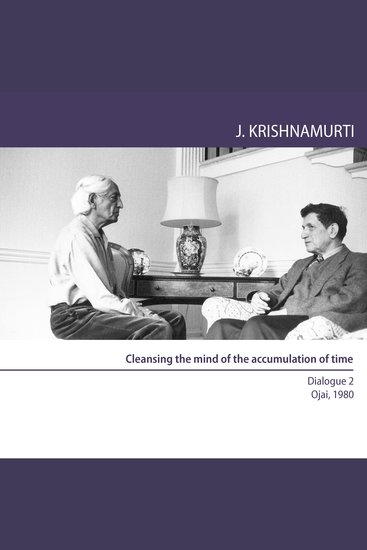
    Cleansing the mind of the accumulation of time - 2 April 1980  
    • Time is the enemy of man. 
    • Is there a beginning which is not enmeshed in time? 
    • We said nothingness is everything and so it is total energy. It is undiluted pure, uncorrupted energy. Is there something beyond that? 
    • Has man ever been free from the ‘I’? 
    • That emptiness can only exist when there is death of the particular.
    Show book
  • 5 Rare Sexual Disorders You Didn't Know About - A Look at Uncommon Intimacy Challenges - cover

    5 Rare Sexual Disorders You...

    John Harpoon

    • 0
    • 0
    • 0
    Sexual health is an essential yet often overlooked aspect of overall well-being. While common sexual disorders like erectile dysfunction or low libido receive significant attention, there exists a range of rare sexual disorders that many people have never heard of. These conditions can be confusing, distressing, and deeply isolating for those affected. Unlike mainstream sexual dysfunctions that have widely known treatments and medical support, rare sexual disorders often remain misunderstood, misdiagnosed, or even dismissed entirely. This lack of awareness leaves those who suffer from these conditions struggling in silence, unsure of where to turn for help.  
      
    This book aims to shed light on five rare sexual disorders, each presenting unique challenges that go beyond the conventional difficulties associated with intimacy. From physical conditions that cause unrelenting discomfort to psychological disorders that disrupt one’s ability to form healthy sexual relationships, these disorders can have a profound impact on self-esteem, relationships, and overall quality of life. Understanding these conditions is the first step toward breaking the stigma and fostering empathy for those who experience them. 
    Show book
  • Conversational Phrases Dutch Audiobook - Level 1 - Absolute Beginner - cover

    Conversational Phrases Dutch...

    DutchPod101.com, Innovative...

    • 0
    • 0
    • 0
    Are you trying to learn Dutch…but having trouble speaking?
     
    Do you struggle coming up with your own Dutch sentences?
     
    Are you tired of not understanding how Dutch grammar works?


    If you answered yes to any of these questions, …


    ...then the Conversational Phrases Audiobook, Level 1 - Absolute Beginner is for you!


    In this beginner-level Audiobook, you will master over 25 common sentence patterns across 25 simple lessons. By the end, you’ll be able to ask common questions and answer them in your own way, all while acquiring over 100 Dutch words. 


    Most importantly, you’ll be able to have real conversations in various social situations.


    How, you may ask? Each lesson introduces a new conversation reflecting a real-world situation, including casual chats between friends as well as dialogues in more formal settings. Learning is made easy with three simple steps:


    1. Get familiar: First, you get a sample conversation and its translation.
     
    2. Understand: Then, we explain an underlying sentence pattern, so you can grasp the grammar and actually understand how the Dutch works.
     
    3. Practice: Lastly, you create your own responses… and start speaking Dutch!


    Lessons in this audiobook include:
     
    - Going Sightseeing
     
    - Going to a Restaurant
     
    - Giving Directions
     
    - Going to the Movies
     
    - Renting an Apartment
     
    And much more!


    Conversational Phrases Audiobook, Level 1 - Absolute Beginner contains:
     
    - 25 Lessons 
     
    - 4 Hours+ of Content
     
    - 1 Core Pattern Per Lesson
     
    - 100+ Dutch Vocabulary Words
     
    - 28 Page Accompanying PDF eBook


    Download the PDF and read along
    Show book
  • How to Have Difficult Conversations About Race - Practical Tools for Necessary Change in the Workplace and Beyond - cover

    How to Have Difficult...

    Kwame Christian

    • 0
    • 0
    • 0
    Negotiation expert Kwame Christian's motto is: "The best things in life are on the other side of difficult conversations." If we want a more equitable workplace, and a more equitable world, we have to talk to each other about race. But, for so many of us, that's easier said than done. 


    Many people avoid conversations about race because of fear: fear of discomfort, damaging important relationships, being misunderstood, "canceled," ostracized. How to Have Difficult Conversations About Race equips you with the skills you need to make these crucial conversations easier and more productive. 


    Whether you're looking to create change for yourself and other BIPOC, or a white ally seeking to support your coworkers or clients, you'll learn how to: overcome your internal barriers to talking about diversity, equity, and inclusion (DEI); work around others' barriers to productive discussion; be strategic about the outcome you want, and guide the conversation accordingly; use "Compassionate Curiosity" to connect and persuade; avoid common mistakes; and communicate more effectively over email, when you can't talk face to face. If you've ever struggled to turn that passion into persuasion, or been too afraid to speak up at work (or outside of it), this book is for you.
    Show book
  • The Yoga Sutras of Patanjali - The Final Guide for the Study and Practice of Patanjali's Yoga Sutras - cover

    The Yoga Sutras of Patanjali -...

    Amin Rampa

    • 0
    • 0
    • 0
    It is important for you to know that Yoga is a way of being in the world based on the Yoga Sutras of Patanjali 
    There are people who approach the practice of Yoga, because they have seen other notable changes or someone has told you that the practice of Yoga is good, well, you don’t need to be a doubtful Thomas, as this book is embedded with all important and effective approach that will influence your yoga sutra of pantajali in no time. 
    But ... what is this Yoga, which is becoming so fashionable? And what are its origins 
    Yoga is an ancestral philosophy that was born in India about 5000 years ago. Our ancestors were people who retired in search of a connection and internalization, which has little to do with the way in which Yoga is practiced today in the West. 
    And this is not bad, life evolves and with it also changes around us to meet the needs of today's society. But I think it is important to take into account the origins of this discipline, because, at least for me, it makes a lot of sense to my practice. 
    When I talk about my practice, I don't mean just the time I spend on the mat moving my body or meditating, I mean everything that accompanies me throughout the day, from when I wake up until I go to bed. 
    Therefore, I want to transfer the teachings I have received about this way of being and being in the world, because knowing, even a little, its origin, you can better understand what you do or what is achieved with the constant practice of this discipline. That was the reason why this audiobook is birthed. 
    The Yoga Sutra of Patanjali also provide the method or the means to achieve said “goal” all these approaches are mentioned with quality pictures just for your perusal and fast understanding. 
    As you can see there are no secrets, everything is achieved through practice and more practice.
    Show book
  • Transcendentalism - The Greatest Good for the Greatest Number - cover

    Transcendentalism - The Greatest...

    Hector Davidson

    • 0
    • 0
    • 0
    Transcendentalism is a philosophical and literary movement that emerged in the early 19th century in America, primarily associated with thinkers like Ralph Waldo Emerson, Henry David Thoreau, and Margaret Fuller. It developed as a reaction to the industrial revolution, the growing materialism of society, and the influence of traditional European intellectual thought. Transcendentalism posited that knowledge transcends the senses and that reality can be understood through intuition and spiritual insight rather than empirical observation alone. This belief is rooted in the idea that each individual has access to divine truths through personal experience and direct communion with nature. 
    At its core, Transcendentalism emphasizes the importance of the individual and the power of self-reliance. It encourages a connection to nature as a means of finding spiritual clarity and understanding. Nature, for the transcendentalists, was not simply a physical world to be studied but a living, divine entity that could guide personal growth and spiritual development. They argued that individuals should look within themselves and to nature for truth, rather than relying on societal conventions or religious institutions. 
    The roots of Transcendentalism are found in a variety of sources, including German idealism, Eastern philosophy, and the American Puritan tradition. However, it was through figures like Emerson, who published his seminal essay Nature in 1836, that the movement gained significant traction. Emerson’s ideas about self-reliance, individualism, and the divine presence in nature resonated with many Americans seeking an alternative to the rigid societal structures of the time.
    Show book