Join us on a literary world trip!
Add this book to bookshelf
Grey
Write a new comment Default profile 50px
Grey
Subscribe to read the full book or read the first pages for free!
All characters reduced
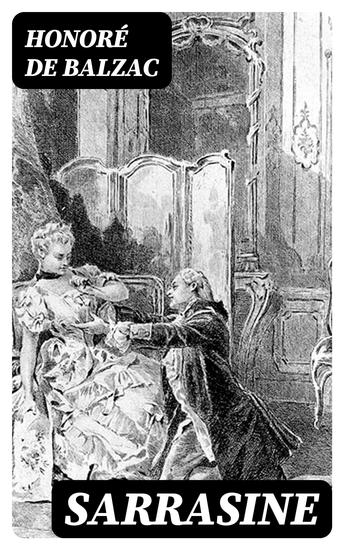
Sarrasine - cover

Sarrasine

Honoré de Balzac

Translator Clara Bell

Publisher: DigiCat

  • 0
  • 0
  • 0

Summary

In "Sarrasine," Honoré de Balzac expertly weaves a tale that explores themes of obsession, identity, and the complexities of authenticity within societal expectations. Set against the backdrop of 19th-century Paris, the novella delves into the life of the fictional sculptor, Sarrasine, whose passionate infatuation with a beautiful woman leads to tragic consequences. Balzac's masterful prose is characterized by rich descriptions and psychological depth, reflecting the distinct literary style of realism that captures the intricacies of human emotion and social dynamics, while also critiquing the prevailing romantic ideals of his time. Honoré de Balzac, a towering figure in French literature, is best known for his extensive series of interconnected novels, collectively titled "La Comédie Humaine." His own experiences as a writer navigating the challenging literary and social landscape of post-Napoleonic France profoundly influenced his work. Balzac's keen observations of society and his fascination with the themes of class and ambition are vividly encapsulated in "Sarrasine," enriching the narrative with philosophical underpinnings and societal critique. This novella is highly recommended for readers interested in psychological depth and social critique within a historical context. Balzac's nuanced exploration of the human psyche, woven with themes of love and artistic aspiration, makes "Sarrasine" a timeless study of the dichotomy between reality and illusion, essential for anyone looking to deepen their understanding of 19th-century literature.
Available since: 09/15/2022.
Print length: 34 pages.
Other books that might interest you

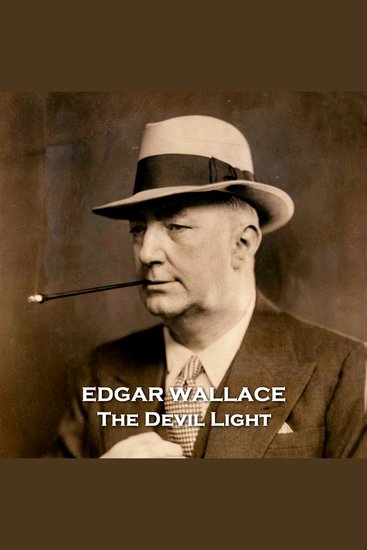
  • The Devil Light - Former soldier and journalist that became a revered author and screenwriter - cover

    The Devil Light - Former soldier...

    Edgar Wallace

    • 0
    • 0
    • 0
    Richard Horatio Edgar Wallace was born on the 1st April 1875 in Greenwich, London.  Leaving school at 12 because of truancy, by the age of fifteen he had experience; selling newspapers, as a worker in a rubber factory, as a shoe shop assistant, as a milk delivery boy and as a ship’s cook.  
     
    By 1894 he was engaged but broke it off to join the Infantry being posted to South Africa. He also changed his name to Edgar Wallace which he took from Lew Wallace, the author of Ben-Hur.  
     
    In Cape Town in 1898 he met Rudyard Kipling and was inspired to begin writing. His first collection of ballads, The Mission that Failed! was enough of a success that in 1899 he paid his way out of the armed forces in order to turn to writing full time.  
     
    By 1904 he had completed his first thriller, The Four Just Men. Since nobody would publish it he resorted to setting up his own publishing company which he called Tallis Press. 
      
    In 1911 his Congolese stories were published in a collection called Sanders of the River, which became a bestseller. He also started his own racing papers, Bibury’s and R. E. Walton’s Weekly, eventually buying his own racehorses and losing thousands gambling.  A life of exceptionally high income was also mirrored with exceptionally large spending and debts.  
     
    Wallace now began to take his career as a fiction writer more seriously, signing with Hodder and Stoughton in 1921. He was marketed as the ‘King of Thrillers’ and they gave him the trademark image of a trilby, a cigarette holder and a yellow Rolls Royce. He was truly prolific, capable not only of producing a 70,000 word novel in three days but of doing three novels in a row in such a manner. It was estimated that by 1928 one in four books being read was written by Wallace, for alongside his famous thrillers he wrote variously in other genres, including science fiction, non-fiction accounts of WWI which amounted to ten volumes and screen plays. Eventually he would reach the remarkable total of 170 novels, 18 stage plays and 957 short stories. 
     
    Wallace became chairman of the Press Club which to this day holds an annual Edgar Wallace Award, rewarding ‘excellence in writing’.  
     
    Diagnosed with diabetes his health deteriorated and he soon entered a coma and died of his condition and double pneumonia on the 7th of February 1932 in North Maple Drive, Beverly Hills. He was buried near his home in England at Chalklands, Bourne End, in Buckinghamshire.
    Show book
  • Mumu - Turgenev brilliantly displays the relationship between man and mans best friend and an awful choice it will bring - cover

    Mumu - Turgenev brilliantly...

    Ivan Turgenev

    • 0
    • 0
    • 0
    Ivan Sergeyevich Turgenev was born on 9th November 1818 in Oryol, Russia to parents from the nobility.  He and his two brothers were raised by their mother on the family estate.  Surrounded by foreign governesses he became fluent in French, German, and English.  Their father spent little time with them and this undoubtedly had an effect on him and his brothers.  When he was nine the family moved to Moscow to give their children a better education. 
     
    Turgenev studied for a year at the University of Moscow and then at the University of St Petersburg to study Classics, Russian literature, and philology.  During that time his father died from kidney stone disease.  In 1838 Turgenev studied philosophy and history at the University of Berlin for 3 years before returning to St Petersburg for his master's. 
     
    He started his career with the Russian Civil Service and it was only in 1852, after several earlier publications, that he made his name with his short story collection, ‘A Sportsman's Sketches’, based on his observations of peasant life and nature. 
      
    That same year he wrote an obituary for Nikolai Gogol: "Gogol is dead!... What Russian heart is not shaken by those three words?... He is gone, that man whom we now have the right (the bitter right, given to us by death) to call great."  The St Petersburg censor banned publication but the Moscow censor allowed it.  He was dismissed but Turgenev was held responsible and imprisoned for a month, and then exiled to his country estate.  
     
    Along with many other intellectuals Turgenev left Russia and settled in Paris in 1854.  During this period he wrote his finest stories and four novels.  
     
    Alexander II ascended the Russian throne in 1855, and the political climate relaxed.  Turgenev returned home.  
     
    ‘Fathers and Sons’, Turgenev's most famous and enduring novel, appeared in 1862. Its leading character is considered the first ‘Bolshevik’ in Russian literature. But the hostile reaction prompted Turgenev's decision to again leave Russia.  
     
    His health declined during his later years.  In January 1883, an aggressive malignant tumor was removed but by then it had metastasized in his upper spinal cord, causing him intense pain in his final few months of life.  
     
    Ivan Turgenev died on 3rd September 1883 of a spinal abscess, a complication of the metastatic liposarcoma, in his house near Paris.  He was buried in St Petersburg.  
     
    In Mumu, Turgenev hauntingly tells the story of a Gerasim, a six foot five deaf mute with the menial job of yard-porter who is ostracized by all those around him.  A dog, Mumu, becomes his only true and faithful friend.  One day he is given a dreadful and agonizing choice.
    Show book
  • Daddy-Long-Legs - cover

    Daddy-Long-Legs

    Jean Webster

    • 0
    • 0
    • 0
    When Jerusha Abbott, an eighteen-year-old girl living in an orphan asylum, was told that a mysterious millionaire had agreed to pay for her education, it was like a dream come true. For the first time in her life, she had someone she could pretend was "family." But everything was not perfect, for he chose to remain anonymous and asked that she only write him concerning her progress in school. Who was this mysterious gentleman and would Jerusha ever meet him?
    Show book
  • The Thirty-Nine Steps - cover

    The Thirty-Nine Steps

    John Buchan

    • 0
    • 0
    • 0
    As war looms in Europe, Richard Hannay returns from Rhodesia to his home in London. His neighbor, an American freelance spy named Franklin Scudder, claims to know of an assassination plot to destabilize Europe. When Hannay finds Scudder dead in his flat, he is drawn into a fast-paced labyrinthine adventure that takes him from the hills of Scotland to an unassuming location by the sea.
    Show book
  • The Lost World - cover

    The Lost World

    Arthur Conan Doyle

    • 0
    • 0
    • 0
    "The Lost World" is a novel written by Sir Arthur Conan Doyle, the British author best known for creating the iconic detective Sherlock Holmes. Published in 1912, this adventure novel stands apart from Doyle's more famous detective fiction and is known for its exploration of the unknown and its contribution to the "lost world" literary genre. 
     
    The story is centered around the character of Professor Challenger, an eccentric and larger-than-life scientist who, like Sherlock Holmes, became one of Conan Doyle's memorable literary creations. Professor Challenger claims to have discovered evidence of prehistoric life in the Amazon rainforest and invites a group of individuals, including the narrator Edward Malone, to join him on an expedition to verify his findings. 
     
    The group embarks on a perilous journey into the uncharted and remote plateau in South America, where they encounter a world seemingly frozen in time. Dinosaurs and other prehistoric creatures roam the plateau, and the explorers must navigate not only the dangers of the natural world but also the challenges of their own personalities and relationships. 
     
    "The Lost World" is a pioneering work in the "lost world" subgenre of adventure fiction, which involves the discovery of isolated and prehistoric environments that time forgot. It predates other famous works in this genre, such as Edgar Rice Burroughs' "The Land That Time Forgot" and Sir Arthur Conan Doyle's contemporary H.G. Wells' "The Time Machine." 
     
    The novel combines elements of science fiction, adventure, and exploration with themes of human curiosity, bravery, and the clash between the modern world and the primeval past. It also touches on the ethical implications of encountering and documenting creatures thought to be extinct.
    Show book
  • Goose-Girl The - Story Time Episode 36 (Unabridged) - cover

    Goose-Girl The - Story Time...

    Brothers Grimm

    • 0
    • 0
    • 0
    A widowed queen sends her daughter to a faraway land to marry. Accompanying the princess are her magical horse Falada, who can speak, and a waiting maid. The queen gives the princess a special charm that will protect her as long as she wears it.
    Show book