Join us on a literary world trip!
Add this book to bookshelf
Grey
Write a new comment Default profile 50px
Grey
Subscribe to read the full book or read the first pages for free!
All characters reduced
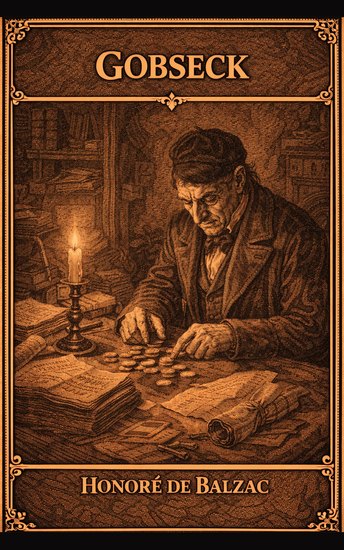
Gobseck - cover

Gobseck

Honoré de Balzac

Publisher: CLXBX

  • 0
  • 0
  • 0

Summary

In Gobseck, Honoré de Balzac delivers a powerful and penetrating exploration of wealth, obsession, and the hidden machinery of society. Set in post-Napoleonic Paris, this masterful novella—part of Balzac's monumental collection La Comédie Humaine—examines the corrosive power of money and the moral compromises people make in pursuit of status and survival.

At the center of the story stands Jean-Esther van Gobseck, an aging and enigmatic moneylender whose life revolves around one unwavering principle: gold rules the world. Cold, calculating, and emotionally detached, Gobseck has built his fortune by lending money to desperate aristocrats and ambitious social climbers, watching with clinical fascination as debt exposes their secrets, weaknesses, and hypocrisies. To him, human emotions—love, honor, loyalty—are mere illusions, all ultimately subject to the authority of money.

The narrative unfolds through the perspective of a young lawyer, Derville, who recounts Gobseck's life and his dealings with the aristocratic Countess de Restaud. As the Countess spirals into financial and moral ruin to sustain her extravagant lifestyle and illicit passions, Gobseck becomes both witness and silent judge. Through this tragic entanglement, Balzac reveals the fragile façade of high society and the devastating consequences of greed, vanity, and unchecked desire.

Yet Gobseck is more than a portrait of a miser. It is a profound meditation on capitalism, power, and human nature. Gobseck himself is a paradox—both predator and philosopher, villain and observer. Though he accumulates immense wealth, he lives in stark austerity, hoarding treasures he never uses, revealing the emptiness at the heart of his obsession. His life poses unsettling questions: Is wealth power, security, or prison? Can a person truly possess riches without being possessed by them?

Balzac's sharp realism, vivid characterizations, and incisive social commentary make Gobseck a timeless study of ambition and morality. With psychological depth and keen insight into the financial and emotional transactions that govern human relationships, this novella remains strikingly relevant in a world still driven by profit and power.

Dark, intelligent, and unflinchingly honest, Gobseck is a compelling exploration of the price of wealth—and the cost of losing one's soul in its pursuit.
Available since: 02/18/2026.
Print length: 78 pages.
Other books that might interest you

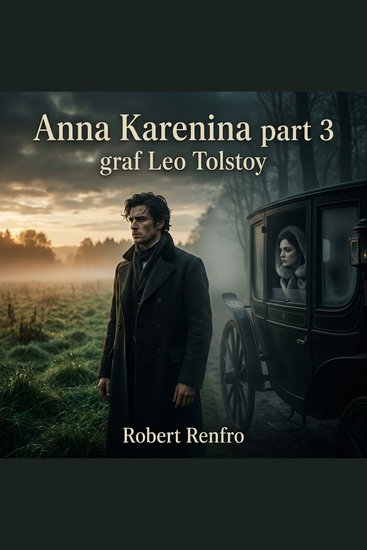
  • Anna Karenina part 3 - Step into Classic Literature as betrayal rural labor and forbidden romance collide in the spellbinding continuation of Tolstoy's epic tragedy of Russian high society - cover

    Anna Karenina part 3 - Step into...

    graf Leo Tolstoy

    • 0
    • 0
    • 0
    Betrayal wears a mask of duty, and forbidden passion demands the ultimate sacrifice in Tolstoy's epic masterpiece. 
    In the sweeping continuation of this timeless saga, the fallout of Anna's illicit confession reverberates across Russia. Alexey Alexandrovitch Karenin, desperate to maintain his immaculate societal facade, coldly calculates his revenge without shedding a single drop of blood. Instead of a duel or a scandalous divorce, he sentences his wife to a torturous prison of outward propriety. Meanwhile, deep in the country, a heartbroken Konstantin Levin seeks refuge in the exhausting, rhythmic labor of the peasant fields. But just as he vows to renounce the superficialities of the aristocracy forever, a fleeting, dawn-lit glimpse of his lost love, Kitty, shatters his newfound resolve and pulls him back into the agonizing labyrinth of human desire. 
    Why you will love this audiobook:This cornerstone of Classic Literature masterfully intertwines grand societal critique with intimate psychological depth. Fans of sweeping historical fiction, tragic romances, and vintage philosophical tales will be utterly captivated by this iconic story of morality, societal expectations, and unbridled love. Tolstoy's lush prose and profound exploration of the human condition make this an essential, unforgettable listen. 
    About the Author:Graf Leo Tolstoy (1828–1910) is widely considered one of the greatest novelists in the history of world literature. A Russian aristocrat who later embraced a radical philosophy, his unparalleled realism and psychological insight forever changed the literary landscape.
    Show book
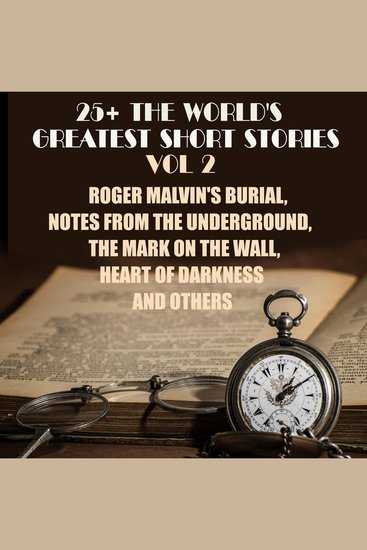
  • 25+ The World's Greatest Short Stories Vol 2 - Roger Malvin's Burial Notes From The Underground The Mark On The Wall Heart Of Darkness and other - cover

    25+ The World's Greatest Short...

    Washington Irving, Edgar Allan...

    • 0
    • 0
    • 0
    Contents:
     • Washington Irving: Rip Van Winkle
    • Edgar Allan Poe: The Murders In The Rue Morgue
    • Fyodor Dostoevsky: Notes From The Underground
    • Franz Kafka: The Metamorphosis
    • Charles Dickens: The Chimes
    • Ivan Turgenev: Mumu
    • Francis Scott Fitzgerald: The Curious Case Of Benjamin Button
    • Joseph Conrad: Heart Of Darkness
    • Ambrose Bierce: Chickamauga
    • Arthur Conan Doyle: A Study In Scarlet
    • H. P. Lovecraft: At the Mountains of Madness
    • Nathaniel Hawthorne: Roger Malvin's Burial
    • Guy de Maupassant: Necklace
    • Leo Tolstoy: God Sees The Truth, But Waits
    • Anton Chekhov: The Lottery Ticket
    • Virginia Woolf: The Mark On The Wall
    • Katherine Mansfield: The Garden Party
    • H.G. Wells: The Star
    • Stendhal: Vanina Vanini
    • Honoré De Balzac: The Unknown Masterpiece
    • Mark Twain: The Celebrated Jumping Frog of Calaveras County
    • Aldous Huxley: Crome Yellow
    • Ernest Hemingway: Up In Michigan
    • Nikolay Gogol: A May Night
    • O. Henry: The Ransom Of Red Chief
    • Jack London: To Build a Fire
    Show book
  • My Confession - cover

    My Confession

    Leo Tolstoy

    • 0
    • 0
    • 0
    My Confession is a brief autobiographical story of Leo Tolstoy's struggle with a mid-life existential crisis of melancholia. It describes his search for answers to the profound questions "What will come of my life?" and "What is the meaning of life?", without answers to which life, for him, had become "impossible." Tolstoy reflects on the arc of his philosophical life until then: his childhood abandonment of his Russian orthodox faith; his mastery of strength, will, power, and reason; and how, after he had achieved tremendous financial success and social status, life to him seemed meaningless. After despairing of his attempts to find answers in science, philosophy, eastern wisdom, and his fellow men of letters, he describes his turn to the wisdom of the common people and his attempts to reconcile their instinctive faith with the dictates of his reason. The main body of the text ends with the author reaching a compromise: faith, he realizes, is a necessity, but it must be constrained by reason. However, an epilogue that describes a dream he had some time after completing the body of the text suggests that he has undergone a radical personal and spiritual transformation. (Summary from Wikipedia)
    Show book
  • The Strange Case Of Dr Jekyll And Mr Hyde - cover

    The Strange Case Of Dr Jekyll...

    Robert Louis Stevenson

    • 0
    • 0
    • 0
    The story of respectable Dr Jekyll's strange association with 'damnable young man' Edward Hyde; the hunt through fog-bound London for a killer; and the final revelation of Hyde's true identity is a chilling exploration of humanity's basest capacity for evil.
    Show book
  • The Sign of the Four - cover

    The Sign of the Four

    Sir Arthur Conan Doyle

    • 0
    • 0
    • 0
    London, 1888.  
    A Ms. Mary Morstan arrives at 221B Baker Street with a case for Sherlock Holmes and his companion, Dr. John Watson. Some ten years prior, her father, Captain Arthur Morstan, returned to London while on leave from his post in India—only to go missing. Adding another layer to the mystery are six pearls in her possession, having received one per year since 1882. The sixth and most recently received pearl was accompanied by a letter asking for a meeting, claiming Ms. Morstan is a wronged woman.  
    Holmes and Watson's deductive skills are put to the test in a thrilling adventure involving a map of a fortress bearing four names, poison darts, and high-speed boat chases.   
    The second of the four Sherlock Holmes novels, Sir Arthur Conan Doyle's The Sign of the Four follows Holmes and Watson's debut in A Study In Scarlet. Originally commissioned by Lippincott's Monthly, the novel was published in the magazine in 1890. In the summer of 2024, Doyle's original handwritten manuscript sold for over $900,000 at auction.
    Show book
  • A Man with Two Lives - From their pens to your ears genius in every story - cover

    A Man with Two Lives - From...

    Ambrose Bierce

    • 0
    • 0
    • 0
    Ambrose Gwinnett Bierce was born on 24th June 1842 at Horse Cave Creek in Meigs County, Ohio. His parents were poor but they introduced him to literature at an early age, instilling in him a deep appreciation of books, the written word and the elegance of language.  
    Growing up in Koscuisko County, Indiana poverty and religion were defining features of his childhood, and he would later describe his parents as “unwashed savages” and fanatically religious, showing him little affection but always quick to punish. He came to resent religion, and his introduction to literature appears to be their only positive effect. 
    At age 15 Bierce left home to become a printer’s devil, mixing ink and fetching type at The Northern Indian, a small Ohio paper. Falsely accused of theft he returned to his farm and spent time sending out work in the hopes of being published. 
    His Uncle Lucius advised he be sent to the Kentucky Military Institute. A year later he was commissioned as an Officer.  As the Civil War started Bierce enlisted in the 9th Indiana Infantry Regiment.  
    In April 1862 Bierce fought at the Battle of Shiloh, an experience which, though terrifying, became the source of several short stories. Two years later he sustained a serious head wound and was off duty for several months. He was discharged in early 1865.  
    A later expedition to inspect military outposts across the Great Plains took him all the way to San Francisco. He remained there to become involved with publishing and editing and to marry, Mary Ellen on Christmas Day 1871.  They had a child, Day, the following year.  
    In 1872 the family moved to England for 3 years where he wrote for Fun magazine. His son, Leigh, was born, and first book, ‘The Fiend’s Delight’, was published.  
    They returned to San Francisco and to work for a number of papers where he gained admiration for his crime reporting. In 1887 he began a column at the William Randolph Hearst’s San Francisco Examiner.  
    Bierce’s marriage fell apart when he discovered compromising letters to his wife from a secret admirer. The following year, 1889 his son Day committed suicide, depressed by romantic rejection. 
    In 1891 Bierce wrote and published the collection of 26 short stories which included ‘An Occurrence at Owl Creek Bridge’.  Success and further works including poetry followed.  
    Bierce with Hearst’s resources helped uncover a financial plot by a railroad to turn 130 million dollars of loans into a handout. Confronted by the railroad and asked to name his price Bierce answered “my price is $130 million dollars. If, when you are ready to pay, I happen to be out of town, you may hand it over to my friend, the Treasurer of the United States”.  
    He now began his first foray as a fabulist, publishing ‘Fantastic Fables’ in 1899.  But tragedy again struck two years later when his second son Leigh died of pneumonia relating to his alcoholism.  
    He continued to write short stories and poetry and also published ‘The Devil’s Dictionary’.  
    At the age of 71, in 1913 Bierce departed from Washington, D.C., for a tour of the battlefields where he had fought during the civil war. At the city of Chihuahua he wrote his last known communication, a letter to a friend. It’s closing words were “as to me, I leave here tomorrow for an unknown destination,” Ambrose Bierce then vanished without trace.
    Show book