Join us on a literary world trip!
Add this book to bookshelf
Grey
Write a new comment Default profile 50px
Grey
Subscribe to read the full book or read the first pages for free!
All characters reduced
Eugenie Grandet - Enriched edition - cover

Eugenie Grandet - Enriched edition

Honoré de Balzac

Translator Katharine Prescott Wormeley

Publisher: DigiCat

  • 0
  • 0
  • 0

Summary

In "Eugénie Grandet," Honoré de Balzac crafts a poignant narrative that epitomizes his realist style, deeply rooted in the social dynamics of early 19th-century France. The novel centers around the titular character, Eugénie, a beautiful and kind-hearted young woman, whose life is shaped by the ruthless financial pursuits of her father, a miserly and domineering figure. Balzac's keen observations of bourgeois greed, familial obligation, and the struggle for love and autonomy create a rich tapestry of character interactions and societal critiques. The novel illustrates the complex interplay between wealth and personal happiness, embodying themes commonly explored within Balzac's larger work, "La Comédie Humaine. As a central figure of the French literary world, Honoré de Balzac was noted for his detailed portrayal of various strata of society, which largely stemmed from his own experiences in a rapidly industrializing France. His acute awareness of the societal pressures of his time, along with his struggles with financial instability, influenced his vivid depictions of characters like Eugénie Grandet, whose yearning for love clashes with the cold realities of her father's avarice and the societal expectations placed upon her. "Eugénie Grandet" is a must-read for anyone interested in the intricacies of human relationships and social critique. Balzac's masterful storytelling invites readers to engage with profound moral questions while offering a detailed glimpse into the emotional and societal landscapes of his era. This novel remains relevant, resonating with contemporary issues of wealth, love, and autonomy.

In this enriched edition, we have carefully created added value for your reading experience:
- A succinct Introduction situates the work's timeless appeal and themes.
- The Synopsis outlines the central plot, highlighting key developments without spoiling critical twists.
- A detailed Historical Context immerses you in the era's events and influences that shaped the writing.
- An Author Biography reveals milestones in the author's life, illuminating the personal insights behind the text.
- A thorough Analysis dissects symbols, motifs, and character arcs to unearth underlying meanings.
- Reflection questions prompt you to engage personally with the work's messages, connecting them to modern life.
- Hand‐picked Memorable Quotes shine a spotlight on moments of literary brilliance.
- Interactive footnotes clarify unusual references, historical allusions, and archaic phrases for an effortless, more informed read.
Available since: 05/17/2022.
Print length: 159 pages.
Other books that might interest you

  • Les Misérables: Volume 5: Jean Valjean - Book 7: The Last Draught from the Cup (Unabridged) - cover

    Les Misérables: Volume 5: Jean...

    Victor Hugo

    • 0
    • 0
    • 0
    Victor-Marie Hugo (26 February 1802 - 22 May 1885) was a French poet, novelist, essayist, playwright, and dramatist of the Romantic movement. During a literary career that spanned more than sixty years, he wrote abundantly in an exceptional variety of genres: lyrics, satires, epics, philosophical poems, epigrams, novels, history, critical essays, political speeches, funeral orations, diaries, and letters public and private, as well as dramas in verse and prose.
    BOOK 7: THE LAST DRAUGHT FROM THE CUP: The days that follow weddings are solitary. People respect the meditations of the happy pair. And also, their tardy slumbers, to some degree. The tumult of visits and congratulations only begins later on. On the morning of the 17th of February, it was a little past midday when Basque, with napkin and feather-duster under his arm, busy in setting his antechamber to rights, heard a light tap at the door.
    Show book
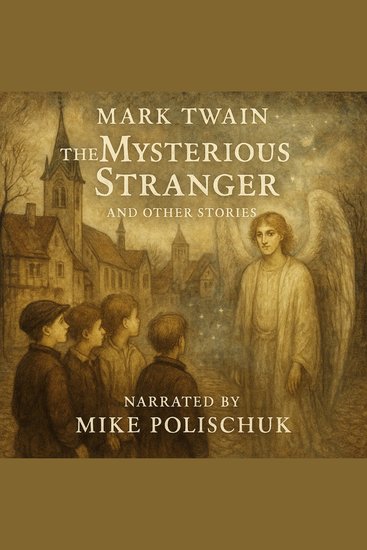
  • The Mysterious Stranger and Other Stories - cover

    The Mysterious Stranger and...

    Mark Twain

    • 0
    • 0
    • 0
    Step into a world where innocence meets the infinite, and the everyday collides with the supernatural. The Mysterious Stranger and Other Stories represents Mark Twain at his most philosophical, daring, and haunting. Far removed from his lighthearted tales of riverboats and boyhood adventures, Twain here explores the mysteries of existence, morality, and the fragile nature of human belief. 
    Set in a secluded medieval Austrian village, the title story follows young Theodor Fischer and his friends as they encounter a mysterious visitor—an ethereal being calling himself “Satan.” What begins as childlike fascination soon spirals into a confrontation with unsettling truths about humanity, faith, suffering, and the illusions that bind us. 
    Alongside this profound tale, Twain’s accompanying stories further probe the absurdity, beauty, and cruelty of the world, blending satire, spirituality, and dark humor in only the way Twain can. 
    Narrated with thoughtful depth by Mike Polischuk, this audiobook invites listeners into a quiet, eerie, and unforgettable meditation on what it means to be human—seen through Twain’s final and most provocative lens. 
    Prepare for a journey that is mesmerizing, unsettling, and impossible to shake.
    Show book
  • Gulliver's Travels - cover

    Gulliver's Travels

    Jonathan Swift

    • 0
    • 0
    • 0
    Gulliver's Travels," originally titled "Travels into Several Remote Nations of the World, in Four Parts. By Lemuel Gulliver," is a satirical novel by Jonathan Swift, first published in 1726. The story follows Lemuel Gulliver as he embarks on voyages to fantastical lands, including Lilliput, where people are only six inches tall, and Brobdingnag, a land of giants. While the book is often considered a children's story due to its fantastical elements, it is also a biting satire of human nature, government, and the "traveller's tales" literary subgenre.
    Show book
  • A Thing That Glistened - From their pens to your ears genius in every story - cover

    A Thing That Glistened - From...

    Frank R. Stockton

    • 0
    • 0
    • 0
    Frank Richard Stockton was born in Philadelphia on 5th April 1834.  
    His father, a Methodist minister, discouraged Stockton’s literary career from an early age.  Feeling unable to go against those wishes it was for many years that Stockton’s income was maintained as a wood engraver.   
    His first work was published in 1867 and his first collection only appeared in 1870.  Despite this late arrival Stockton’s innovative and often far-fetched stories, with a gentle ‘poking fun’ humour were very popular.  Like his contemporary Mark Twain he avoided the scolding, hectoring and moral tones of many other authors and instead gently teased and cajoled his reader to open their eyes to the ills, the greed and the ambitions of the world around them.  His sci-fi stories in particular were far-seeing and inventive including a tale of negative gravity and a bloodless Anglo-US war won by technological feats.  
    Perhaps his most enduring tale though is ‘The Lady, or the Tiger?’ from 1882.  A condemned man is given a choice of being eaten alive or marrying his princess lover.  But he has to choose which door each is behind. 
    Frank R Stockton died in Washington, DC, on 20th April 1902, of a cerebral haemorrhage.  He is buried at The Woodlands in Philadelphia.
    Show book
  • A Man Could Stand Up — - cover

    A Man Could Stand Up —

    Madox Ford

    • 0
    • 0
    • 0
    There are not many English novels which deserve to be called great: Parade's End is one of them. — W. H. Auden  
    A Man Could Stand Up — is the third of four installments in Ford Madox Ford's Parade's End tetralogy, which follows Christopher Tietjens, a wealthy British landowner and the last British Tory; his unfaithful wife, Sylvia; and his mistress, Valentine Wannop.   
    Opening on Armistice Day (November 11, 1918), A Man Could Stand Up — serves as the climax of the series. Highlighting the tension between traditional values and a rapidly changing social order, the novel details Christopher and Valentine's trials as the post-war world takes shape around them.  
    Unique among other war fiction of the time, the Parade's End tetralogy privileges not the conflict of World War I itself, but the impact the war had on its participants and upon society writ large. With it's publication, Ford hoped to contribute to the obviating of all future wars. Parade's End is often referred to as one of the greatest 20th century novels, and one of the best depictions of war in literature. The 2012 television adaptation, written by Tom Stoppard and starring Benedict Cumberbatch and Rebecca Hall, was nominated for two Primetime Emmy Awards and seven BAFTA Television Awards.
    Show book
  • Bliss - cover

    Bliss

    Katherine Mansfield

    • 0
    • 0
    • 0
    "Bliss" is a modernist short story by Katherine Mansfield first published in 1918. It was published in the English Review in August 1918 and later reprinted in Bliss and Other Stories.
    The story follows a dinner party given by Bertha Young and her husband Harry.
    Show book