Join us on a literary world trip!
Add this book to bookshelf
Grey
Write a new comment Default profile 50px
Grey
Subscribe to read the full book or read the first pages for free!
All characters reduced
Some Stories of Old Ironsides - Tales of Valor and Victory Aboard Old Ironsides - cover

Some Stories of Old Ironsides - Tales of Valor and Victory Aboard Old Ironsides

Holloway Halstead Frost

Publisher: Good Press

  • 0
  • 0
  • 0

Summary

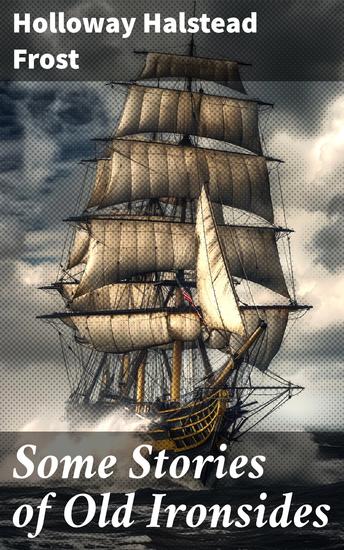
In "Some Stories of Old Ironsides," Holloway Halstead Frost crafts a compelling narrative that intertwines historical events with rich storytelling, focusing on the USS Constitution, affectionately known as "Old Ironsides." Through a blend of vivid descriptions and meticulous research, Frost captures the spirit of naval warfare in the early 19th century, showcasing both the heroism and humanity of those who served on this legendary ship. Frost's literary style is marked by a balance of formal historical inquiry and engaging prose that invites readers into a world rife with adventure, valor, and the complex realities of naval life during a transformative era in American history. Holloway Halstead Frost was a passionate historian and accomplished writer, whose fascination with maritime history and the legacy of the USS Constitution inspired him to pen this collection of stories. His scholarly background and dedication to preserving the narrative of American naval heritage deeply influenced his approach, enabling him to interweave factual accounts with fictional elements, thereby enhancing both educational value and entertainment. "Some Stories of Old Ironsides" is a must-read for historians, maritime enthusiasts, and anyone captivated by America's naval legacy. Frost'Äôs work not only honors the proud legacy of the USS Constitution but also provides readers with a rich, engaging experience that marries history with narrative artistry.
Available since: 11/01/2023.
Print length: 25 pages.
Other books that might interest you

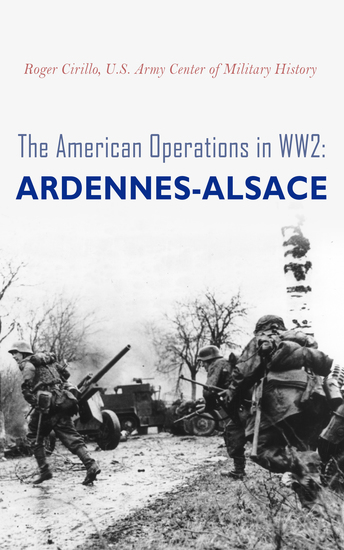
  • The American Operations in WW2: Ardennes-Alsace - 16 December 1944–25 January 1945 - cover

    The American Operations in WW2:...

    History U.S. Army Center of...

    • 0
    • 0
    • 0
    World War II was the largest and most violent armed conflict in the history of mankind. Highly relevant today, World War II has much to teach us, not only about the profession of arms, but also about military preparedness, global strategy, and combined operations in the coalition war against fascism. This book follows military operations of the US Army in France from 16 December 1944 to 25 January 1945. 
    In his political testament Mein Kampf ("My Struggle") Adolf Hitler wrote, "Strength lies not in defense but in attack." Throughout World War II, attempts to gain or regain the initiative had characterized Hitler's influence on military operations. Thus, when the military situation in late 1944 looked darkest on the Western Front, an enemy offensive to redress the balance on the battlefield—and thereby cripple or delay the Allied advance—should have come as no surprise.
    Hitler's great gamble began during the nights of 13, 14, and 15 December, when the initial assault force of German armor, artillery, and infantry gradually staged forward to attack positions along the Belgian-German-Luxembourg border. This mustered force, with more than 200,000 men in thirteen infantry and seven panzer divisions and with nearly 1,000 tanks and almost 2,000 guns, deployed along a front of 60 miles—its operational armor holdings equaling that on the entire Eastern Front. Five more divisions moved forward in a second wave, while still others, equipped with at least 450 more tanks, followed in reserve.
    On the Allied side the threatened American sector appeared quiet. The 15 December daily situation report for the VIII Corps, which lay in the path of two of Hitler's armies, noted: "There is nothing to report." This illusion would soon be shattered.
    Show book
  • The Etiquette Book for Gentlemen - cover

    The Etiquette Book for Gentlemen

    Cecil Hartley

    • 0
    • 0
    • 0
    Step into a world of refined manners with "The Etiquette Book for Gentlemen" by Cecil Hartley. This guide offers timeless wisdom on social conduct, teaching the art of impeccable behavior in various settings—from dining etiquette to social gatherings. Through its insightful advice, it helps gentlemen navigate the nuances of decorum, respect, and elegance. Ideal for those aspiring to embody true gentlemanly virtues, this classic manual remains an essential reference for polished and courteous living.
    Show book
  • The Boy Who Wouldn't Eat Breakfast - cover

    The Boy Who Wouldn't Eat Breakfast

    Eugene Bradley Coco

    • 0
    • 0
    • 0
    Saturday morning at the farm is a busy, noisy place! Once Robby the Rooster wakes up and loudly exclaims “Cock-A-Doodle-Doo,” Zach is up and ready to play. When Zach runs into the kitchen to eat breakfast, he decides he doesn't have time for this important meal. So off Zach runs to see Horace the Horse. But Horace can't play with Zach because he is busy eating his breakfast of hay. Find out what happens when Zach finds Clara the Cow and Cori the Chicken. Fun barnyard sound effects and whimsical music will have animal lovers listening over and over again to this delightful story about “The Boy Who Wouldn't Eat Breakfast.”
    Show book
  • Essays: First Series Art - cover

    Essays: First Series Art

    Ralph Waldo Emerson

    • 0
    • 0
    • 0
    What is art? A mere imitation of life or something far greater—an act of creation that reveals the soul of the universe? Ralph Waldo Emerson, the philosopher-poet of American transcendentalism, elevates art beyond the canvas, beyond words, beyond form itself. In this essay, he explores the divine spark within creativity, arguing that true art is not bound by technique or tradition but flows from the spirit of the artist, a force both mysterious and essential.
    Emerson's vision is not for the passive observer but for those who seek to understand art as a living energy, a reflection of the highest truths. He sees the poet, the painter, the sculptor not as mere craftsmen but as visionaries, shaping the world with the raw power of imagination. Art, in its purest form, is not just a product—it is a revelation.
    For artists, dreamers, and seekers of meaning, Art is an invitation to look beyond the surface, to see beauty not as decoration but as a force that shapes existence itself. Read Emerson and rediscover art as you have never seen it before—alive, infinite, and transcendent.
    Show book
  • From The Britons to the Battle Of Hastings - prehistory to 1066 - cover

    From The Britons to the Battle...

    Gilbert Abbott A'Beckett

    • 0
    • 0
    • 0
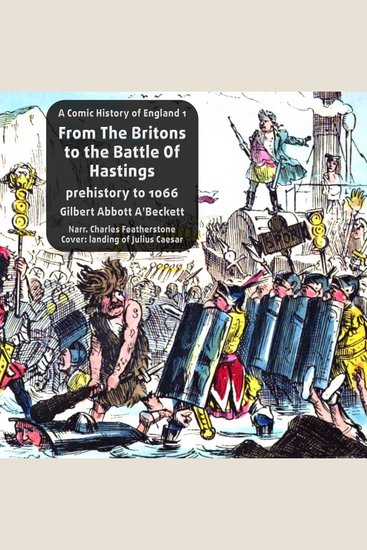
    A captivating, uproarious and informative journey through the beginnings of British history.  
    Gilbert Abbott à Beckett was one of the great journalists of his time, being a descendant of Thomas Becket who edited Figaro, was a founder member of Punch, and wrote for The Times, The Morning Herald, and The Illustrated London News.  
    He also wrote around fifty plays, as well as two operas, and is best known for this history of England. 
    This volume covers: 
    The Britons—The Romans—Invasion By Julius Cæsar 
    Invasion By The Romans Under Claudius—Caractacus—Boadicea—Agricola—-Galgacus—Severus—Vortigern Calls In The Saxons. 
    The Saxons—The Heptarchy. 
    The Union Of The Heptarchy Under Egbert. 
    The Danes—Alfred. 
    From King Edward The Elder To The Norman Conquest. 
    Edmund Ironsides—Canute—Harold Harefoot—Hardicanute—Edward The Confessor—Harold—The Battle Of Hastings.
    Show book
  • Letters from a Father to His Daughter - cover

    Letters from a Father to His...

    jawaharlal Nehru

    • 0
    • 0
    • 0
    Letters from a Father to His Daughter is a collection of letters written by the former Prime Minister of Inidia, Jawaharlal Nehru, to his daughter, Indira Gandhi, during the period when he was imprisoned. Heartfelt and moving, Nehru imparts knowledge on various subjects to young Indira, who was around 10 years old at the time.
    The letters cover everything from history and science to philosophy and the natural world. Nehru introduces Indira to the great figures of history, including ancient civilizations and leaders from various cultures, and explains the concepts of freedom, justice, and democracy. He also shares his love for nature, describing the beauty of the world around him, and encourages Indira to think critically, ask questions, and embrace learning.
    Show book