Join us on a literary world trip!
Add this book to bookshelf
Grey
Write a new comment Default profile 50px
Grey
Subscribe to read the full book or read the first pages for free!
All characters reduced
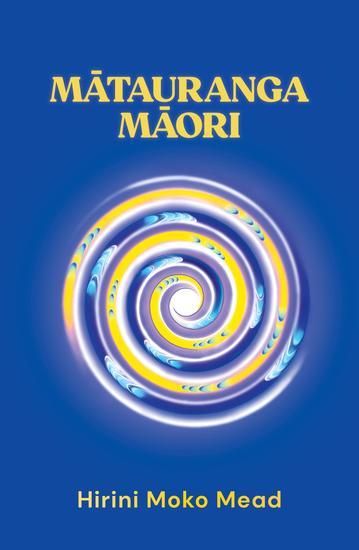
Mātauranga Māori - cover

Mātauranga Māori

Hirini Moko Mead

Publisher: Huia Publishers

  • 0
  • 0
  • 0

Summary

In Mātauranga Māori, Hirini Moko Mead explores the Māori knowledge system and explains what mātauranga Māori is. He looks at how the knowledge system operates, the branches of knowledge, and the way knowledge is recorded and given expression in te reo Māori and through daily activities and formal ceremonies. Mātuaranga Māori is a companion publication to Hirini Moko Mead's best-selling book
Tikanga Māori.
Mātauranga Māori is integrated into every activity people engage in. It touches the lives of people in whatever they do, in the way they act, in the way they think, in the way they learn and in the way their knowledge is shared with others. (Mātauranga Māori)
Available since: 06/29/2025.
Print length: 400 pages.

Other books that might interest you

  • Imperial China - Foundations of a Great Civilization (3 in 1) - cover

    Imperial China - Foundations of...

    Jun Liu

    • 0
    • 0
    • 0
    This book offers an in-depth exploration of three of the most influential dynasties in Chinese history: the Han, Qin, and Tang Dynasties. This book delves into the powerful legacies of these dynasties, each of which shaped China’s cultural, political, and social development in profound ways. The Qin Dynasty, under the leadership of Emperor Qin Shi Huang, is known for unifying China and initiating monumental infrastructure projects such as the Great Wall and the Terracotta Army. The Han Dynasty, a golden age in Chinese history, expanded China’s borders, solidified Confucian ideals, and fostered the flourishing of trade along the Silk Road. Finally, the Tang Dynasty, often regarded as the most prosperous period in China’s imperial history, saw significant advancements in arts, culture, and governance. 
    In the Qin Dynasty, China was unified for the first time under a single ruler, marking the beginning of imperial rule. Emperor Qin’s centralization of power, creation of a standardized legal system, and the construction of defensive walls set the stage for the future of Chinese civilization. Although short-lived, the Qin Dynasty’s impact on Chinese governance and infrastructure would echo through the centuries.  
    Meanwhile, the Han Dynasty succeeded the Qin, ushering in an era of stability, economic prosperity, and cultural development. The Han established a strong bureaucracy and military, advanced in science and technology, and integrated Confucianism as the official philosophy, influencing Chinese society for over two millennia. 
    The Tang Dynasty, which followed the collapse of the Sui Dynasty, is celebrated for its cultural achievements, including the flourishing of poetry, painting, and literature. The Tang Empire expanded China's territory to its greatest extent, and its cosmopolitan capital, Chang'an, became a vibrant hub for international trade and cultural exchange.
    Show book

  • Stokely Carmichael: The Life and Legacy of the Civil Rights Activist Who Led the Black Power Movement - cover

    Stokely Carmichael: The Life and...

    Editors Charles River

    • 0
    • 0
    • 0
    “Our grandfathers had to run, run, run. My generation's out of breath. We ain't running no more.” – Stokely Carmichael 
    In the late 1960s, Stokely Carmichael would become one of the most influential and controversial figures in America, founding and leading new organizations while being meticulously shadowed by the country’s national security apparatus, particularly J. Edgar Hoover’s FBI. The attention would ultimately compel him to move to Africa, where he changed his name to Kwame Ture and became one of the world’s most famous Pan-African leaders until his death in Guinea in 1998.  
    Since then, he has remained a subject of both praise and criticism, from contemporaries and historians alike. SNCC Chairman Phil Hutchings, despite being the one who pushed Carmichael out of the organization, aptly summed up the dichotomy: "Even though we kidded and called him 'Starmichael', he could sublimate his ego to get done what was needed to be done....He would say what he thought, and you could disagree with it but you wouldn't cease being a human being and someone with whom he wanted to be in relationship." 
    Show book
  • The World War II History Journals:1945 - cover

    The World War II History...

    Liam Dale

    • 0
    • 0
    • 0
    Do you want to learn more about World War II, but don’t have time to read/listen to huge, long books? Then let The History Journals take you on an hourly history tour of each year of the war with The World War II History Journals series which includes one book per year from 1939 to 1945. 
     
    Throughout this series of journals released to acknowledge 80 years since the beginning of WW2, we will be looking at the seven years of that conflict on an annual basis. The conflict, the buildup to war, the major battles, the strategies and technological developments, the effect on civilians, and most importantly of all we’ll consider the role of the soldiers, sailors, and airmen who gave their lives fighting for the freedom of others. 
     
    Although the Allied nations faced the New Year of 1945 with a huge sense of hope, there was still a great deal of work to be done if world peace was to become a reality. Adolf Hitler and his Axis powers were finally facing defeat after seven years at war, but just like any wounded animal in the wild, they continued to pose a very real and dangerous threat. Follow us onward into the history of WW2 in 1945 – and the end of the war. 
     
    You will learn about: 
     
    A retreating Japan responds with Kamikaze pilots, Russian push to Warsaw 
    Hitler’s suicide 
    German army withdraws after Battle of the Bulge, American forces target Iwo Jima 
    The last rush for Berlin, VE Day, Truman authorizes nuclear bomb testing 
    Hiroshima, Nagasaki, America drops the atomic bomb, Japan surrenders, VJ Day 
     
    Be sure to read/listen to all the books in the series - one for each year through the end of the war in 1945!
    Show book
  • Tweaking Your Life - Creating The Life You Really Want - cover

    Tweaking Your Life - Creating...

    Cindy Boyce

    • 0
    • 0
    • 0
    Tweaking your life is your practical solution to intentional change without the overwhelm. You'll discover how small, daily , strategic tweaks can create massive shifts right now and accumulatively for the future bringing happiness and fulfillment. This audiobook will help you design a life that you will enjoy everyday. You can create the kind of life you truly want starting today.
    Show book
  • A Rare Recording of US Senator Frank Church Chairman of the Church Committee - cover

    A Rare Recording of US Senator...

    Senator Frank Church

    • 0
    • 0
    • 0
    Frank Forrester Church III (July 25, 1924 to April 7, 1984) was an American Democrat politician and lawyer. Church served as a U.S. Senator from Idaho from 1957 to 1981, and gained national prominence as chairman of the U.S. Senate Select Committee to Study Governmental Operations with Respect to Intelligence Activities, from 1975 through 1976, commonly known as the Church Committee, which conducted extensive hearings investigating extra-legal FBI and CIA intelligence-gathering and covert operations. The following recording is from a speech Church gave to the Women's Democratic League in 1975.
    Show book
  • Bold Ventures - Thirteen Tales of Architectural Tragedy - cover

    Bold Ventures - Thirteen Tales...

    Charlotte Van den Broeck

    • 0
    • 0
    • 0
    A prize-winning Belgian poet explores the nature of creative endeavor—the godlike ambition, the crushing defeat of failure—through the stories of thirteen tragic architects. 


    In thirteen fascinating chapters, Charlotte Van den Broeck goes in search of buildings that were fatal to their architects—architects who either killed themselves or are rumored to have done so. They range across time and space from a church with a twisted spire in seventeenth-century France to a theater that collapsed mid-performance in 1920s Washington, DC, and an eerily sinking swimming pool in the author's hometown. Drawing on a vast range of material, from Hegel and Darwin to art history, stories from her own life, and popular culture, Van den Broeck brings patterns into focus as she asks, What is that strange, life-or-death connection between a creation and its creator? 


    Threaded through each story is the author's meditation on the question of suicide—what Albert Camus called the "one truly serious philosophical problem"—in relation to creativity and public disgrace. The result is a profoundly idiosyncratic book, breaking ground in literary nonfiction, as well as providing solace and consolation to anyone who has ever attempted a creative act.
    Show book