Join us on a literary world trip!
Add this book to bookshelf
Grey
Write a new comment Default profile 50px
Grey
Subscribe to read the full book or read the first pages for free!
All characters reduced
Mr Belloc still objects to Mr Wells's "Outline of history" - cover

Mr Belloc still objects to Mr Wells's "Outline of history"

Hilaire Belloc

Publisher: Good Press

  • 0
  • 0
  • 0

Summary

In "Mr. Belloc Still Objects to Mr. Wells's 'Outline of History,'" Hilaire Belloc presents a critical response to H.G. Wells's ambitious narrative of human history. Through a combination of wit and erudition, Belloc employs a conversational yet incisive literary style, interspersing anecdotes and philosophical musings that apture the essence of the historical discourse. He vehemently challenges Wells's interpretations, positioning his arguments within the broader context of early 20th-century historical thought, reflecting the tensions between empiricism and metaphysics, as well as the struggle between traditional and progressive views of history. Hilaire Belloc was a prominent figure in the early 1900s, widely known for his ventures in literature, history, and political thought. His deep Catholic faith and background in philosophy and socio-political issues significantly influenced his worldview, leading him to critique works like Wells's from a traditionalist perspective. This tension speaks to Belloc's enduring quest to reconcile faith and reason, and his writings often reveal an underlying conviction that history must be interpreted through a moral lens. For readers intrigued by historical narratives and the philosophical debates surrounding them, Belloc's work offers a compelling counter-narrative that challenges conventional historical accounts. This book not only calls into question Wells' sweeping interpretations but also encourages readers to reflect critically on the nature of history itself, making it an essential read for those interested in history, literature, and philosophy alike.
Available since: 03/02/2025.
Print length: 210 pages.
Other books that might interest you

  • The Dream of a Ridiculous Man - A Profound Reflection on Life Redemption and the Search for Truth - cover

    The Dream of a Ridiculous Man -...

    Fyodor Dostoevsky, Tim Zengerink

    • 0
    • 0
    • 0
    What if the voice of one “ridiculous” man could reignite your faith in humankind? 
    Plagued by hopelessness, a solitary man prepares for the ultimate escape—until a staggering dream hurls him into a world of pure beauty.  
    When that heaven turns to ruin, he wakes with a mission: persuade every living soul that love can save the earth. 
    What you’ll hear inside: 
     — A Riveting Inner Monologue – Immerse yourself in the raw honesty of a mind on the brink 
     — A Cosmic Dreamscape – Vivid soundscapes recreate the fall of a perfect world 
     — Timeless Insights on Freedom and Responsibility – Dostoevsky’s powerful challenge to modern cynicism 
     — A Clear, Contemporary Performance – Narration that honors the original emotion while speaking directly to today’s listener 
    At just over an hour, this audio experience packs a universe of wisdom into a single breath.  
    Press play and let one dream change the way you see the world.
    Show book
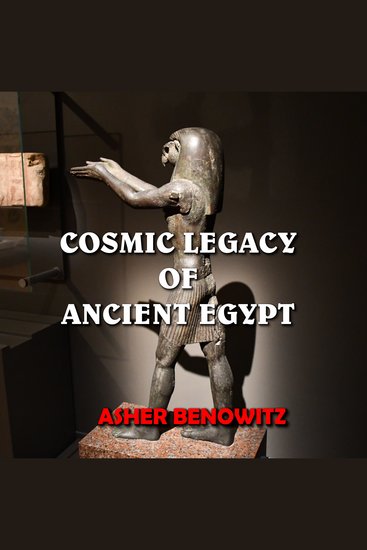
  • Cosmic Legacy of Ancient Egypt - Sacred Knowledge Hidden in Plain Sight - cover

    Cosmic Legacy of Ancient Egypt -...

    Asher Benowitz

    • 0
    • 0
    • 0
    Today, we do not use our ancient cosmic orientation to relate to the natural world as we once did. It's no longer determined by where we are or what time it is by the Sun's daily motion across the sky. Our perception of the outside world has changed, and we have lost our sense of wholeness within a great system. Factors such as our work and play rhythms, clothing, diet, and travel are affected by climatic and seasonal factors. These factors affect our unconscious sense of timing and our ability to communicate with nature, which we often overlook. 
    Often we marvel at the apparent serenity and spiritual confidence of ancient people, forgetting that their tools were taught and used within an environment that encouraged them to recognize and embrace natural and divine forces. These tools enabled one to maintain a profound sense of cosmic orientation, keep it, and view one's role as actual spiritual work. In ancient Egypt, a man named Al was gifted with a sense of cosmic orientation. 
    As dams have been constructed in our era, the Nile no longer produces an annual flood, but understanding the rhythm of that event and others associated with it is essential to understanding Egyptian rituals and ceremonies. To restore cosmic orientation, we need to leave our temporal field of time and enter the visible universe of ancient Egypt, where cosmic rhythms sustained human life, nature, and even the gods.
    Show book
  • The Socratic Dialogues - Alcibiades and Other Attributed Dialogues - cover

    The Socratic Dialogues -...

    Plato

    • 0
    • 0
    • 0
    The influence of Plato, his Dialogues and his ‘Academy’, cast a long shadow. Around 35 Dialogues, almost all featuring Socrates as the principal figure, are generally ascribed to Plato and form one of the most important threads in Western philosophy  These four Dialogues may fall into the ‘Attributed Texts’ category, but they are of sufficient interest to warrant study in our time and when set against the principal canon.  
     
    The recording opens with Alcibiades I. Socrates’ interlocuter is well known as a young, charismatic figure of the time, and appears in the Symposium and Protagoras. The subject under discussion is justice and injustice. Socrates questions the over-confident Alcibiades about his understanding of these issues, which is crucial for someone about to play an active role in public life. It is the longest Dialogue of the four. 
     
    Hippias is another young man. A Sophist, brimming with the confidence of youth to the extent of being vain and boastful. He appears in two Dialogues on this recording, the Lesser Hippias and the Greater Hippias. The Lesser Hippias is a witty and lively conversation in which Hippias is keen to display his abilities only to be shaken by patient questioning by the astute Socrates. The Greater Hippias, a discussion about beauty, contains some interesting elements, while also showing how the form became diluted in the hands of lesser followers of Plato.  
     
    The final Dialogue, Menexenus is a special case. It was an important form in Athenian society and this is a rare surviving example. It has been included here in a new recording so it can be listened to in the context of ‘Attributed Dialogues’, rather than a fully accepted work by Plato. The background to each Dialogue is set by Benjamin Jowett. David Rintoul continues his persuasive characterisation of the masterful Socrates.
    Show book
  • The Vital Spark - How the authentic non-dual teachings and post-renaissance learning illumine and vitalise each other - cover

    The Vital Spark - How the...

    Anthony Halliday

    • 0
    • 0
    • 0
    Contemporary scientifically-informed culture investigates the phenomenal world revealed to our mind, senses and technical instruments. Non-duality looks within to the nature of the experiencing subject. Both spring from the need to know, grow and fulfil the supreme potential of human beings, who find the universe apparently manifesting consciousness as themselves. Non-duality offers a path of enquiry into the metaphysical questions underlying physics, and scientific discoveries shed light on what is universal and essential in the non-dual teachings to be found at the heart of all the great wisdom traditions.
    Show book
  • The Alice Crimmins Case - cover

    The Alice Crimmins Case

    Anais Renevier

    • 0
    • 0
    • 0
    New York, Summer of 1965. 


    One hot summer, two young children disappeared from their first-floor apartment in the Kew Gardens neighborhood of Queens, New York. Their mother, Alice Crimmins, reported them missing to the police. Later that day, the body of four-year-old Missy was found in a vacant lot, showing signs of having been strangled. The body of five-year-old Eddie, Jr., was found several days later. 


    Police were immediately suspicious of the mother. Recently divorced, with teased red hair and heavy makeup, Alice Crimmins did not fit the maternal ideal held by the predominantly Catholic police detectives on the case. Her every action was scrutinized: Was she behaving like a grief-stricken mother or like a coldhearted killer? After three years of police surveillance, Alice was charged with the murder of her children in 1968 in a highly publicized trial. Ultimately found guilty of manslaughter, Alice spent a decade in prison before being released on parole in 1977. 


    But was she truly guilty, or just the victim of police bias and misogynistic judgment? Journalist Anaïs Renevier revisits the case, exploring one of the most famous and divisive trials in recent American history.
    Show book
  • Arctic Convoys - Bletchley Park and the War for the Seas - cover

    Arctic Convoys - Bletchley Park...

    David Kenyon

    • 0
    • 0
    • 0
    An incisive account of the Arctic convoys, and the essential role Bletchley Park and Special Intelligence played in Allied success 


    Between 1941 and 1945, more than eight hundred shiploads of supplies were delivered to the Soviet Union protected by allied naval forces. Each journey was a battle against the elements, with turbulent seas, extreme cold, and the constant dread of torpedoes. These Arctic convoys have been mythologized as defenseless vessels at the mercy of deadly U-boats—but was this really the case? 


    David Kenyon explores the story of the war in the Arctic, revealing that the contest was more evenly balanced that previously thought. Battles included major ship engagements, aircraft carriers, and combat between surface ships. Amid this wide range of forces, Bletchley Park's Naval Section played a decisive role in Arctic operations, with both sides relying heavily on Signals Intelligence to intercept and break each other's codes. Kenyon presents a vivid picture of the Arctic theater of war, unearthing the full-scale campaign for naval supremacy in northern waters.
    Show book