Siddhartha - An Indian Tale
Hermann Hesse
Translator Anke Dreher Gunther Olesch
Publisher: Glomarble
Summary
Siddhartha is a religious novel published in 1922 by Herman Hesse, who was deeply interested in Eastern thought.
Translator Anke Dreher Gunther Olesch
Publisher: Glomarble
Siddhartha is a religious novel published in 1922 by Herman Hesse, who was deeply interested in Eastern thought.
A collection of strange stories that take place in the oft weird and wonderful great outdoors. Contents: "The Pool of the Stone God" by A. Merritt An encounter with a strange statue. "The Wood of the Dead" by Algernon Blackwood An encounter with a ghost, whose appearance is an omen of death. "Skeleton Lake: An Episode in Camp" by Algernon Blackwood Men on a moose hunting trip find a dead man washed ashore. "Genius Loci" by Clark Ashton Smith A painter’s strange account of a meadow. "Uneasy Lie the Drowned" by Donald Wandrei A troubling lake crossing. "The Moon-Bog" by H. P. Lovecraft A man acquires a family estate with unfortunate results. "The Tree on the Hill" by H. P. Lovecraft A tree with strange properties. "The Hunt" by Jennifer Gill A young lady’s first hunt of the season. "The Death of Halpin Frayser" by Ambrose Bierce A man apparently dies at the hands of his deceased mother. "Chickamauga" by Ambrose Bierce A child strays into the forest...Show book
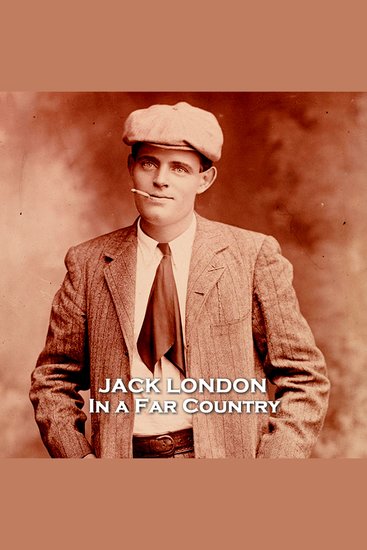
John Griffith Chaney was born on January 12th, 1876 in San Francisco. His father, William Chaney, was living with Flora Wellman when she became pregnant. Chaney insisted she have an abortion. Flora's response was to turn a gun on herself. Although her wounds were not severe the trauma made her temporarily deranged. In late 1876 his mother married John London and the young child was brought to live with them as they moved around the Bay area, eventually settling in Oakland where now, calling himself Jack, he completed grade school. Jack worked hard at several jobs, sometimes 12-18 hours a day, but his dream was university. He studied hard and borrowed the money to enrol in the summer of 1896 at the University of California in Berkeley. In 1897, at 21, Jack searched out newspaper accounts of his mother's suicide attempt and for the name of his biological father. He wrote to Chaney, then living in Chicago, who claimed he could not be Jack’s father because he was impotent and casually asserted that London's mother had relations with other men. Jack, devastated by the response, quit Berkeley and went to the Klondike. Other accounts suggest that his dire finances presented Jack with the excuse he needed to leave. In the Klondike Jack began to gather material for his writing but also accumulated many health problems, including scurvy, which together with hip and leg problems he would carry for the rest of his life. During the late 1890's Jack was regularly publishing short stories and by the turn of the century full blown novels. By 1904 Jack had married, fathered two children and was now in the process of divorcing. A stint as a reporter on the Russo-Japanese war of 1904 was equal amounts trouble and experience. But that experience was always put to good use in a continuing and remarkable output of work. In 1905 he married Charmian Kittredge who at last was a soul and companion who brought him some semblance of peace despite his advancing alcoholism and his incurable wanderlust. Twelve years later Jack had amassed both wealth and a literary reputation through such classics as ‘The Call of the Wild’, ‘White Fang’ and many others. He had a reputation as a social activist and was a tireless friend of the workers. Jack London died suffering from dysentery, late-stage alcoholism and uremia, aged only 40, on November 22nd 1916 at his property in Glen Elen in California.Show book
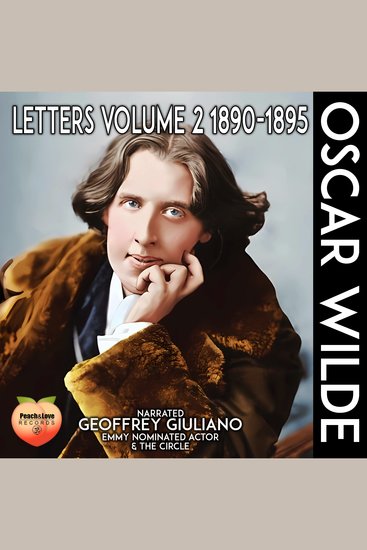
The correspondence of Oscar Wilde volume two. This second collection of the correspondence of Oscar Wilde includes letters written when the Irish playwright was at the height of his success. Wilde defends several of his works from criticism and even censorship and writes "prose poems" to his lover, Lord Alfred Douglas, that will eventually be read out in court. Oscar Fingal O'Flahertie Wills Wilde was an Irish poet and playwright. After writing in different forms throughout the 1880s, he became one of the most popular playwrights in London in the early 1890sShow book
George Orwell has never been more quoted and misquoted. Can he be rescued from the soundbites?George Orwell remains a work in progress. He is, or has become, a meme, a global writer, a national treasure, a London statue, a scholarly society, a Prize and a Journal, a trope and a show, various movies and murals, too many misquotations, two adjectives, at least half a dozen fictions, and most recently "a dead metaphor" with plenty more accolades to come.George Orwell: Life and Legacy is an intellectual biography which offers an authentic account of Orwell's life and work from his birth in the high noon of British imperialism in 1903, to his death on the eve of the Cold War in 1950―a life played out against a background of two world wars, the rise of communism, and the war-time preeminence of the United States. Yet no matter how alert he was to the world order, and no matter how guarded he was in his personal life, Orwell never shied away from the question of who he was, and the contradictions that entailed.His two great modern masterpieces, Animal Farm (1945) and Nineteen Eighty-Four (1949), arrived to define the age he lived in. Interest in him has never abated since; no writer is more quoted or misquoted. Orwell is in danger of being lost to soundbites. Colls reveals the author once again.Show book
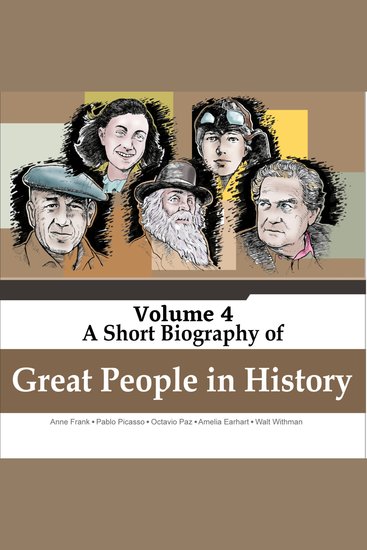
Volume containing the biographies in English of the following characters: Anne Frank, Pablo Picasso, Octavio Paz, Amelia Earhart and Walt WhitmannShow book
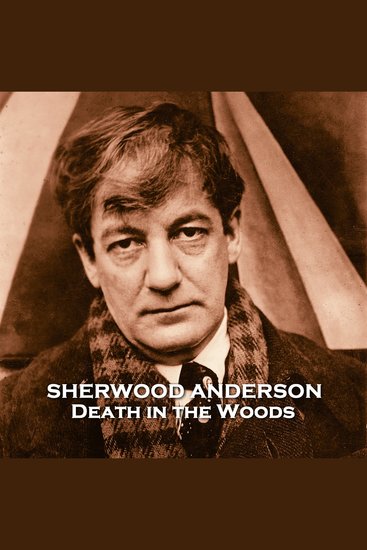
Sherwood Anderson was born on 13th September 1876 in Camden, Ohio. When his father’s business failed the family was forced to move on a regular basis before finally settling in Clyde, Ohio. Anderson, one of 7 children, left school at 14 to take a number of jobs to help with the family finances. These were difficult years. He moved to Chicago in search of opportunities before joining the Army for the US-Spanish War of 1898. He then entered Wittenberg Academy in Springfield, Ohio to complete his education before moving back to Chicago to take up a writing job. In 1904 he married Cornelia Lane, her family had resources and Anderson was keen, with this family backing, to run a business. The early years of their marriage produced 3 children but a nervous breakdown in 1907 and another in 1912, despite his success as a business entrepreneur, resulted in him abandoning his family and deciding that a literary career would be best for him. A move back to Chicago resulted in a job in advertising, a divorce from Cornelia and marriage to Tennessee Mitchell. That same year his first book ‘Windy McPherson’s Son’ was released and in 1919, his most famous book, ‘Winesburg, Ohio’, a collection of short stories about life in an Ohio town was released. Anderson continued to write short stories, novels and non-fiction but his only true bestseller came with ‘Dark Laughter’. His influence on writers that followed, from Faulkner to Hemingway, was immense. He also married a further two times. Sherwood Anderson died in in Colón, Panama, on the 8th March, 1941. He was 64. An autopsy revealed that a swallowed toothpick had resulted in peritonitis. His headstone epitaph reads ‘Life, Not Death is the Great Adventure.’Show book