Join us on a literary world trip!
Add this book to bookshelf
Grey
Write a new comment Default profile 50px
Grey
Subscribe to read the full book or read the first pages for free!
All characters reduced
The Story of Hiawatha Adapted from Longfellow - cover

We are sorry! The publisher (or author) gave us the instruction to take down this book from our catalog. But please don't worry, you still have more than 500,000 other books you can enjoy!

The Story of Hiawatha Adapted from Longfellow

Henry Wadsworth Longfellow, Winston Stokes

Publisher: DigiCat

  • 0
  • 0
  • 0

Summary

In 'The Story of Hiawatha, Adapted from Longfellow', readers are invited into a reimagined realm where Henry Wadsworth Longfellow's renowned epic poem is recast with a focus on the tales of Hiawatha, this time portrayed as a Native American woman whose adventures harmonize with the deep, spiritual fabric of the American continent. The adaptation retains the original poem's trochaic tetrameter, a rhythmic likeness to the Finnish epic Kalevala, which Longfellow admired, thus preserving the distinctive musicality and oral tradition of storytelling. Immersed in a rich tapestry of cultural mythos and nature's grandeur, the text dwells on themes of peace, unity, and respect for the environment, encapsulated in a narrative-driven form that adds a novel dimension to the enduring myth of Hiawatha.
Henry Wadsworth Longfellow, a titan of American literature, drew upon the vast well of indigenous legends to craft his 1855 version of 'The Song of Hiawatha'. Longfellow's fascination with Native American cultures was partly inspired by his friendship with Ojibwe Chief Kahge-ga-gah-bowh and Henry Rowe Schoolcraft, an ethnographer and government agent among the tribes of the Great Lakes. This adaptation is a testament to Longfellow's pervasive influence and his abiding quest to integrate the legends and life-ways of Native Americans into the nation's literary heritage.
For enthusiasts of American poetry and folklore, 'The Story of Hiawatha, Adapted from Longfellow' offers a uniquely feminine perspective on an iconic legend, stepping beyond the bounds of Longfellow's original opus. It is a poignant re-envisioning that connects readers with the spirit of an earlier world, asking them to consider the timeless struggle for harmony with nature and each other. This adaptation shines as a mirror to Longfellow's craftsmanship and as a bridge to cultures that are often rendered invisible, making it an essential read for those who seek to understand the full, rich mosaic of America's storytelling lineage.
Available since: 08/10/2022.
Print length: 145 pages.
Other books that might interest you

  • Lycidas - Much shorter poem from the famed author of Paradise Lost - cover

    Lycidas - Much shorter poem from...

    John Milton

    • 0
    • 0
    • 0
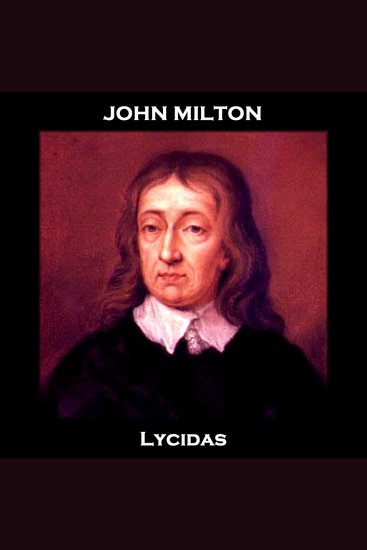
    John Milton was born in Bread Street, London, on December 9th, 1608.  His early years were privately tutored before gaining a place at St Paul’s School and in 1625 he matriculated at Christ's College, Cambridge, earning a BA in 1629 and an MA in 1632. At Cambridge he had developed a reputation for poetic skill but also experienced alienation from his peers and university life as a whole.  
    The next 6 years were spent in private study. He read both ancient and modern works of theology, philosophy, history, politics, literature and science, in preparation for a poetical career.  Milton mastered Latin, Greek, Hebrew, French, Spanish, and Italian. To these he would add Old English (whilst researching his History of Britain) and also acquired more than a passing acquaintance in Dutch.  
    Although he was studying, some of his poetry from this time is remarkable; L’Allegro and Il Penseroso in 1631 and Lycidias in 1638. 
    In May 1638, Milton embarked upon a 15 month tour of France and Italy. These travels added a new and direct experience of artistic and religious traditions, especially Roman Catholicism.  He cut the journey short to return home during the summer of 1639 because of what he claimed were "sad tidings of civil war in England."  
    Once home, Milton wrote prose tracts against episcopacy, in the service of the Puritan and Parliamentary cause.  
    He married 16-year-old Mary Powell in June 1643 but she left him after only a few months during which he wrote and published several writings on divorce. Mary did return after 3 years and their life thereafter seemed harmonious.  Milton received a hostile response to the divorce tracts and drove him to write Areopagitica, his celebrated attack on pre-printing censorship.  
    With the parliamentary victory in the Civil War, Milton wrote The Tenure of Kings and Magistrates (1649) which defended popular government and implicitly sanctioned the regicide which led to his appointment as Secretary for Foreign Tongues by the Council of State.  
    On 24 February 1652 Milton published his Latin defense of the English People, Defensio Pro Populo Anglicano, also known as the First Defense. Milton's Latin prose and intellectual sweep, quickly gained him a European reputation.  
    Tragically his first wife, Mary, died on May 5th, 1652 following the birth of their fourth child.   The following year Milton had become totally blind, probably due to glaucoma.  He then had to dictate his verse and prose to helpers, one of whom was the poet Andrew Marvell.  
    He married again to Katherine Woodcock but she died in February 1658, less than four months after giving birth to a daughter, who also tragically died.  
    Though Cromwell’s death in 1658 caused the English Republic to collapse Milton stubbornly clung to his beliefs and in 1659 he published A Treatise of Civil Power, attacking the concept of a state-dominated church. Upon the Restoration in May 1660, Milton went into hiding for his life. An arrest warrant was issued and his writings burnt. He re-emerged after a general pardon was issued, but was nevertheless arrested and briefly imprisoned before influential friends, such as Marvell, now an MP, intervened 
    His third marriage was to Elizabeth Mynshull. Despite a 31-year age gap, the marriage seemed happy and Milton spent the remaining decade of his life living quietly in London, apart from a short spell in Chalfont St. Giles, during the Great Plague of London.  
    Milton was to now publish his greatest works, which had been gestating for many years.  Paradise Lost, perhaps the classic English Epic poem was originally published in 10 books in 1667.  This was followed by Paradise Regained and Samson Agonistes in 1671.  Because of his anti-monarchy views their reception was muted but over the centuries since Milton has established himself as second only to Shakespeare.  He died of kidney failure on November 8th, 1674 and was buried in the church of St Giles Cripplegate.
    Show book
  • Paper - cover

    Paper

    Chris Bush

    • 0
    • 0
    • 0
    'People don't need scissors. They don't need beautiful, handcrafted, ninety pound scissors, however impressive they might be. But they do need somewhere to live.'
    Faye and Mel have been together forever. Two kids, a mortgage and a diabetic hamster. A regular, unexceptional existence. They work hard, they get by, they do their best. So if it's true - if Faye's father really has left the factory to her - they'd deserve it, wouldn't they? The site could be worth a fortune - not for making scissors, but ripe for redevelopment. It could change everything. But first they need the paperwork.
    Paper is a play about family, heritage and legacy, and is part of Chris Bush's triptych of plays about a Sheffield manufacturing family, Rock / Paper / Scissors. The three plays were first performed simultaneously with the same cast moving between three theatres in Sheffield – the Crucible, the Lyceum and the Studio – as part of Sheffield Theatres' fiftieth birthday celebrations in 2022.
    Show book
  • Hello Scarecrow - cover

    Hello Scarecrow

    Mike Blake

    • 0
    • 0
    • 0
    Hello ~ Scarecrow, is Poem about the Romance of an Elderly lady (60s/70s) with a much younger guy,  
    who realizes her attraction value despite her age - set in Spain. 
    *NO A.I. has been used in the creation of this Poem. Purely the Authors inspiration. 
    * As for all my poems.* 
    Instagram: wild_poetrys / wild.poetry.webs 
    TikTok: @wild_poetrys - charliechaplinsoffice 
    FB: https://www.facebook.com/New.Poets.Corner
    Show book
  • Toxic - cover

    Toxic

    Nathaniel J Hall

    • 0
    • 0
    • 0
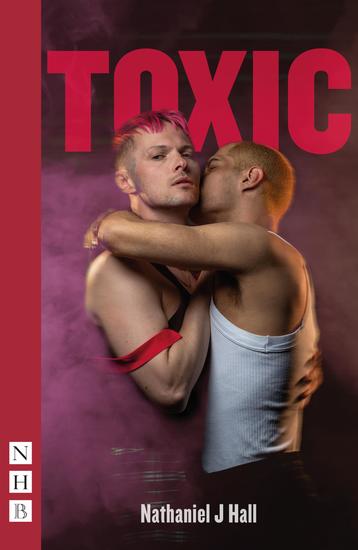
    'This is the story of how we met, fell in love, and fucked it up. But it's not just our story. It's his, and his and theirs. Maybe it's yours…'
    Manchester, 2017. During a hot and sweaty queer warehouse party, two damaged hearts collide. He is HIV+ and drowning in shame. They are one microaggression away from a full-on meltdown. Together, they form a bond so tight, they might just survive it all. But sometimes survival means knowing when to leave.
    Pulling back the glittery curtain of pride to reveal the devastating impact of generational HIV stigma, racism, homophobia and repressive gender norms, Nathaniel J Hall's Toxic is a powerful, passionate play celebrating survival and the resilience of the queer spirit.
    Inspired by true events, it was first performed at HOME, Manchester, in 2023, before touring the UK in 2025, directed by Scott Le Crass, and performed by the playwright alongside Josh-Susan Enright.
    'An intimate portrayal of queer love, aching with authenticity, pain and joy' Russell T Davies
    Show book
  • Judas Goat - Poems - cover

    Judas Goat - Poems

    Gabrielle Bates

    • 0
    • 0
    • 0
    "Stellar . . . with great humanity, grace and precision." —Nicole Sealey, author of Ordinary Beast 


    Gabrielle Bates's electric debut collection Judas Goat plumbs the depths of intimate relationships. The book's eponymous animal is used to lead sheep to slaughter, while its own life is spared, and its harrowing existence echoes through this spellbinding collection of forty poems, which wrestle with betrayal and forced obedience, violence and young womanhood, and the "forbidden felt language" of sexual and sacred love. These poems conjure encounters with figures from scriptures, domesticated animals eyeing the wild, and mothering as a shape-shifting, spectral force; they question what it means to love another person and how to exorcise childhood fears. All the while, the Deep South haunts, and no matter how far away the speaker moves, the South always draws her back home. 


    In confession, in illumination, Bates establishes herself as an unflinching witness to the risks that desire necessitates, as Judas Goat holds listeners close and whispers its unforgettable lines.
    Show book
  • A Rare Recording of EE Cummings Reading His Own Poetry - cover

    A Rare Recording of EE Cummings...

    EE Cummings

    • 0
    • 0
    • 0
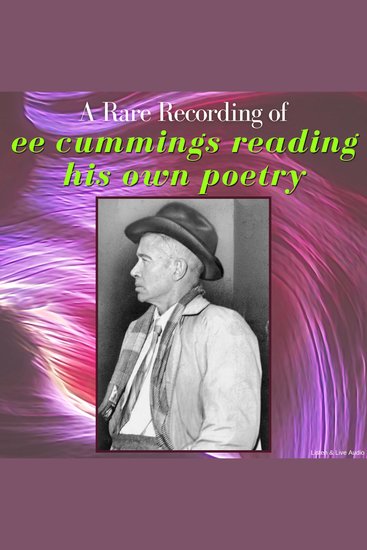
    Edward Estlin Cummings (October 14, 1894 - September 3, 1962), commonly known as e e cummings, was an American poet, painter, essayist, author, and playwright. During World War I, he worked as an ambulance driver and was imprisoned in an internment camp, which provided the basis for his 1922 novel The Enormous Room. The following year he published his first collection of poetry. Cummings wrote approximately 2,900 poems and is often regarded as one of the most important American poets of the 20th century. He is associated with modernist free-form poetry, and much of his work uses idiosyncratic syntax and lower-case spellings for poetic expression. In the following recordings, Cummings reads his poems "somewhere i have never travelled,gladly beyond" (1931), "next to of course god america i" (1926), "anyone lived in a pretty how town" (1940), "Buffalo Bill's (1920), "in Just–" (1920), i carry your heart with me(i carry it in)" (1952). The final audio clip is from a 1955 Cummings speech, "A Poet's Advice to Students."
    Show book