Join us on a literary world trip!
Add this book to bookshelf
Grey
Write a new comment Default profile 50px
Grey
Subscribe to read the full book or read the first pages for free!
All characters reduced
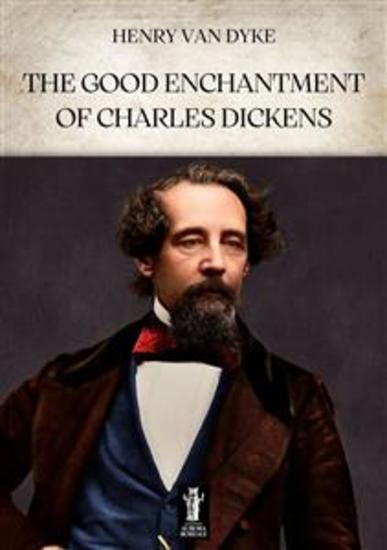
The Good Enchantment of Charles Dickens - cover

The Good Enchantment of Charles Dickens

Henry Van Dyke

Publisher: Edizioni Aurora Boreale

  • 0
  • 0
  • 0

Summary

Henry Jackson Van Dyke (1852-1933) was an American writer, poet, educator, diplomat, and Presbyterian clergyman.Among his popular writings are the two Christmas stories, The Other Wise Man (1896) and The First Christmas Tree (1897). Various religious themes of his work are also expressed in his poetry, hymns and the essays collected in Little Rivers (1895) and Fisherman’s Luck (1899). He wrote the lyrics to the popular hymn Joyful, Joyful We Adore Thee (1907), sung to the tune of Beethoven’s Ode to Joy. He compiled several short stories in The Blue Flower (1902), named after the key symbol of Romanticism introduced first by Novalis. He also contributed a chapter to the collaborative novel, The Whole Family (1908).The short Van Dyke’s essay The Good Enchantment of Charles Dickens was published in 1912 on the Scribner’s Magazine. It is a writing in which Van Dyke manages to capture all the spirituality and enchantment that the great British writer Charles Dickens was able to convey in his works.«Ah, master of the good enchantment, you have given us hours of ease and joy, and we thank you for them. But there is a greater gift than that. You have made us more willing to go cheerfully and comradely along the strange, crowded, winding way of human life, because you have deepened our faith that there is something of the divine on earth, and something of the human in heaven».
Available since: 01/13/2023.

Other books that might interest you

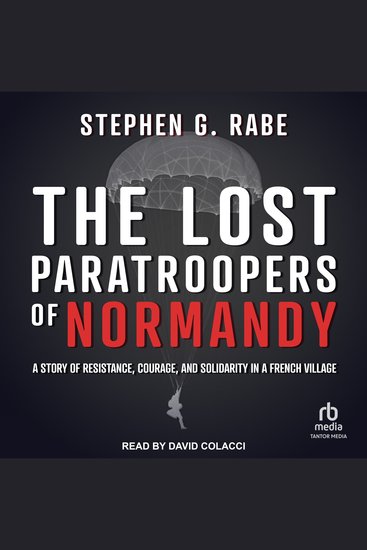
  • The Lost Paratroopers of Normandy - A Story of Resistance Courage and Solidarity in a French Village - cover

    The Lost Paratroopers of...

    Stephen G. Rabe

    • 0
    • 0
    • 0
    The fateful days and weeks surrounding June 6th, 1944, have been extensively documented in histories of the Second World War, but less attention has been paid to the tremendous impact of these events on the populations nearby. The Lost Paratroopers of Normandy tells the inspiring yet heartbreaking story of ordinary people who did extraordinary things in defense of liberty and freedom. On D-Day, when transport planes dropped paratroopers from the 82nd and 101st Airborne Divisions hopelessly off-target into marshy waters in northwestern France, the 900 villagers of Graignes welcomed them with open arms. These villagers—predominantly women—provided food, gathered intelligence, and navigated the floods to retrieve the paratroopers' equipment at great risk to themselves. When the attack by German forces on June 11th forced the overwhelmed paratroopers to withdraw, many made it to safety thanks to the help and resistance of the villagers. In this moving book, historian Stephen G. Rabe, son of one of the paratroopers, meticulously documents the forgotten lives of those who participated in this integral part of D-Day history.
    Show book
  • The Abrahamic Revolution - A Middle Eastern Peace Formula - cover

    The Abrahamic Revolution - A...

    Tom Wegner

    • 0
    • 0
    • 0
    Are we doomed to endless conflict, or is there a revolutionary path to lasting peace in the Middle East? 
    For decades, Western peace plans have failed, leaving the region caught in a cycle of bloodshed with consequences for the entire world. But what if the true solution was never about separation, but about rediscovering a shared heritage? 
    Forged in the fire of the regional war that began on October 7, 2023, a new movement has emerged from unprecedented discussions among leaders representing the region's diverse peoples and faiths. Out of these discussions, a new school of thought was born: Political Abrahamism. 
    The Abrahamic Revolution by Tom Wegner is the foundational manifesto of this movement. This dense and powerful book provides a practical framework to dismantle the ideologies of hate and build a future based on mutual respect and shared security. 
    Are we doomed to endless conflict, or is there a revolutionary path to lasting peace in the Middle East? 
    For decades, Western peace plans have failed, leaving the region caught in a cycle of bloodshed with consequences for the entire world. But what if the true solution was never about separation, but about rediscovering a shared heritage? 
    Forged in the fire of the regional war that began on October 7, 2023, a new movement has emerged from unprecedented discussions among leaders representing the region's diverse peoples and faiths. Out of these discussions, a new school of thought was born: Political Abrahamism. 
    The Abrahamic Revolution by Tom Wegner is the foundational manifesto of this movement. This dense and powerful book provides a practical framework to dismantle the ideologies of hate and build a future based on mutual respect and shared security.
    Show book
  • Leaving Darkness Behind - Recovery From Childhood Sexual Abuse - cover

    Leaving Darkness Behind -...

    PhD Dr. Elizabeth M. Altmaier

    • 0
    • 0
    • 0
    This book helps survivors find the road to recovery and learn healthy practices that will lead to thriving, not just surviving. 


    Survivors of childhood sexual abuse can begin a recovery journey informed by accurate understandings, not myths, and empowered by processes that help them thrive. Written for men and women by an author who is herself a survivor, this guide tells the truth about what complex trauma means for your physical and mental health. Listeners will learn how to build key recovery processes into their lives, including grieving, meaning-making, forging healthy connections with others, and finding hope. This guidance is scientifically-based, in findings from positive psychology. 


    With self-assessments, journaling prompts, and suggested action steps to help you leave your darkness behind, this book is your essential interactive guide through the recovery journey.
    Show book
  • Late Antique Little Ice Age The: The History of the Cooling Period at the Start of the Middle Ages - cover

    Late Antique Little Ice Age The:...

    Charles River Editors

    • 0
    • 0
    • 0
    An often overlooked, yet very important, environmental process in world history is known as the “Late Antique Little Ice Age,” which took place during the 6th century A.D. across most of the Northern Hemisphere and received its name because it was shorter and less well-known than the Little Ice Age, which took place from the 16th-19th centuries. An examination of the written sources from the 6th century, along with archaeological and climatological information, reveals that the Late Antique Little Ice Age was a major event in world history that had long-lasting repercussions on numerous societies. Although it was not as long or as severe as the later Little Ice Age, the Late Antique Little Ice Age drastically impacted several advanced societies across the Northern Hemisphere, including in Europe, Central Asia, East Asia, and even North America. Perhaps the best-studied aspect of the Late Antique Little Ice Age is the role it played in the collapse of the Western Roman Empire and how it helped shape the composition of early medieval Europe. Some of these studies suggest that the Late Antique Little Ice Age played a major, if not the most important, role in the reformation of Western Europe after the fall of the Roman Empire. Other studies suggest that the Late Antique Little Ice Age affected the political structure of late ancient societies in the Middle East and Arabia, helping to give rise to Islam. And finally, although the Late Antique Little Ice Age’s effects on East Asia and North America have not been studied nearly as much as its influence on Europe, the archaeological and some textual evidence – in the case of East Asia – suggest that the Late Antique Little Ice Age also affected how complex societies transitioned in those regions during the 6th century and later.
    Show book
  • Admiral Alfred Thayer Mahan: The Life and Legacy of America’s Most Influential Naval Strategist - cover

    Admiral Alfred Thayer Mahan: The...

    Editors Charles River

    • 0
    • 0
    • 0
    Alfred Thayer Mahan is arguably the most influential military strategist in American history, and one of the world’s most important naval theorists. His work has been nearly as influential as the famous German military theorist Carl von Clausewitz (1780-1831), and the lesser-known but nearly as influential Swiss military writer Antoine-Henri Jomini (1779-1869). 
    Alfred decided to go to the Naval Academy in Annapolis, which he was admitted to via the influence of Secretary of War Jefferson Davis. He graduated in 1859 and started a career lasting almost 40 years. He served aboard a wide variety of ships, from a powerful frigate under sail to a variety of steam sloops, corvettes, and gunboats, many of which were side wheelers and all of which had auxiliary sails. 
    He started as a Midshipman and worked his way up the naval ranks to Captain and Commander. He also had several independent commands. He was stationed off the Atlantic Coast and in the Gulf of Mexico during the Union blockade of the Confederacy. He was on a sidewheeler tasked with keeping an eye on the French in Mexico, where Napoleon II had installed a Hapsburg archduke as emperor. He spent more than two years on station in the Far East, spent a couple of years with the South Atlantic Squadron based in Montevideo in Uruguay, and then a year off the west coast of South America, in a ship observing events during the War of the Pacific. 
    After a lengthy naval career, Mahan had assignments at the Naval Academy and the Brooklyn Naval Yard. He was invited to lecture at the Naval War College, and it was there that he collected together his notes and wrote a book, The Influence of Naval Power upon History, which somehow became an international bestseller in 1890. His book resulted in an invitation to dine with the Queen in Britain. It was translated into German and the Kaiser ordered a copy be placed on every German warship and in every school.
    Show book
  • The Friendship Bench - How Fourteen Grandmothers Inspired a Mental Health Revolution - cover

    The Friendship Bench - How...

    Dixon Chibanda

    • 0
    • 0
    • 0
    A simple, human solution for loneliness and depressionWhen Dr. Dixon Chibanda lost a patient to suicide, he began a soul-searching journey that eventually led to a mental healthcare revolution. As one of only six psychiatrists in all of Zimbabwe, a country traumatized by decades of conflict, Chibanda quickly realized that millions there were suffering from mental illness with no hope of receiving care. He saw that the only way to narrow this care gap was to leverage existing resources in the community, and one such resource was the compassion and understanding of grandmothers. With fourteen of these wise elders as partners, Chibanda pioneered the Friendship Bench program, a community-driven initiative addressing loneliness, depression, substance abuse, and suicide by fostering intergenerational connectedness. Since then, more than 500,000 people worldwide have sat on a park bench to share their personal stories with an empathetic grandmother.
     
    A primer on how human connection forms the bedrock of our resilience, The Friendship Bench gives readers the tools to facilitate transformative healing by reaching out to those who are struggling and isolated from the world around them. It’s a case study of how interventions supported by robust scientific evidence can be made accessible for all. Ultimately, it’s a celebration of the collective wisdom and knowledge of those rooted in their communities and their profound ability to foster belonging, purpose, and healing.
    Show book