Join us on a literary world trip!
Add this book to bookshelf
Grey
Write a new comment Default profile 50px
Grey
Subscribe to read the full book or read the first pages for free!
All characters reduced
The Myth of Hiawatha and Other Stories of the North American Indians - Enriched edition Myths and Stories of the North American Indians - cover

The Myth of Hiawatha and Other Stories of the North American Indians - Enriched edition Myths and Stories of the North American Indians

Henry Schoolcraft

Publisher: Musaicum Books

  • 0
  • 0
  • 0

Summary

In 'The Myth of Hiawatha and Other Stories of the North American Indians', Henry Schoolcraft takes readers on a captivating journey through traditional tales of Native American tribes. Written in a compelling and descriptive style, the book beautifully captures the essence of these stories, bringing to life the rich cultural heritage of the indigenous peoples. Schoolcraft's work not only provides insight into the myths and legends of the North American Indians but also sheds light on the oral tradition and storytelling practices of the tribes. The book's literary context lies in its contribution to preserving and celebrating the narratives of a marginalized community. Henry Schoolcraft, an American explorer and ethnologist, was deeply fascinated by the indigenous cultures of North America. His passion for preserving the folklore of the Native American tribes drove him to compile and document these stories in 'The Myth of Hiawatha'. Schoolcraft's background in anthropology and his firsthand experiences with Native American communities equipped him with the knowledge and sensitivity needed to accurately present their narratives. I highly recommend 'The Myth of Hiawatha and Other Stories of the North American Indians' to readers interested in exploring the rich storytelling traditions of Native American cultures. Schoolcraft's meticulous research and respectful portrayal of these myths make this book a valuable resource for anyone seeking to learn more about the indigenous peoples of North America.

In this enriched edition, we have carefully created added value for your reading experience:
- A comprehensive Introduction outlines these selected works' unifying features, themes, or stylistic evolutions.
- A Historical Context section situates the works in their broader era—social currents, cultural trends, and key events that underpin their creation.
- A concise Synopsis (Selection) offers an accessible overview of the included texts, helping readers navigate plotlines and main ideas without revealing critical twists.
- A unified Analysis examines recurring motifs and stylistic hallmarks across the collection, tying the stories together while spotlighting the different work's strengths.
- Reflection questions inspire deeper contemplation of the author's overarching message, inviting readers to draw connections among different texts and relate them to modern contexts.
- Lastly, our hand‐picked Memorable Quotes distill pivotal lines and turning points, serving as touchstones for the collection's central themes.
Available since: 01/04/2022.
Print length: 254 pages.


Other books that might interest you

  • Policing Gun Violence - Strategic Reforms for Controlling Our Most Pressing Crime Problem - cover

    Policing Gun Violence -...

    Anthony A. Braga, Philip J. Cook

    • 0
    • 0
    • 0
    In many US cities, gun violence is the most urgent crime problem. High rates of deadly violence make a city less livable, dragging down quality of life, economic development, and property values. 


    How can police departments find the right balance between over- and under-policing of high-violence areas? What are the best practices for police to preempt and deter gun violence, while engendering support and cooperation from the public? 


    Drawing on fifty years of research and practical experience, Policing Gun Violence argues that it is possible for the police to create greater public safety while respecting the rights of individuals and communities. While gun violence can be attributed to various systemic causes, Anthony A. Braga and Philip J. Cook make the case that violence is itself a root cause of social disparity and future violence. Effective law enforcement is a vital component of a just society. They review and synthesize the evidence in several key areas: enforcement of gun laws, policing hot spots, controlling high-risk groups through focused deterrence, enhancing investigations to increase the arrest and conviction rate, preventing officer-involved shootings, and disrupting underground gun markets. Policing Gun Violence serves as a guide to how the police can better utilize their considerable resources to make cities safer.
    Show book
  • Western Han Dynasty The: A History of China - cover

    Western Han Dynasty The: A...

    Hui Wang

    • 0
    • 0
    • 0
    The Western Han Dynasty: A History of China, PART THREE takes you on a journey through ambition, betrayal, war, and the struggle for power. From Emperor Yuan’s court to the dynasty’s fall and rebirth under Liu Xiu, this book brings to life the rulers, rebels, and visionaries who shaped one of China’s most fascinating eras. 
    Inside the imperial palace, love and power intertwined. Figures like Zhao Feiyan, a dancer turned empress, and the “Cut-Sleeve Emperor,” whose personal life left a historic mark, rose to prominence. Meanwhile, political schemes brewed. Wang Mang, a seemingly noble reformer, seized the throne, triggering chaos, rebellion, and his own dramatic downfall. 
    Beyond the palace, Han power extended through diplomacy and war. General Chen Tang’s bold campaign proved Han’s far-reaching influence. Meanwhile, Wang Zhaojun, sent to marry a Xiongnu chieftain, sacrificed her status to bring peace beyond the Great Wall. 
    As the empire crumbled, Liu Xiu waited. Patient and strategic, he seized the moment to lead a rebellion that restored the Han Dynasty. His rise marked the climax of this era of transformation. 
    This is more than history—it’s a saga of power, betrayal, sacrifice, and resilience. If you love epic tales of real-life intrigue and legacy, this book will draw you deep into the Western Han's dramatic rise, fall, and rebirth.
    Show book
  • Architects of Terror: Paranoia Conspiracy and Anti-Semitism in Franco’s Spain - cover

    Architects of Terror: Paranoia...

    Paul Preston

    • 0
    • 0
    • 0
    A TIMES HISTORY BOOK OF THE YEAR 
    From the preeminent historian of 20th century Spain Paul Preston, Architects of Terror is a new history of how paranoia, conspiracy and anti-Semitism was used to justify the military coup of 1936 and enabled the construction of a dictatorship built on violence and persecution. 
    It is the previously untold story of how antisemitic beliefs were weaponised to justify and propagate the Franco overthrow of liberal Spain. 
    The Spanish military coup of 1936 was launched to overturn the social and economic reforms of the democratic Second Republic, and its educational and cultural challenges to the established order. The consequent civil war was fought in the interests of the landowners, industrialists, bankers, clerics and army officers whose privileges were threatened. However, a central justification for a war that took the lives of around 500,000 Spaniards was that it was being fought to combat an alleged scheme for world domination by a non-existent ‘Jewish- Masonic-Bolshevik Conspiracy’. Despite the fact that Spain had only a tiny minority of Jews and Freemasons, Franco and his inner circle were ardent believers in this fabricated conspiracy and spread the notion that the survival of Catholic Spain, as well, of course, of the establishment ’ s economic interests, required the total annihilation of Jews and Freemasons. 
    Architects of Terror is the story of how fake news, mendacity, corruption and nostalgia for lost empire generated violence and hatred. The book presents vivid portraits of the key ideologues who propagated the myth of the Jewish-Masonic-Bolshevik Conspiracy and of the military figures who implemented the atrocities that it justified. Among the convictions shared by these individuals was their belief in the idea that Freemasonry was responsible for Spain ’ s loss of empire and in the factual veracity of The Protocols of the Elders of Zion, the notorious fiction about the global domination of the Jews. 
    This is a history that reverberates in our own political moment 
    In his latest work, Architects of Terror, Paul Preston presents a compelling narrative of the Spanish military coup of 1936, a historical event marred by paranoia, conspiracy, and anti-Semitism. The book, a must-read in the biography and historical genre, uncovers the role of fake news, corruption, and nostalgia in generating violence and hatred. 
    For fans of Antony Beevor (Arnhem), Giles Tremlett (The International Brigades), Adam Hochschild (American Midnight), Anne Applebaum (Red Famine), and Ernest Hemingway (Ernest Hemingway on Writing). 
    HarperCollins 2023
    Show book
  • Scottish History - Forces Facts and Highlanders of the North - cover

    Scottish History - Forces Facts...

    Kelly Mass

    • 0
    • 0
    • 0
    Scotland is an old country with an ancient history. There is no doubt about that. Many traditions, words, symbols, and other cultural aspects we see as normal today, originate from Scotland. 
    Scotland's documented history started with the Roman Empire's entryway in the first century, when the province of Britannia broadened as far north as the Antonine Wall. Caledonia, to the north, was home to the Picti, whose uprisings drove Rome's armies back to Hadrian's Wall. As Rome withdrew from Britain, the Scoti, a group of Gaelic pirates, started colonizing Western Scotland and Wales. Ancient Scotland saw the Neolithic Age around 4000 BC, the Bronze Age around 2000 BC, and the Iron Age around 700 BC before the arrival of the Romans. 
    With all of this history and more in the past few centuries, when things got really interesting, let’s take a look at some of the best-known, most important factors of Scotland’s history, and what we can learn from them.
    Show book
  • Don't Talk Negatively Behind Anybody's Back - cover

    Don't Talk Negatively Behind...

    Pastor Philip

    • 0
    • 0
    • 0
    The fact that you would take time to talk negatively about someone, means that you have a picture in your mind of the person you're talking about. The picture in your mind of the person you're talking negatively about, will be transmitted by that person's angel in protest to our Father in heaven.  The song "It'll Be Ok" sung by Chey at the end of the message gives the audience the opportunity to reflect on the message.
    Show book
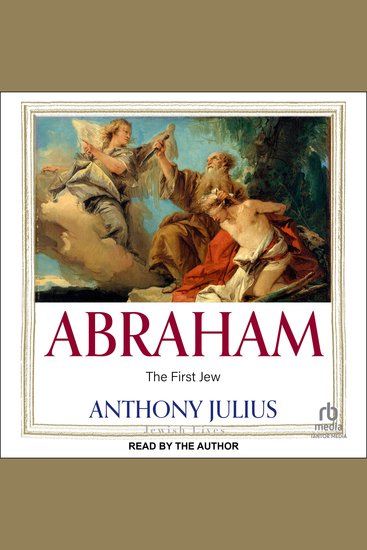
  • Abraham - The First Jew - cover

    Abraham - The First Jew

    Anthony Julius

    • 0
    • 0
    • 0
    The story of Abraham, the first Jew, portrayed as two lives lived by one person, paralleling the contradictions in Judaism throughout its history 


    In this new biography of Abraham, Judaism's foundational figure, Anthony Julius offers an account of the origins of a fundamental struggle within Judaism between skepticism and faith, critique and affirmation, thinking for oneself and thinking under the direction of another. Julius describes Abraham's life as two separate lives, and as a version of the collective life of the Jewish people. 


    Abraham's first life is an early adulthood of questioning the polytheism of his home city of Ur Kasdim until its ruler, Nimrod, condemns him to death and he is rescued, he believes, by a miracle. In his second life, Abraham's focus is no longer on critique but rather on conversion and on his leadership over his growing household, until God's command that he sacrifice his son Isaac. This test, the Akedah (or "Binding"), ends with another miracle, as he believes, but as Julius argues, it is also a catastrophe for Abraham. The Akedah represents for him an unsurpassed horizon—and in Jewish life thereafter. This book focuses on Abraham as leader of the first Jewish project, Judaism, and the unresolvable, insurmountable crisis that the Akedah represents—both in his leadership and in Judaism itself.
    Show book