Join us on a literary world trip!
Add this book to bookshelf
Grey
Write a new comment Default profile 50px
Grey
Subscribe to read the full book or read the first pages for free!
All characters reduced
American Struggle in History - How Conflict Has Shaped the American Experiment Inspired by Jon Meacham’s Anthology - cover

American Struggle in History - How Conflict Has Shaped the American Experiment Inspired by Jon Meacham’s Anthology

Henry Perry

Publisher: HENRY PERRY

  • 0
  • 0
  • 0

Summary

American Struggle in History is a sweeping, deeply human exploration of the conflicts that have shaped the United States from its earliest beginnings to the present day. Rather than telling a story of steady progress or inevitable decline, this book traces America’s long argument with itself, an argument over freedom and power, inclusion and exclusion, justice and fear. It asks not whether conflict defines the nation, but how Americans have used conflict to challenge authority, expand rights, and renegotiate what it means to belong.Spanning four centuries, the book moves from colonial contradictions and the founding paradox of liberty alongside slavery, through revolution, civil war, reconstruction, industrialization, world war, civil rights, globalization, and into the fractured realities of the twenty first century. Each era reveals familiar tensions resurfacing in new forms. Economic growth produces inequality. Security threatens liberty. Reform provokes backlash. Democracy advances unevenly, never finished and never free from resistance.What sets this book apart is its focus on struggle as a civic force rather than a national failure. American history is presented not as a courtroom delivering final judgments, but as a living conversation shaped by voices from the margins and the center alike. Reformers, workers, protestors, citizens, and leaders all appear as participants in an ongoing debate over the nation’s ideals and responsibilities. The book shows how progress has emerged not from consensus, but from sustained disagreement grounded in moral urgency.Written in a clear, engaging, and reflective style, American Struggle in History connects past conflicts to present divisions without reducing complexity or offering easy answers. It challenges readers to see today’s polarization in historical context, reminding us that moments of fracture have come before, and that the survival of democracy has always depended on the willingness of citizens to stay engaged in the argument.This is not a book that promises reassurance. It offers perspective. It affirms that the American experiment has always been unfinished, shaped by choices made under pressure, and renewed through civic participation. For readers seeking to understand how the United States became what it is today, and what its history suggests about the future, American Struggle in History offers a thoughtful, honest, and essential guide.
Available since: 01/25/2026.
Print length: 147 pages.

Other books that might interest you

  • Broken by the Cowboy Studs (Gay Pony Play Erotica) - cover

    Broken by the Cowboy Studs (Gay...

    Archer Vale

    • 0
    • 0
    • 0
    “Here at the stud ranch, you’ll learn how to train even the most aggressive males. You’ll learn how to wear away independence, coaxing them into a state of docile obedience.” 
    It sounded like an incredible opportunity—working as a ranch hand up in the mountains for the summer. I didn’t realize why I was actually hired though… 
    Alone in the barn with three older ranchers, I stand naked while they run a brush through my hair and tell me what a pretty pony boy I am. It feels so good…I want this. 
    The heavy scent of their sweat causes my legs to tremble as I sink to the filthy ground. On my hands and knees, I’m ready to be mounted for the first time. 
    I’m a college football stallion. 
    I’m being broken. 
    --- 
    CONTAINS EXPLICIT GAY SEXUAL CONTENT. 
    For exclusive stories, visit www.ArcherVale.com.
    Show book
  • Psychology of Peoples - Its influence on their evolution - cover

    Psychology of Peoples - Its...

    Gustave Le Bon

    • 0
    • 0
    • 0
    After receiving a doctorate in medicine, Le Bon travelled in Europe, North Africa, and Asia and wrote several books on anthropology and archaeology. His interests later shifted to natural science and social psychology. Gustave Le Bon is best known for his seminal work „Crowd Psychology“ where he describes the psychological effects in various group settings. In „Psychology of Peoples“ written in 1894 he utilizes his anthropological knowledge and cross-references it with social psychology. He developed a view that history is the product of racial or national character, with emotion, not intelligence, being the dominant force in social evolution. He attributed true progress to the work of an intellectual elite. As a product of its time and conditions, the content of this book is partly highly controversial and should be seen as an intellectual challenge. Some arguments should be outright rejected, cause they haven’t stood the test of time. To his credit, already back in 1894 Le Bon foresaw the dangers of the application of socialism, well before the Russian Revolution and Mao’s takeover of China. 
    Show book
  • Scottish Uprisings The: The History of Scotland’s Most Famous Battles against England - cover

    Scottish Uprisings The: The...

    Charles River Editors

    • 0
    • 0
    • 0
    From their very beginnings, England and Scotland fought each other. Emerging as unified nations from the early medieval period, their shared border and inter-related aristocracy created endless causes of conflict, from local raiders known as border reivers to full blown wars between their monarchies. Every century from the 11th to the 16th was colored by such violence, and there were periods when not a decade went by without some act of violence marring the peace. 
    	Out of all of this, the most bitterly remembered conflict is Edward I's invasion during the late 13th century. After Edward’s death, the English were eventually beaten back at the famous Battle of Bannockburn in 1314, and thus the early 14th century was a period featuring some of Scotland's greatest national heroes, including William Wallace and Robert the Bruce. It still resonates in the Scottish national memory, all the more so following its memorable but wildly inaccurate depiction in the 1995 film Braveheart, which had Scottish audiences cheering in cinemas. William Wallace is one of the most famous freedom fighters in history, and over 700 years after his death he is still remembered as Scotland’s beloved hero. But while the movie Braveheart helped make him a household name, and he is commemorated across Scotland as a natural leader and a loyal son of his homeland, he is also “the most mysterious of the leaders of the Scottish resistance to Edward I.” 
    England has more often been faced with the claims of competing kings and queens than with a period of no monarch at all. The major exception to that rule came in the 11 years between 1649 and 1660, when England was a republic. Following the disastrous reign of Charles I and the civil wars that led to his execution, Parliament and the army ruled England. That situation was one that would not have been possible without the Bishops’ Wars that preceded it.
    Show book
  • The Age of Empires - Conquest and Colonization - cover

    The Age of Empires - Conquest...

    Nova Ashford

    • 0
    • 0
    • 0
    The Age of Empires, a period marked by conquest and colonization, spans several centuries and had a profound impact on global history. From the late 15th century through the early 20th century, European powers embarked on ambitious campaigns of territorial expansion, driven by the pursuit of wealth, resources, and political dominance. This era saw the rise and fall of vast empires, each of which left an indelible mark on the world. The motivations behind empire-building were multifaceted, rooted in the quest for economic gain, military supremacy, and the spread of cultural, religious, and political ideologies. 
    The Age of Empires can trace its origins to the Renaissance, a period of intellectual and cultural awakening in Europe. The revival of classical learning, coupled with advancements in navigation, shipbuilding, and cartography, laid the groundwork for the age of exploration. This era saw European nations eager to find new trade routes and territories, driven by the promise of wealth from spices, silks, and other exotic goods. The expansion of European power also coincided with a period of intense competition among European states, each vying to claim territories and secure dominance over lucrative trade routes. 
    In 1492, Christopher Columbus’ famous voyage to the New World marked the beginning of a new era in exploration and conquest. Columbus’ journey, sponsored by Spain, led to the discovery of the Americas, setting off a wave of Spanish, Portuguese, British, French, and Dutch exploration and colonization. Spain and Portugal were the earliest and most successful empires in this period, establishing colonies in the Americas, Africa, and Asia. The Spanish empire, in particular, amassed incredible wealth through the exploitation of native populations and the vast resources found in the Americas, including precious metals like gold and silver.
    Show book
  • How To Read People Like A Book - Communication & Social Skills Training - How You Can Analyze People Understand Body Language Master Small Talk & Connect Effortlessly - cover

    How To Read People Like A Book -...

    Sarah Evanson

    • 0
    • 0
    • 0
    How To Read People Like A Book: Communication & Social Skills Training - How You Can Analyze People, Understand Body Language, Master Small Talk & Connect Effortlessly 
    Introducing How You Can Start Analyzing People To Connect Deeper Than Ever Before, Understand Their True Intentions & Supercharge Your Social Skills 
    In "How to Read People Like a Book," learn how to decode human behavior. This in-depth manual explains the best methods for deciphering and interpreting nonverbal clues like body language, facial emotions, and others.  
    You will discover how to communicate and connect with others more effectively, whether in intimate settings, the business, or any other social situation. Make better decisions right away by gaining awareness of the motives and feelings of individuals around you. 
    Here’s a preview of what’s inside:Study The Art Of Interpreting Nonverbal Clues And Human Behaviour.Learn How To Read People's Facial Expressions, Body Language, And Other Nonverbal Cues.Understanding The Thoughts, Feelings, And Motives Of OthersDevelop Interpersonal Skills For Use In Social Situations, The Workplace, And Personal Relationships.Real-World Examples And Step-By-Step Instructions For Simple UnderstandingA Thorough Manual For Anyone Wishing To Communicate More Effectively And Make Better Decisions.Over 50 Must Know Skills & Strategies For Mastering The Art Of Analyzing People, Body Language & True Intentions 
    plus a lot more! 
    So If You Want The Blueprint To Speed Reading People With Ease & Understanding Your Environment Like Never Before Then Scroll Up And Click “Buy This Audiobook” Today!
    Show book
  • A Woman's Crusade - Alice Paul and the Battle for the Ballot - cover

    A Woman's Crusade - Alice Paul...

    Mary Walton

    • 0
    • 0
    • 0
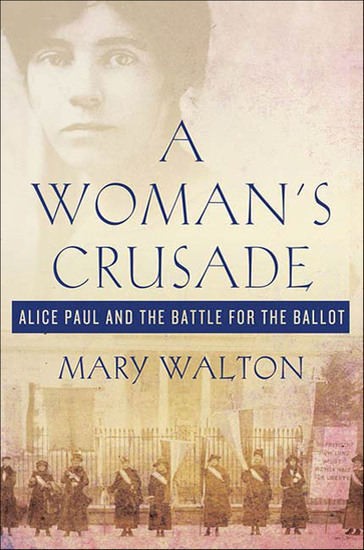
    “A reminder of the perseverance, the gall, the intelligence it took to obtain what now seems an inalienable right, an obvious pillar of any democracy.” —Los Angeles TimesAlice Paul began her life as a studious girl from a strict Quaker family in New Jersey. In 1907, a scholarship took her to England, where she developed a passionate devotion to the suffrage movement. Upon her return to the United States, Alice became the leader of the militant wing of the American suffrage movement. Calling themselves “Silent Sentinels,” she and her followers were the first protestors to picket the White House. Arrested and jailed, they went on hunger strikes and were force-fed and brutalized. Years before Gandhi's campaign of nonviolent resistance, and decades before civil rights demonstrations, Alice Paul practiced peaceful civil disobedience in the pursuit of equal rights for women.With her daring and unconventional tactics, Alice Paul eventually succeeded in forcing President Woodrow Wilson and a reluctant U.S. Congress to pass the Nineteenth Amendment, granting women the right to vote. Here at last is the inspiring story of the young woman whose dedication to women's rights made that long-held dream a reality.“Alice Paul was a visionary and a pioneer . . . She went where most men and women would not have gone.” —Hillary Clinton“I value the book for introducing [Paul] to the next generation of feminists with a taste for revolution.” —Vivian Gornick, Ms. Magazine“Mary Walton vividly brings [Paul] to life again in this brilliant, important and highly readable book. America's understanding of its history will be all the richer for it.” —Gene Roberts, Pulitzer Prize–winning author
    Show book