Junte-se a nós em uma viagem ao mundo dos livros!
Adicionar este livro à prateleira
Grey
Deixe um novo comentário Default profile 50px
Grey
Assine para ler o livro completo ou leia as primeiras páginas de graça!
All characters reduced
Submarine and Anti-submarine - Innovative Tactics and Undersea Battles in WWI - cover
LER

Submarine and Anti-submarine - Innovative Tactics and Undersea Battles in WWI

Henry John Newbolt

Editora: Good Press

  • 0
  • 0
  • 0

Sinopse

In "Submarine and Anti-submarine," Henry John Sir Newbolt presents a meticulous examination of naval warfare during the early 20th century, particularly focusing on the strategic interplay between submarine and anti-submarine tactics. Newbolt employs a clear, engaging literary style, blending technical analysis with historical narrative, which situates the book within the context of World War I naval strategy. He skillfully navigates the complexities of emerging submarine technology and its implications for naval power, reflecting the anxieties and innovations characteristic of this turbulent era. Newbolt, a prominent British poet, historian, and public figure, was deeply invested in the naval traditions of his time, having served in various capacities that provided him with firsthand insight into military affairs. His commitment to capturing the essence of nautical strategy and its ramifications was likely fueled by both his literary inclinations and his experiences as a lifelong advocate for the Royal Navy. This unique perspective allows Newbolt to articulate the tension between aggression and defense within maritime operations, a theme that resonates throughout the text. "Submarine and Anti-submarine" is invaluable for historians and military enthusiasts alike, as it offers a profound understanding of naval doctrine and its evolution. Newbolt'Äôs ability to distill complex concepts into accessible prose makes this work both informative and engaging. For those interested in the intricacies of maritime warfare and its historical context, this book is an essential addition to their library.
Disponível desde: 28/10/2023.
Comprimento de impressão: 214 páginas.


Outros livros que poderiam interessá-lo

  • The Lost Family - How DNA Testing Is Upending Who We Are - cover

    The Lost Family - How DNA...

    Libby Copeland

    • 0
    • 1
    • 0
    “A fascinating exploration of the mysteries ignited by DNA genealogy testing—from the intensely personal and concrete to the existential and unsolvable.” —Tana French, New York Times–bestselling author  
     
    You swab your cheek or spit in a vial, then send it away to a lab somewhere. Weeks later you get a report that might tell you where your ancestors came from or if you carry certain genetic risks. Or, the report could reveal a long-buried family secret that upends your entire sense of identity. Soon a lark becomes an obsession, a relentless drive to find answers to questions at the core of your being, like “Who am I?” and “Where did I come from?” Welcome to the age of home genetic testing. 
     
    In The Lost Family, journalist Libby Copeland investigates what happens when we embark on a vast social experiment with little understanding of the ramifications. She explores the culture of genealogy buffs, the science of DNA, and the business of companies like Ancestry and 23andMe, all while tracing the story of one woman, her unusual results, and a relentless methodical drive for answers that becomes a thoroughly modern genetic detective story. Gripping and masterfully told, The Lost Family is a spectacular book on a big, timely subject. 
     
    “An urgently necessary, powerful book that addresses one of the most complex social and bioethical issues of our time.” —Dani Shapiro, New York Times–bestselling author 
     
    “Before you spit in that vial, read this book.” —The New York Times Book Review 
     
    “Impeccably researched . . . up-to-the-minute science meets the philosophy of identity in a poignant, engaging debut.” —Kirkus Reviews (starred review)
    Ver livro
  • Make Bold Choices Today for the Life You Desire Tomorrow - "Embrace bold choices today and unlock the life you desire with our transformative audio lessons!" - cover

    Make Bold Choices Today for the...

    Orson Merriweather

    • 0
    • 0
    • 0
    Make Bold Choices Today for the Life You Desire Tomorrow 
    ⭐⭐ Simplified Guide & Explanations Included ⭐⭐ 
    Are you eager to advance in your career and enhance your understanding by successfully navigating transformative decisions? 
    Searching for a comprehensive resource that encompasses everything you need for personal and professional growth? 
    Your search ends here! 
    This guide is your ultimate companion for fostering your understanding, applying actionable strategies, and engaging in practical exercises. With this, you're poised for success. 
    Updated for the latest approaches to personal and professional life transformation. 
    Key features of this enhanced guide: 
    - In-depth insights about empowering your journey through bold, transformative decisions 
    - Detailed explanations of the choices that can reshape your future 
    - Effective strategies for preparation and execution of your decisions 
    Our guide sets itself apart through thorough coverage, essential for your journey to success. Concepts are not simply mentioned; they are explored with clarity. 
    Please be aware that this guide is an independent resource and not affiliated with any official organization. 
    Crafted with a clear structure and straightforward language, our guide ensures seamless transitions between topics. Say goodbye to convoluted jargon and embrace clear, precise, and technically sound content. 
    So, why wait? Click the BUY NOW button, grab your guide, and embark on your journey to a fulfilling life through bold choices!  
    Make bold choices today for the life you desire tomorrow!
    Ver livro
  • The US Supreme Court - A Very Short Introduction - cover

    The US Supreme Court - A Very...

    Linda Greenhouse

    • 0
    • 0
    • 0
    For thirty years, Pulitzer Prize-winning journalist Linda Greenhouse chronicled the activities of the U.S. Supreme Court and its justices as a correspondent for the New York Times. In this Very Short Introduction, she draws on her deep knowledge of the court's history and of its written and unwritten rules to show listeners how the Supreme Court really works. 


    Greenhouse offers a fascinating institutional biography of a place and its people—men and women who exercise great power but whose names and faces are unrecognized by many Americans and whose work often appears cloaked in mystery. How do cases get to the Supreme Court? How do the justices go about deciding them? What special role does the chief justice play? What do the law clerks do? How does the court relate to the other branches of government? Greenhouse answers these questions by depicting the justices as they confront deep constitutional issues or wrestle with the meaning of confusing federal statutes. Throughout, the author examines many individual Supreme Court cases to illustrate points under discussion. 


    The third edition of Greenhouse's Very Short Introduction tracks the changes in the Court's makeup over the past decade, including the landmark decisions of the Obama and Trump eras and the emergence of a conservative supermajority.
    Ver livro
  • Joseph Roth: A short biography - 5 Minutes: Short on time – long on info! - cover

    Joseph Roth: A short biography -...

    5 Minutes, 5 Minute Biographies,...

    • 0
    • 0
    • 0
    Joseph Roth, literary genius and tragic figure: Life and work in a short biography! Everything you need to know, brief and concise. Infotainment, education and entertainment at its best!
    Ver livro
  • The Sound of Many Waters - A Journey along the River Tay - cover

    The Sound of Many Waters - A...

    Robin A. Crawford

    • 0
    • 0
    • 0
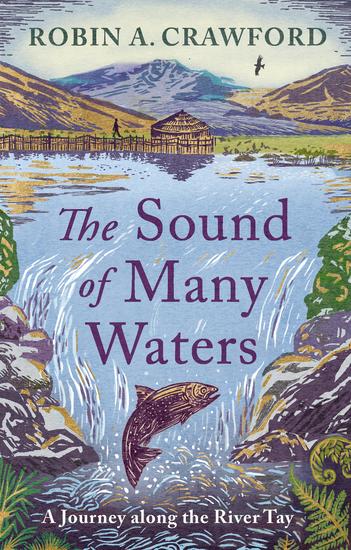
    With the widest catchment area of any river in Britain, the Tay drains much of the lower Highlands of Scotland. A vast network of lochs and smaller bodies of water feed the Isla, Garry, Tummel, Almond and Earn, which all flow into this mighty river.
    As Robin Crawford walks along the banks of the Tay, we delve into the history of this landscape and his personal connection with it, from hill walks with friends into the mountains of the Tay's source to his student days in Dundee, where the Tay eventually spills out into the North Sea.
    Along the route we dip into the river's story: the gold-panners on the river Cononish, the Earthquake House outside Comrie, Beatrix Potter's holiday home near Dunkeld. Throughout, the river is our constant companion, connecting the small moments on which events turn and lives are changed forever.
    Ver livro
  • The Third Battle of Ypres - The History of the Largest Battle in Flanders during World War I - cover

    The Third Battle of Ypres - The...

    Charles River Editors

    • 0
    • 0
    • 0
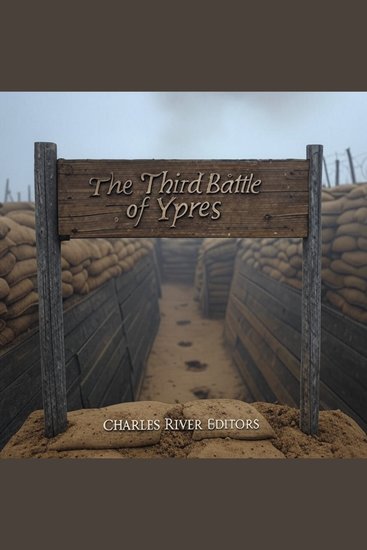
    With the exception of a few hours on Christmas Day 1914, the shelling, sniping, raids, and bloodshed at Ypres in Belgium never ceased from the moment of first contact between the British Expeditionary Force (BEF) and the Imperial German army. The Ypres salient had formed the previous year during the “race to the sea,” when the opposing armies tried and failed to outflank each other in a series of maneuvers and counter-maneuvers.  
    	The Ypres salient bulged a few miles forward into Belgium, representing the only part of that nation the Germans had not occupied. Held by a mix of British, French, Canadian, Belgian, and colonial troops, this thorn in the Germans’ side had held off massive but clumsily handled attacks by barely-trained German volunteers and conscripts in late 1914 at the First Battle of Ypres. Each side had attempted to launch a major offensive through Ypres at the same time, leading to a blood-soaked encounter battle that, after weeks of futile butchery amid the small farms, hedgerows, canals, and tracts of woodland, devolved into a grim stalemate. Lines of trenches faced each other and sniping, artillery bombardment, and small actions led to an ongoing stream of casualties to the rear and corpses into the new soldiers’ graveyards established conveniently close to the front lines.  
    	The heaviest fighting in the vicinity took place in 1917 during the Third Battle of Ypres, a linked series of battles on the Western Front that took place from July-November of that year. It is still remembered as one of the most notorious battles in British history. British troops, who called this series of battles Passchendaele after the small Belgian village that formed the final objective, continued to use the same tactics that had been employed since early 1915 as they were ordered into frontal attacks on prepared German trenches protected by artillery, barbed wire, bunkers, and machine gun positions.
    Ver livro