Join us on a literary world trip!
Add this book to bookshelf
Grey
Write a new comment Default profile 50px
Grey
Subscribe to read the full book or read the first pages for free!
All characters reduced
The Beast in the Jungle - cover

The Beast in the Jungle

Henry James

Publisher: Bu Classics Books

  • 0
  • 0
  • 0

Summary

A man lives his entire life in fearful anticipation of a catastrophic event he believes is destined to happen. His fixation prevents him from recognizing the true love and opportunities passing him by. This chilling psychological study explores the tragedy of a life wasted on the Specter of an imagined future.
Available since: 03/06/2026.
Print length: 75 pages.

Other books that might interest you

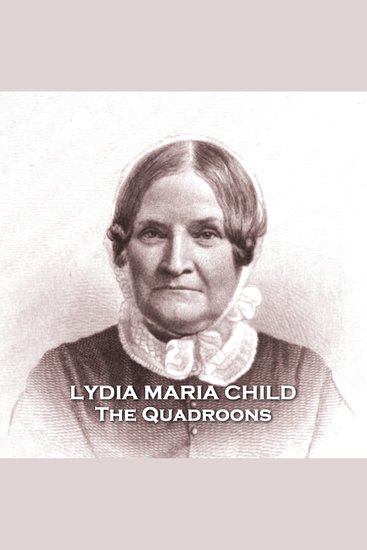
  • The Quadroons - From their pens to your ears genius in every story - cover

    The Quadroons - From their pens...

    Lydia Maria Child

    • 0
    • 0
    • 0
    The bookshelves of American literature are incredible collections that have gathered together centuries of very talented authors.  From this continent their fame spread and whilst among their number many are now forgotten or neglected their talents endure.  Among them is Lydia Maria Child.
    Show book
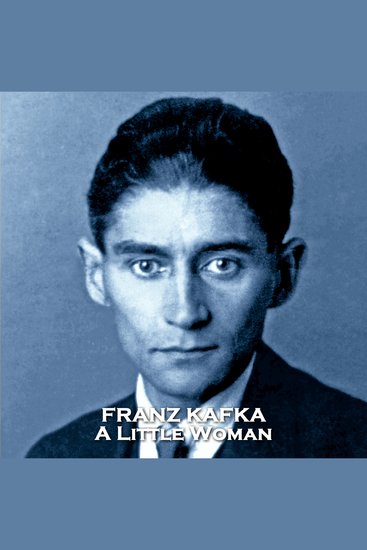
  • A Little Woman - A man tries to appease a woman frustrated with him in true Kafkaesque fashion - cover

    A Little Woman - A man tries to...

    Franz Kafka

    • 0
    • 0
    • 0
    Franz Kafka was born on 3rd July 1883 in Prague, then in Bohemia, the eldest of 6, into a middle-class Jewish family. 
     
    Life for the young Kafka and his passion for literature was often made an ordeal by his over-bearing and domineering entrepreneur of a father.   
     
    In 1889 Kafka was sent to the Deutsche Knabenschule, an elementary school in Prague. His father would only allow him to be educated in German-speaking schools and even went so far as to limit visits to the synagogue to four a year. 
     
    In 1901 he graduated from the classics-oriented Altstädter Gymnasium. Kafka did well there and across a large range of subjects.  He now enrolled at the Charles Ferdinand University, to study chemistry, but quickly switched to law for which he obtained his degree in June 1906 and then performed the mandatory year of unpaid service as clerk at the civil and criminal courts. 
     
    A job at an Italian insurance company left him little time to write and after a year he took another job with the Worker's Accident Insurance Institute for the Kingdom of Bohemia where he stayed until ill health led to his resignation in 1922. 
     
    Although he saw work as a means to pay the bills and to allow him time to write, he received several promotions and was noted as a good employee. 
     
    By 1917 Kafka was suffering from tuberculosis, which required frequent periods of convalescence. Interspersed with this, were several intense affairs before he settled in Berlin with Dora Diamant, a 25-year-old kindergarten teacher who herself having left the ghetto now influenced Kafka's interest in the book of Jewish law, the Talmud. 
     
    Kafka’s on-going health was littered with problems. Apart from TB there were several other ailments, including migraines, insomnia, boils, depression, all usually brought on by excessive stresses and strains. He attempted to counteract all of this by naturopathic treatments, a vegetarian diet and consuming large quantities of unpasteurized milk. 
     
    His tuberculosis still worsened. He returned to Prague, where he died on 3rd June 1924. He was 40. 
     
    His literary works are few in number but towering in influence.  His masterpieces include ‘The Trial’, ‘The Metamorphosis’ as well as a number of short stories which reveal facets of humankind that truthfully could only be born from Kafka’s brain and pen.
    Show book
  • Anathema - From their pens to your ears genius in every story - cover

    Anathema - From their pens to...

    Alexander Kuprin

    • 0
    • 0
    • 0
    Alexander Kuprin was born in Narovchat, Penza in Russia on 7th September 1870. 
    At 3 his Father died and he and mother moved to Moscow. By 10 he was enrolled at the Second Moscow Military High School and there his interest in literature began. The Alexander Military Academy followed and two years later he was a sub-lieutenant and posted to an Infantry Regiment for a further four years. 
    Despite his duties he was a now a keen writer and published his first short story at this time. His military duties also garnered him experiences for his breakthrough work ‘The Duel’.  Leaving the military he left for Kiev to work for local newspapers.  He continued to publish both stories and novels and by 1901 he was in St Petersburg becoming part of a group that included Chekhov, Ivan Bunin, Maxim Gorky and Leonid Andreyev.  
    In the years that followed further controversial works and acclaim followed.  His comments on the regime meant he was also put under secret police surveillance.   
    As World War I erupted, Kuprin opened a military hospital but was then given command of an infantry company in Finland. He was soon discharged on grounds of ill health.  
    The October Revolution saw him praise Lenin, but he warned that the Bolsheviks threatened Russian culture and might cause further widespread suffering to the peasants.  As Civil War raged he took his family to Helsinki and then on to Paris. 
    Exile saw his talents decline further and his succumbing to alcoholism. He became lonely and withdrawn. The family's poverty increased his malaise.   
    In May 1937, the Kuprin’s returned to Moscow.  He now saw his work published but wrote almost nothing new.  In 1938 his health rapidly deteriorated.  Already suffering from a kidney problems and sclerosis, he had now developed cancer of the oesophagus.  
    Alexander Kuprin died on 25th August 1938.
    Show book
  • The Waste Land - cover

    The Waste Land

    T.S. Eliot

    • 0
    • 0
    • 0
    The Waste Land is a poem by T. S. Eliot, widely regarded as one of the most important poems of the 20th century and a central work of modernist poetry. Published in 1922, the 434-line poem first appeared in the United Kingdom in the October issue of Eliot's The Criterion and in the United States in the November issue of The Dial. It was published in book form in December 1922. Eliot's poem loosely follows the legend of the Holy Grail and the Fisher King combined with vignettes of contemporary British society. Eliot employs many literary and cultural allusions from the Western canon, Buddhism and the Hindu Upanishads. The poem shifts between voices of satire and prophecy featuring abrupt and unannounced changes of speaker, location, and time and conjuring a vast and dissonant range of cultures and literatures.The poem's structure is divided into five sections. The first section, "The Burial of the Dead," introduces the diverse themes of disillusionment and despair. The second, "A Game of Chess," employs alternating narrations, in which vignettes of several characters address those themes experientially. "The Fire Sermon," the third section, offers a philosophical meditation in relation to the imagery of death and views of self-denial in juxtaposition influenced by Augustine of Hippo and eastern religions. After a fourth section, "Death by Water," which includes a brief lyrical petition, the culminating fifth section, "What the Thunder Said," concludes with an image of judgment.
    Show book
  • Beauty of Form and Beauty of Mind - cover

    Beauty of Form and Beauty of Mind

    Hans Christian Andersen

    • 0
    • 0
    • 0
    In Beauty of Form and Beauty of Mind, Hans Christian Andersen offers one of his most mature and quietly devastating tales—a reflective allegory about love, art, and the cost of mistaking appearance for substance. 
    Alfred, a gifted young sculptor, becomes captivated by Kaela, a woman of flawless beauty whose presence seems to embody everything his art strives to achieve. Enchanted by her outward perfection, he fails to ask what lies beneath. Their union, admired by society and celebrated as ideal, slowly reveals a profound imbalance—one that beauty alone cannot sustain. 
    As time passes, illness, loss, and reflection strip away illusion, forcing Alfred to confront a truth he had long ignored: that form, however exquisite, is transient, while the life of the mind and spirit endures. In the thoughtful, unassuming Sophy, he discovers a deeper companionship—one grounded not in admiration, but in understanding. 
    Written with restraint and moral clarity, this story stands apart from Andersen’s lighter fairy tales. It is a philosophical meditation on art, marriage, and human fulfillment, asking a timeless question: what kind of beauty truly elevates us—and what happens when we learn the answer too late? 
    Narrated with grace and emotional subtlety by Michele Wagner, this audiobook invites listeners into a world where elegance conceals emptiness, and quiet wisdom carries the greater weight.
    Show book

  • A Farewell to Arms - cover

    A Farewell to Arms

    Ernest Hemingway

    • 0
    • 0
    • 0
    A Farewell to Arms is a novel by American writer Ernest Hemingway, set during the Italian campaign of World War I. First published in 1929, it is a first-person account of an American, Frederic Henry, serving as a lieutenant (Italian: tenente) in the ambulance corps of the Italian Army. The novel describes a love between the American expatriate and an English nurse, Catherine Barkley.
    Show book