Join us on a literary world trip!
Add this book to bookshelf
Grey
Write a new comment Default profile 50px
Grey
Subscribe to read the full book or read the first pages for free!
All characters reduced
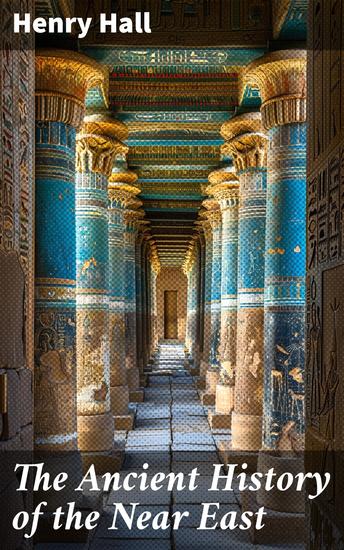
The Ancient History of the Near East - From the Earliest of Times to the Battle of Salamis - cover

The Ancient History of the Near East - From the Earliest of Times to the Battle of Salamis

Henry Hall

Publisher: Good Press

  • 0
  • 0
  • 0

Summary

In "The Ancient History of the Near East," Henry Hall provides a meticulous examination of the civilizations that shaped this pivotal region, intertwining archaeological findings with historical narratives. Hall's literary style balances academic rigor with an accessible prose that invites both scholars and general readers. The book contextualizes significant events and cultural developments from the dawn of civilization to the decline of empires, articulating the intricate tapestry of interactions among the Sumerians, Akkadians, Babylonians, and Assyrians. Hall's use of primary sources and critical analysis reveals the complexities of governance, trade, and societal structures, rendering a comprehensive historical account that is both informative and engaging. Henry Hall, an esteemed historian specializing in Near Eastern studies, draws on a deep well of expertise shaped by his extensive travels and fieldwork throughout the region. His passion for ancient history is apparent in his nuanced understanding of the socio-political dynamics and cultural exchanges that informed these early civilizations. Hall's academic background, enriched by years of research, provides readers with a well-rounded perspective on the significance of the Near East in the larger narrative of global history. Recommended for history enthusiasts and scholars alike, Hall'Äôs work stands as an essential resource for anyone seeking to understand the foundational narratives of human civilization. "The Ancient History of the Near East" not only educates but also inspires a profound appreciation for the complexities and achievements of our ancient ancestors.
Available since: 12/25/2023.
Print length: 588 pages.
Other books that might interest you

  • Greek Made Easy - Beginner - Volume 2 of 3 - cover

    Greek Made Easy - Beginner -...

    Lingo Wave

    • 0
    • 0
    • 0
    We broke our new series on learning Greek down into different learning stages. Start with the "Lower Beginner" books followed by the "Beginner" and "Upper Beginner" books. Next, progress to the "Intermediate" series, then test and reinforce your knowledge with the "Conversations" series. 
    This audiobook is divided into units.While it provides different learning patterns and accommodates various needs, this audiobook focuses on helping you improve your ability to understand, speak, and memorise Greek.  
    In Unit 1 you will hear Greek decoded with each syllable spoken very slowly and clearly with repetition. Immediately before each sentence is spoken, you will hear the translation, so you will always understand what is being said. 
    Unit 2 focuses solely on increasing your listening ability, which will improve your abilities to engage in dialogue with a native Greek speaker. This chapter requires you to listen very carefully to nuances in the language. 
    By Unit 3 you will already notice progress in your abilities to speak and understand Greek. The spoken translation is followed by two repetitions in Greek at a completely natural speed. While you are learning to process naturally spoken Greek, Units 3 and 4 will help you memorise new vocabulary and full sentences.  
    In Unit 5 you can test yourself on how much you have learned. If you are having difficulties, we suggest you revisit the listening, speaking, or memorisation section of Units 1, 2 3 or 4, according to what you need more help with. 
    Topics covered in this book: 
    1. Asking about family 
    2. Asking about relationship status 
    3. Expressing frequency 
    4. Talking about spare time activities and hobbies 
    5. Using quantifiers/determiners 
    6. Talking about preference 
    7. Talking about abilities 
    8. Talking about location of places 
    9. Describing appearance 
    10. Talking about personality 
    ...
    Show book
  • Republicanism Explained - The Principles of Republican Government and Its Variants - cover

    Republicanism Explained - The...

    Arlo Holders

    • 0
    • 0
    • 0
    Republicanism is a political ideology that emphasizes the importance of a government where power rests in the hands of elected representatives, rather than a monarch or dictator. The essence of republicanism lies in the commitment to a system that prioritizes liberty, the rule of law, and the well-being of the public. Republicanism has roots in the ancient political thought of Greece and Rome, particularly through the Roman Republic, which provided the foundational ideas of civic participation and the limitation of power. It was in the Renaissance and Enlightenment periods that these principles were revived and further refined, giving rise to modern republicanism as we know it today. 
    The core tenet of republicanism is that government should be based on consent of the governed. Unlike monarchies, where power is inherited or imposed, republicanism promotes a system in which rulers are elected by the people to serve their interests. This concept of popular sovereignty—government’s authority coming from the consent of the people—distinguishes republicanism from both monarchy and democracy. In republican systems, rulers are expected to act in the best interest of society, balancing the needs of the individual with those of the community, while also safeguarding the common good. 
    A key feature of republicanism is its emphasis on the separation of powers. Drawing from Montesquieu’s influence, republican thought advocates for dividing government authority into branches—executive, legislative, and judicial—in order to prevent any one entity from becoming too powerful. This system of checks and balances ensures that power is distributed and that no single branch or individual can dominate or misuse their authority. This is vital to maintaining the liberty of individuals within a republican system.
    Show book
  • The Architecture of Modern Empire - Conversations with David Barsamian - cover

    The Architecture of Modern...

    Arundhati Roy, Naomi Klein

    • 0
    • 0
    • 0
    A revelatory and wide-ranging series of interviews with award-winning writer Arundhati Roy, touching on United States empire, Indian nationalism, a writer's work, and more. 


    As a novelist, Arundhati Roy is known for her lush language and intricate structure. As a political essayist, her prose is searching and fierce. All of these qualities shine through in the interviews collected here by David Barsamian. 


    This newly reissued and expanded edition, featuring interviews from 2001 to 2022 and a moving foreword by Naomi Klein, explores Roy's evolving political thought and commitments across the tumultuous twenty-first entry. 


    The Architecture of Modern Empire is a searing reckoning with the mechanics of power, in all its forms, and the role of imagination and creative expression in envisioning a radically different world.
    Show book
  • Resilience And Emotions - How to Face a Crisis And Turn It Into Positive Change - cover

    Resilience And Emotions - How to...

    Brian Gibson

    • 0
    • 0
    • 0
    "Resilience and Emotions: How to Face a Crisis and Turn It Into Positive Change" is a transformative exploration of the human experience in times of adversity. It offers profound insights and actionable strategies rooted in coping, appraisal, nonverbal communication, and emotional management. 
    The concept of appraisal is illuminated as a pivotal lens through which we interpret and respond to crises. Readers gain a renewed sense of agency and purpose by reframing setbacks as opportunities for growth and learning. The book encourages adaptive thinking and cognitive flexibility, enabling individuals to transform adversity into a springboard for positive change. 
    "Resilience and Emotions" underscores the profound impact of nonverbal communication in building resilience. From subtle gestures to empathic expressions, nonverbal cues play a vital role in fostering social connections and conveying emotions authentically. Readers discover how these silent forms of communication can enhance emotional intelligence and strengthen interpersonal relationships during challenging times.
    Show book
  • Summary of Miranda Devine's Laptop from Hell - cover

    Summary of Miranda Devine's...

    Falcon Press

    • 0
    • 0
    • 0
    Buy now to get the main key ideas from Miranda Devine's Laptop from Hell 
      
    Joe Biden announced his candidacy for the 2020 presidential election, and two weeks later, his son Hunter left his laptop at a repair shop and never came back. In Laptop from Hell (2021), Miranda Devine exposes the contents of the abandoned laptop. Hunter’s life was falling apart in the spring of 2019. His brother Beau had died, he was deep into his crack addiction, and the money he had made from his shady business dealings abroad was inaccessible. Joe always claimed that he was not aware of any of Hunter’s business ventures, but Devine asserts that this has been proven untrue by the shocking contents of the laptop.
    Show book
  • Egyptian Wisdom in the Revelation of John the Divine - Ancient Egypt the Light of the World Book 11 - cover

    Egyptian Wisdom in the...

    Gerald Massey

    • 0
    • 0
    • 0
    [T]he drama opens in Revelation the same as in “the Book of the Dead,” with “the resurrection and the glory” of the coming Son. “Behold He cometh with the clouds, and every eye shall see Him.” It is the risen Lord of Resurrection who says: “I was dead, and behold I am alive evermore, and I have the keys of death and of hades” (Ch. i 18). This is Horus of the resurrection risen from Amenta in his triumph over death and hell or Sut and Akar. He proclaims himself to he the all-one, Har-Sum-taui-Neb-Uâ. Jesus, like Horus, is the “faithful witness” for the Father… –from “Egyptian Wisdom in the Revelation of John the Divine” It goes unappreciated by modern Egyptologists, but it is embraced by those who savor the concept of a “hidden history” of humanity, and those who approach all human knowledge from the perspective of the esoteric. Gerard Massey’s massive Ancient Egypt: The Light of the World–first published in 1907 and the crowning achievement of the self-taught scholar–redefines the roots of Christianity via Egypt, proposing that Egyptian mythology was the basis for Jewish and Christian beliefs.
    Show book