Join us on a literary world trip!
Add this book to bookshelf
Grey
Write a new comment Default profile 50px
Grey
Subscribe to read the full book or read the first pages for free!
All characters reduced
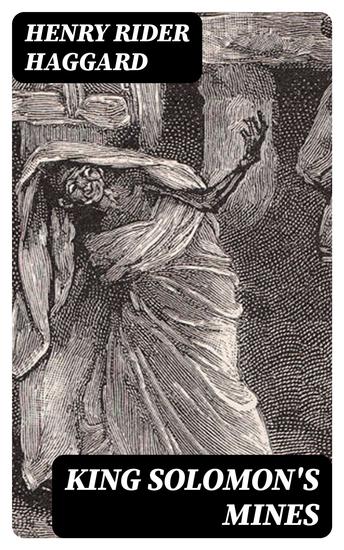
King Solomon's Mines - cover

King Solomon's Mines

Henry Haggard

Publisher: DigiCat

  • 0
  • 0
  • 0

Summary

In "King Solomon's Mines," Henry Rider Haggard masterfully weaves an adventurous narrative that transports readers into the uncharted territories of Africa during the late 19th century. The novel is an early example of the lost world genre, blending exoticism with themes of imperialism and colonial ambition. Haggard employs vivid descriptions and a robust, action-driven prose style that heightens the sense of wonder and danger in the exploration of hidden riches, ultimately addressing the anthropological undercurrents of race and civilization that marked the period. Henry Rider Haggard's background as an English writer, farmer, and adventurer greatly influenced the creation of "King Solomon's Mines." His experiences in South Africa, coupled with his keen interest in mythology and exploration, provided a compelling backdrop for the story. Haggard's immersion in colonial life shaped his vivid imagination and lent authenticity to his portrayal of the African landscape and its people, reflecting both fascination and critique of the imperial worldview of his time. This seminal work is highly recommended for those interested in adventure literature, postcolonial studies, or the historical context of European exploration. Haggard's engaging narrative not only captivates the imagination but also encourages critical reflection on the ethics of empire and the complexities of human interaction across cultures.
Available since: 11/13/2022.
Print length: 230 pages.

Other books that might interest you

  • Last Ballad The: Book summary & analysis - cover

    Last Ballad The: Book summary &...

    Margot Langley

    • 0
    • 0
    • 0
    This content is an independent and unofficial summary created for informational and educational purposes only. It is not affiliated with, authorized, approved, licensed, or endorsed by the original author or publisher. All rights to the original work belong to its respective copyright holders. This summary is not intended to substitute the original book, but to offer a concise overview and interpretation of its main ideas.


    The Last Ballad is a haunting and lyrical tale of love, sacrifice, and the echoes of a fading era. Set against the backdrop of a world on the brink of change, it follows the journey of a soul determined to preserve the beauty and truth of a vanishing legacy. As passions ignite and loyalties are tested, one final song weaves together past and present, hope and sorrow, in a timeless tribute to what must never be forgotten. Rich with emotion, atmosphere, and unforgettable characters, The Last Ballad is a powerful meditation on the cost of dreams and the enduring strength of the human spirit. Perfect for listeners who cherish poignant storytelling and evocative, soul-stirring journeys, this audiobook leaves a lasting imprint on the heart.
    Show book
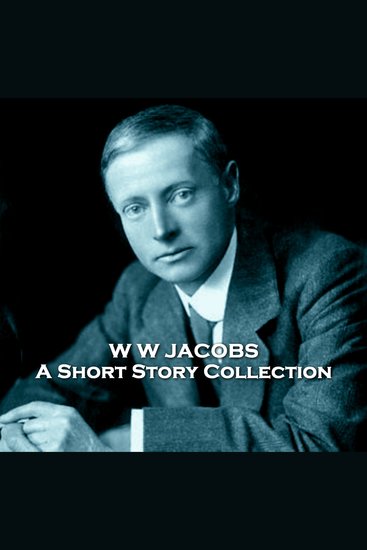
  • The Short Stories of W W Jacobs - Including the famed 'The Monkey's Paw' among his lesser known but equally impressive stories - cover

    The Short Stories of W W Jacobs...

    WW Jacobs

    • 0
    • 0
    • 0
    William Wymark Jacobs was born on 8th September 1863 in Wapping, East London.  
     
    He was educated at a private school and then Birkbeck Literary and Scientific Institution, now part of the University of London. 
     
    In 1879, Jacobs began work as a clerk in the civil service, in the Post Office Savings Bank.  In 1885 his first short story was published but it was not until almost the turn of the century that he would abandon his post office career to that as a full-time writer. By then he was a very popular author, his collections selling extremely well and with an excellent income. 
     
    His best-known work is the macabre ‘The Monkey's Paw’ and he is also highly regarded for his ghost stories although much of his remaining short story output is streaked with humour.  His characters are immediately identifiable and we all know that life will take chunks out of them in no time at all.  
     
    Jacobs married the noted suffragette Agnes Eleanor Williams in 1900 at West Ham, Essex. They went on to have two daughters and three sons as they settled down to life.  
     
    By the outbreak of the First World War his literary output had declined and he now mainly spent his time rewriting his earlier stories for the stage.  In all he wrote 18 plays. 
     
    W W Jacobs died on 1st September 1943 at Hornsey Lane, Islington in London. He was 79. 
    01 - W W Jacobs - A Short Story Collection - An Introduction 
    02 - The Monkey's Paw by W W Jacobs 
    03 - Jerry Bundler by W W Jacobs 
    04 - Three Sisters by W W Jacobs 
    05 - Captain Rogers by W W Jacobs 
    06 - The Money Box by W W Jacobs
    Show book
  • Gitel's Freedom - A Novel - cover

    Gitel's Freedom - A Novel

    Iris Mitlin Lav

    • 0
    • 0
    • 0
    Gitel’s Freedom: A Novel by Iris Mitlin Lav is a deeply moving work of historical fiction that brings to life the struggles, resilience, and quiet courage of Jewish immigrants in early-twentieth-century America. Narrated with warmth and emotional depth by Catherine Divaris and produced and published by Audiobook Publishing Services, this audiobook offers an intimate and immersive listening experience. 
    Perfect for fans of We Were the Lucky Ones by Georgia Hunter and The Light After the War by Anita Abriel, Gitel’s Freedom follows the journey of Gitel, born in Belorussia and brought to the United States in 1911. From a young age, Gitel questions the rigid expectations placed on women within both society and her Orthodox Jewish upbringing. Denied the opportunity to attend college and pressured into marriage, she weds Shmuel, an Orthodox Jewish pharmacist whose progressive political ideals initially offer hope for a more fulfilling future. 
    That hope is tested when the Great Depression destroys their plans to build a life together through a neighborhood pharmacy in Chicago. As financial hardship deepens, Shmuel’s declining health, difficult choices, and misfortune strain their marriage. Gitel dreams of returning to school to become a teacher, but repeated sacrifices. 
    When a devastating stroke leaves Shmuel disabled, Gitel must shoulder the burdens of caregiver, provider, and mother at a time when women face significant wage discrimination and social limitations. 
    Gitel’s Freedom is a compelling portrait of women’s resilience, Jewish family life, and the immigrant experience in early-1900s America. With Catherine Divaris’s expressive narration and the high-quality production of Audiobook Publishing Services, this audiobook is an unforgettable exploration of identity, sacrifice, and the enduring pursuit of independence.
    Show book
  • Shadow of a Dead Man - cover

    Shadow of a Dead Man

    William W. Johnstone, J. A....

    • 0
    • 0
    • 0
    The top dogs of bestselling western action thrillers hit the bullseye once again in the latest in a new series in which a disgraced lawman's quest for vengeance becomes a legendary fight for justice. 


    HE WHO LIVES BY THE GUN . . .  


    Shotgun Johnny Greenway thought he'd hit rock bottom when he lost his wife and son, hung up his badge, and hit the bottle. But a pretty young woman gave him a second chance. Offered him a job riding shotgun for the Reverend's Temptation Gold Mine. Gave him a reason to live. But even she can't save him when the Starrett gang tries to rob the gold—and Johnny kills their leader . . .  


     . . . DIES BY THE GUN 


    When the dust clears, Shotgun Johnny is wanted for murder. The dead man's father has powerful friends, including a town marshal who's Johnny's personal enemy. One wants the gold. The other wants the girl. Both want Johnny dead. With a $1000 bounty on his head—and half the county trying to kill him—Johnny's got to prove his innocence. Not in a court of law. In a trial by shotgun . . .
    Show book
  • The Short Stories of Franz Kafka - Jewish master of the bizarre and creator of Kafkaesque - cover

    The Short Stories of Franz Kafka...

    Franz Kafka

    • 0
    • 0
    • 0
    Franz Kafka was born on 3rd July 1883 in Prague, then in Bohemia, the eldest of 6, into a middle-class Jewish family. 
     
    Life for the young Kafka and his passion for literature was often made an ordeal by his over-bearing and domineering entrepreneur of a father.   
     
    In 1889 Kafka was sent to the Deutsche Knabenschule, an elementary school in Prague. His father would only allow him to be educated in German-speaking schools and even went so far as to limit visits to the synagogue to four a year. 
     
    In 1901 he graduated from the classics-oriented Altstädter Gymnasium. Kafka did well there and across a large range of subjects.  He now enrolled at the Charles Ferdinand University, to study chemistry, but quickly switched to law for which he obtained his degree in June 1906 and then performed the mandatory year of unpaid service as clerk at the civil and criminal courts. 
     
    A job at an Italian insurance company left him little time to write and after a year he took another job with the Worker's Accident Insurance Institute for the Kingdom of Bohemia where he stayed until ill health led to his resignation in 1922. 
     
    Although he saw work as a means to pay the bills and to allow him time to write, he received several promotions and was noted as a good employee. 
     
    By 1917 Kafka was suffering from tuberculosis, which required frequent periods of convalescence. Interspersed with this, were several intense affairs before he settled in Berlin with Dora Diamant, a 25-year-old kindergarten teacher who herself having left the ghetto now influenced Kafka's interest in the book of Jewish law, the Talmud. 
     
    Kafka’s on-going health was littered with problems. Apart from TB there were several other ailments, including migraines, insomnia, boils, depression, all usually brought on by excessive stresses and strains. He attempted to counteract all of this by naturopathic treatments, a vegetarian diet and consuming large quantities of unpasteurized milk. 
     
    His tuberculosis still worsened. He returned to Prague, where he died on 3rd June 1924. He was 40. 
     
    His literary works are few in number but towering in influence.  His masterpieces include ‘The Trial’, ‘The Metamorphosis’ as well as a number of short stories which reveal facets of humankind that truthfully could only be born from Kafka’s brain and pen. 
    01 - Franz Kafka - A Short Story Collection - An Introduction 
    02 - In the Penal Colony by Franz Kafka 
    03 - Before the Law by Franz Kafka 
    04 - A Country Doctor by Franz Kafka 
    05 - A Hunger Artist by Franz Kafka
    Show book
  • England Home and… - cover

    England Home and…

    Andrew Wareham

    • 0
    • 0
    • 0
    England, Home and . . .  


    Nick Turnhouse is captain of his own sloop, and increasingly aware of how rapidly he has been promoted and how much he does not know. He is reliant on the professional skill and goodwill of Master and Boatswain, both of whom are long experienced and old, coming close to the end of their seagoing days. 


    Returning from a convoy north to Halifax, Nick discovers a new admiral in command at English Harbor. His patron has returned to England and he is left as a junior captain in a station in which the new man has his own favorites. 


    Nick is sent as escort to a small out-of-season convoy, taking valuable ships to England . . . with a certainty that French intelligencers are in the know.
    Show book