Join us on a literary world trip!
Add this book to bookshelf
Grey
Write a new comment Default profile 50px
Grey
Subscribe to read the full book or read the first pages for free!
All characters reduced
Amelia — Complete - cover

Amelia — Complete

Henry Fielding

Publisher: Bu Classics Books

  • 0
  • 0
  • 0

Summary

The virtuous Amelia Booth struggles to maintain her integrity and family's well-being despite her husband's gambling debts and moral failings. Navigating the treacherous waters of London's social and legal systems, she becomes a beacon of domestic fortitude and loyalty. Fielding offers a realistic and moving portrayal of the trials faced by women in a society stacked against them. This domestic epic celebrates the strength of character over the allure of vice.
Available since: 03/06/2026.
Print length: 848 pages.

Other books that might interest you

  • Pride and Prejudice - cover

    Pride and Prejudice

    Jane Austen

    • 0
    • 0
    • 0
    Love is in the air when five sisters discover that a wealthy and eligible bachelor is suddenly within reach. But it is his friend, the haughty Mr. Darcy, who becomes smitten. Unfortunately for him, the object of his affection is not so easily swayed. 
    One of the most popular characters in English literature, Elizabeth Bennet is intelligent, witty, well-spoken and ahead of her time. If the terrible rumors about Mr. Darcy are true, he doesn't stand a chance. Yet not all gossip is to be believed when marriage, money, and reputations are on the line. Will Elizabeth and Mr. Darcy circumvent her haste, his ego, and society's expectations to find love? 
    Written more than two centuries ago, Jane Austen's enduring story of manners, family, and love continues to delight new generations of readers.
    Show book
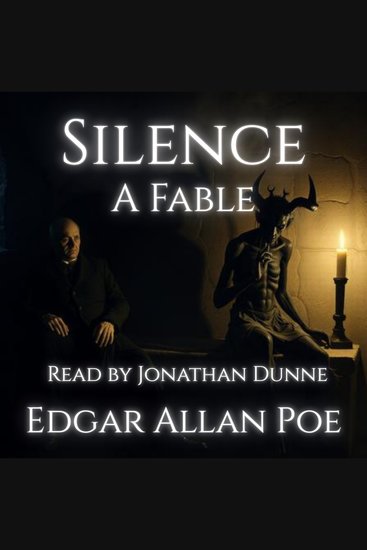
  • Silence - A Fable - cover

    Silence - A Fable

    Edgar Allan Poe

    • 0
    • 0
    • 0
    More classic horror narrations on Jonathan Dunne Horror Stories & Audiobooks: https://www.youtube.com/@JonathanDunneHorrorAudiobooks 
    Title: Silence: A Fable 
    Author: Edgar Allan Poe 
    Narrator: Jonathan Dunne 
    Original Publication: 1839 
    Public Domain: Yes 
    Series Placement: Timeless Terrors No. 65 
    Description: 
    Silence: A Fable is one of Edgar Allan Poe’s most haunting and introspective works — a meditation on isolation, the human soul, and the subtle terrors that dwell in stillness itself. The story follows a lone traveler who encounters an otherworldly figure in a desolate, silent landscape. Through cryptic dialogue and atmospheric detail, Poe explores themes of mortality, existential dread, and the ineffable forces that govern life and death. 
    The horror in Silence: A Fable arises not from action or gore, but from the oppressive quiet that permeates every scene — a silence so profound it becomes almost a tangible presence. Shadows, echoes, and the interplay between light and dark create an atmosphere of uncanny tension, reminding readers that human perception is fragile and limited. 
    Narrated by Amazon-bestselling horror author Jonathan Dunne, this performance captures the ethereal dread, reflective melancholy, and enigmatic beauty of Poe’s prose. While the text itself is fully in the public domain, this narration and production are copyright © 2025 Jonathan Dunne. 
    Part of Timeless Terrors, a series devoted to reviving the classics of horror, Silence: A Fable is a chilling reminder that sometimes the most terrifying forces are not seen or heard — but felt, in the spaces between. 🕯️
    Show book
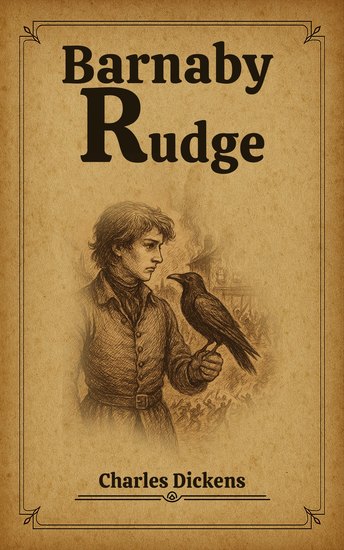
  • Barnaby Rudge - cover

    Barnaby Rudge

    Charles Dickens

    • 0
    • 0
    • 0
    Barnaby Rudge is a powerful historical novel by Charles Dickens that combines vivid social commentary with gripping drama, set against the turbulent backdrop of the Gordon Riots of 1780. As one of Dickens's lesser-known yet deeply compelling works, the novel explores the dangers of mob violence, political fanaticism, and the human cost of social unrest.
    
    At the heart of the story is Barnaby Rudge, a kind-hearted young man with an intellectual disability, whose innocence and vulnerability stand in stark contrast to the chaos surrounding him. Guided by his devoted mother and accompanied by his ominous raven, Grip, Barnaby becomes tragically swept up in the violent anti-Catholic riots that engulf London. His personal journey unfolds alongside a wide cast of characters, including secretive fathers, conflicted lovers, and ruthless agitators, whose lives intersect as private grievances collide with public disorder.
    
    Dickens masterfully portrays the frightening psychology of crowds and the ease with which fear and prejudice can ignite mass violence. Through dramatic scenes of destruction and upheaval, he exposes the manipulation of ordinary people by demagogues and highlights the fragility of justice and reason in times of crisis. At the same time, the novel remains deeply human, emphasizing compassion, loyalty, and moral responsibility.
    
    Rich in atmosphere and historical detail, Barnaby Rudge blends suspense, romance, and social criticism in Dickens's signature style. Its exploration of innocence versus corruption, order versus chaos, and individual conscience versus collective madness remains strikingly relevant.
    
    Barnaby Rudge stands as an important work in Dickens's canon and a vivid reminder of the destructive power of intolerance and extremism. It is an essential read for lovers of classic literature, historical fiction, and novels that probe the darker currents of society while affirming the enduring value of humanity and empathy.
    Show book

  • Antarctic Mystery An - cover

    Antarctic Mystery An

    Jules Verne

    • 0
    • 0
    • 0
    A wealthy American Jeorling is looking for a passage back to the USA after private studies of the wildlife on the Kerguelen Islands. Halbrane is one of the first ships to arrive at Kerguelen, and its captain Len Guy somewhat reluctantly agrees to have Jeorling as a passenger as far as Tristan da Cunha. Underway, they meet a stray iceberg with a dead body on it, which turns out to be a sailor from Jane. A note found with him indicates that he and several others including Jane's captain William Guy had survived the assassination attempt at Tsalal and are still alive.
    Show book
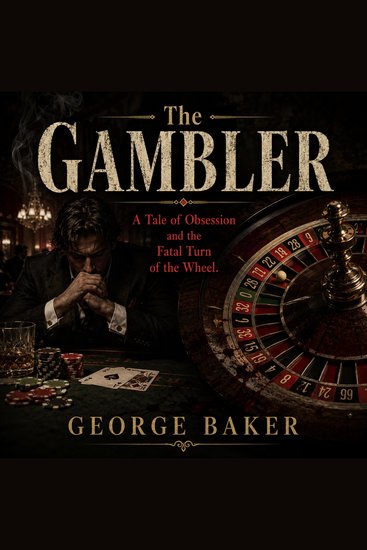
  • The Gambler - A Tale of Obsession and the Fatal Turn of the Wheel - cover

    The Gambler - A Tale of...

    Fyodor Dostoevsky

    • 0
    • 0
    • 0
    Written under extreme pressure and drawing from Dostoevsky's own destructive addiction, 'The Gambler' is a visceral portrait of the gambling mania. Through the eyes of Alexey Ivanovitch, we enter the high-stakes world of European spas and casinos, where social status and sanity are staked on a single number. A timeless psychological thriller narrated with captivating intensity by George Baker.
    Show book
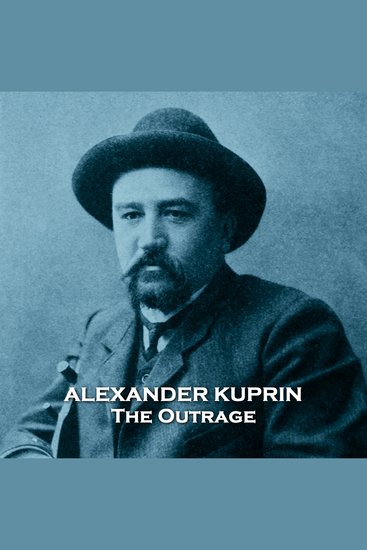
  • The Outrage - From their pens to your ears genius in every story - cover

    The Outrage - From their pens to...

    Alexander Kuprin

    • 0
    • 0
    • 0
    Alexander Kuprin was born in Narovchat, Penza in Russia on 7th September 1870. 
    At 3 his Father died and he and mother moved to Moscow. By 10 he was enrolled at the Second Moscow Military High School and there his interest in literature began. The Alexander Military Academy followed and two years later he was a sub-lieutenant and posted to an Infantry Regiment for a further four years. 
    Despite his duties he was a now a keen writer and published his first short story at this time. His military duties also garnered him experiences for his breakthrough work ‘The Duel’.  Leaving the military he left for Kiev to work for local newspapers.  He continued to publish both stories and novels and by 1901 he was in St Petersburg becoming part of a group that included Chekhov, Ivan Bunin, Maxim Gorky and Leonid Andreyev.  
    In the years that followed further controversial works and acclaim followed.  His comments on the regime meant he was also put under secret police surveillance.   
    As World War I erupted, Kuprin opened a military hospital but was then given command of an infantry company in Finland. He was soon discharged on grounds of ill health.  
    The October Revolution saw him praise Lenin, but he warned that the Bolsheviks threatened Russian culture and might cause further widespread suffering to the peasants.  As Civil War raged he took his family to Helsinki and then on to Paris. 
    Exile saw his talents decline further and his succumbing to alcoholism. He became lonely and withdrawn. The family's poverty increased his malaise.   
    In May 1937, the Kuprin’s returned to Moscow.  He now saw his work published but wrote almost nothing new.  In 1938 his health rapidly deteriorated.  Already suffering from a kidney problems and sclerosis, he had now developed cancer of the oesophagus.  
    Alexander Kuprin died on 25th August 1938.
    Show book