Join us on a literary world trip!
Add this book to bookshelf
Grey
Write a new comment Default profile 50px
Grey
Subscribe to read the full book or read the first pages for free!
All characters reduced
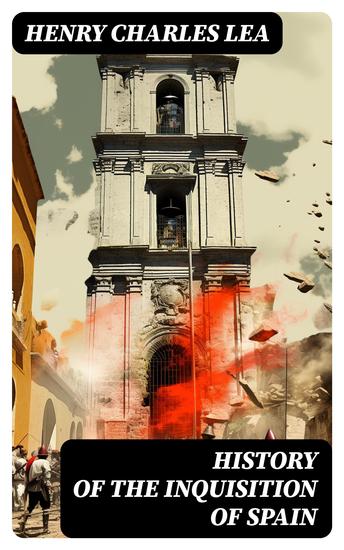
History of the Inquisition of Spain - cover

History of the Inquisition of Spain

Henry Charles Lea

Publisher: DigiCat

  • 0
  • 0
  • 0

Summary

Henry Charles Lea's "History of the Inquisition of Spain" serves as a meticulous exploration of one of history's most controversial institutions. Written in the late 19th century, the book employs rigorous research and a critical analytical style to elucidate the complexities of the Spanish Inquisition, highlighting its socio-political context and religious motivations. Lea's extensive use of primary sources, including official documents and contemporary accounts, enhances the work's academic authenticity, while his narrative is interspersed with thoughtful reflections on the cultural ramifications of such an oppressive regime. Lea, an American historian and abolitionist, was profoundly influenced by the prevailing conflicts between enlightenment ideals and institutional authority. His commitment to social justice and advocacy for legal reform is evident in his writings, as he sought not only to document but also to critique the abuses of power endemic to the Inquisition. His scholarly background, particularly his interest in European history and religious intolerance, uniquely positioned him to tackle the intricacies of the Spanish Inquisition with both expertise and moral urgency. This work is highly recommended for anyone interested in the intersection of history, religion, and human rights. Lea's detailed and engaging narrative provides crucial insights into the dark corners of institutionalized terror, making it essential reading for historians, students, and informed citizens alike.
Available since: 11/15/2023.
Print length: 2447 pages.

Other books that might interest you

  • The Dollmaker’s Curse - Don’t Let Her Eyes Catch You - cover

    The Dollmaker’s Curse - Don’t...

    Willow Thorne

    • 0
    • 0
    • 0
    In the quiet town where secrets sleep, a chilling legend awakens. The Dollmaker’s Curse haunts those who dare cross her path — a sinister spirit trapped within lifeless dolls, waiting for one thing: for you to meet her gaze. Don’t let her eyes catch you, or you’ll be forever trapped in her twisted collection. Can you escape the eerie dollhouse before the curse claims your soul? Beware—the Dollmaker is watching.
    Show book
  • Reflections on War and Death - cover

    Reflections on War and Death

    Sigmund Freud

    • 0
    • 0
    • 0
    "Reflections on War and Death" is a collection of essays written by Sigmund Freud, the renowned psychoanalyst, and founder of psychoanalysis. Originally published in 1918, the book delves into Freud's reflections on the psychological implications of war and the human experience of death. Freud explores the complex interplay between aggression, violence, and the human psyche, offering insights into the ways in which war and death shape individual and collective behavior. Drawing on his deep understanding of human psychology, Freud examines the impact of traumatic experiences, such as those encountered in wartime, on mental health and the human condition. Through his analysis, Freud provides thought-provoking perspectives on the darker aspects of human nature and the enduring effects of conflict on society.
    Show book
  • The Messianic Character of American Education - cover

    The Messianic Character of...

    R. J. Rushdoony

    • 0
    • 0
    • 0
    Rushdoony's study tells us an important part of American history: exactly what has public education been trying to accomplish? Before the 1830s and Horace Mann, no schools in the U.S. were state supported or state controlled. They were local, parent-teacher enterprises, supported without taxes, and taking care of all children. They were remarkably high in standard and were Christian. From Mann to the present, the state has used education to socialize the child. The school's basic purpose, according to its own philosophers, is not education in the traditional sense of the 3 R's. Instead, it is to promote "democracy" and "equality," not in their legal or civic sense, but in terms of the engineering of a socialized citizenry. Public education became the means of creating a social order of the educators design. Such men saw themselves and the school in messianic terms. This book was instrumental in launching the Christian school and homeschool movements.
    Show book
  • Episode 17 - The States of India - cover

    Episode 17 - The States of India

    Anjum Sharma

    • 0
    • 0
    • 0
    India is a union of 28 states, additionally consisting of 8 union territories. The history, culture, festivals and language of each state and union territories are different. Discover this diverse range of information in this episode.
    Show book
  • Churchill's War - How Winston Churchill Led Britain through Its Darkest Hours - cover

    Churchill's War - How Winston...

    Sage Winters

    • 0
    • 0
    • 0
    Winston Churchill is remembered as one of history’s most formidable leaders, a man whose unwavering resolve and stirring oratory inspired a beleaguered nation to withstand its darkest hour. Rising to prominence during one of humanity’s most perilous times, Churchill’s leadership during World War II not only shaped the fate of Britain but left an indelible mark on the global landscape. His life and career encapsulate the qualities of resilience, vision, and adaptability that are crucial during moments of profound crisis.  
      
    Born into an aristocratic family in 1874, Churchill's early life was one of privilege, yet his path to greatness was anything but guaranteed. Despite academic struggles and initial failures, he demonstrated remarkable tenacity, carving out a career as a soldier, journalist, and eventually a politician. His varied experiences—whether charging on horseback in colonial campaigns or reporting from the frontlines—imbued him with a deep understanding of courage and strategy, traits that would serve him well in the years to come.  
      
    Churchill’s rise to the role of wartime Prime Minister was far from linear. By the late 1930s, his political career seemed to be in decline. His outspoken criticism of appeasement policies and his relentless warnings about Adolf Hitler’s ambitions rendered him an isolated figure, often dismissed as a relic of an earlier age. Yet, as Europe hurtled toward war, Churchill’s foresight and defiance became assets too valuable to ignore. In 1940, as Nazi Germany’s forces swept across the continent, Churchill was called upon to lead. 
    Show book
  • The Eurasian Century - Hot Wars Cold Wars and the Making of the Modern Century - cover

    The Eurasian Century - Hot Wars...

    Hal Brands

    • 0
    • 0
    • 0
    We often think of the modern era as the age of American power. In reality, we're living in a long, violent Eurasian century. That giant, resource-rich landmass possesses the bulk of the global population, industrial might, and potential military power. Eurasia is a strategic prize without equal—which is why the world has been roiled, reshaped, and nearly destroyed by clashes over the supercontinent. 


    Since the early twentieth century, autocratic powers have aspired for dominance by seizing commanding positions in the world's strategic heartland. Offshore sea powers, namely the United Kingdom and America, have sought to make the world safe for democracy by keeping Eurasia in balance. America's rivalries with China, Russia, and Iran are the next round in this geopolitical game. If this new authoritarian axis succeeds in enacting a radically revised international order, America and other democracies will be vulnerable and insecure. 


    Hal Brands argues that a better understanding of Eurasia's strategic geography can illuminate the contours of rivalry and conflict in today's world. The Eurasian Century explains how revolutions in technology and warfare, and the rise of toxic ideologies of conquest, made Eurasia the center of twentieth-century geopolitics—with pressing implications for the struggles that will define the twenty-first.
    Show book