Join us on a literary world trip!
Add this book to bookshelf
Grey
Write a new comment Default profile 50px
Grey
Subscribe to read the full book or read the first pages for free!
All characters reduced
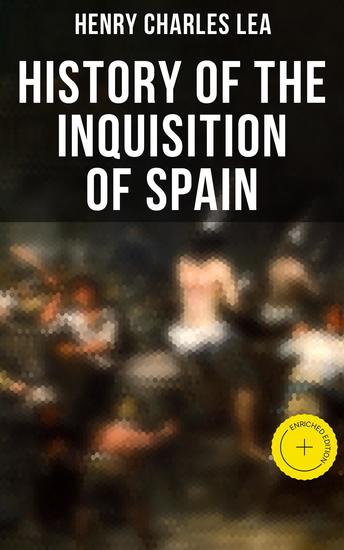
History of the Inquisition of Spain - Enriched edition - cover

History of the Inquisition of Spain - Enriched edition

Henry Charles Lea

Publisher: Musaicum Books

  • 0
  • 0
  • 0

Summary

Henry Charles Lea's 'History of the Inquisition of Spain' is a seminal work that delves into the dark and controversial history of the Spanish Inquisition. Published in the late 19th century, Lea meticulously examines the origins, procedures, and impact of the Inquisition in Spain, providing a comprehensive account of this period in history. His writing style is both detailed and analytical, with a focus on primary source documents and historical evidence. Lea's thorough research and critical analysis make this book a valuable resource for scholars and students interested in medieval history and religious persecution. It sheds light on a complex and often misunderstood chapter in Spain's past. Henry Charles Lea, a renowned historian and scholar, was known for his expertise in religious history and his meticulous research methods. His background in law and his interest in uncovering the truth behind historical events are evident in this work. Lea's dedication to uncovering the truths behind the Inquisition in Spain makes this book a compelling and informative read for anyone interested in European history, religious studies, or the pursuit of knowledge.

In this enriched edition, we have carefully created added value for your reading experience:
- A succinct Introduction situates the work's timeless appeal and themes.
- The Synopsis outlines the central plot, highlighting key developments without spoiling critical twists.
- A detailed Historical Context immerses you in the era's events and influences that shaped the writing.
- A thorough Analysis dissects symbols, motifs, and character arcs to unearth underlying meanings.
- Reflection questions prompt you to engage personally with the work's messages, connecting them to modern life.
- Hand‐picked Memorable Quotes shine a spotlight on moments of literary brilliance.
- Interactive footnotes clarify unusual references, historical allusions, and archaic phrases for an effortless, more informed read.
Available since: 12/17/2020.
Print length: 2447 pages.

Other books that might interest you

  • Columbian Exchange The: A Captivating Guide to the Transatlantic Transfer of People Plants Animals Ideas Resources and More Between the Americas and Europe - cover

    Columbian Exchange The: A...

    Captivating History

    • 0
    • 0
    • 0
    How two worlds became one. 
    In this audiobook, you will understand how Christopher Columbus proposed something new: reaching the riches of the East Indies by sailing west from Europe. The rulers of Spain agreed to support his risky venture, and he sailed off in 1492. He unexpectedly ran into two continents nobody in Europe knew about. He didn’t discover the continents; that had been done centuries before. 
    Discover how the Old World of Eurasia and Africa began a monumentally important exchange of people, ideas, crops, animals, and diseases that changed history and humanity forever. This extended stitching together of the two hemispheres is called the Columbian Exchange. 
    You’ll be fascinated by how Europeans did not know if the fifty million indigenous Americans were human and how a pope issued a proclamation in 1534 that the American native peoples actually had souls. 
    You’ll learn how the initial contacts led to one of the greatest catastrophes in all of human history and how smallpox enabled Cortes and the Spanish to conquer the Aztec Empire, which was bigger than Spain. 
    In this captivating audiobook, you will learn about the following:Japanese samurai who guarded silver shipments in Mexico in the 1600s;Catarina de San Juan, who began life as a Muslim girl in India and ended as a popular saint in Mexico;The immense amount of silver from Peru and Mexico, which fueled Spain’s Golden Century and led to repeated bankruptcy;American chili peppers giving some heat to cuisines from Hungary to Korea;Crops domesticated by indigenous Americans enabling China to double its population;Disease from the Americas making millions of Europeans miserable, including Henry VIII, Casanova, Ivan the Terrible, and Beethoven; 
    Be sure to click the “add to cart” button so you can start learning about this world-shaking event in history!
    Show book
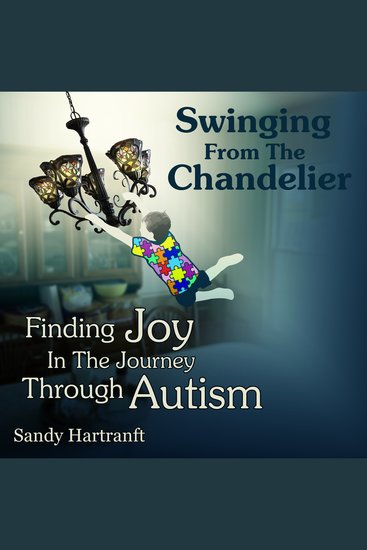
  • Swinging From The Chandelier - Finding Joy In The Journey Through Autism - cover

    Swinging From The Chandelier -...

    Sandy Hartranft, Glenn Hartranft

    • 0
    • 0
    • 0
    The day I found Ben swinging from the chandelier, I knew two things - being his mom was going to be a wild ride, and if I ever decided to write a book about it, I had my title. This book started as a way to cope, a reminder to breathe as I raised three boys, including Ben, who was diagnosed with autism at age 2. It tells our story - from experiencing the complex emotions of fear and guilt at hearing the diagnosis, to fighting tooth-and-nail with the school district to get Ben the services he needed. Our journey isn't over yet, but my once-nonverbal, illiterate son is now a public speaker. And this is the story of how - against all odds - he learned to read and write, learned to drive, and eventually got a job. It's the story of how he was voted homecoming king by his high school of 3,000, and how he continued to exceed all our expectations for him. 
    I have been working on this book for over 10 years. When I first started, it was a way for me to document events, feelings, successes, and missteps while raising our son, Ben, who was diagnosed with autism spectrum disorder at age two. Over time, I realized that the stories of other parents helped me on my own journey, so I hoped my book might do the same for someone else.
    Show book
  • Royal Navy Versus the Slave Traders - Enforcing Abolition at Sea 1808–1898 - cover

    Royal Navy Versus the Slave...

    Bernard Edwards

    • 0
    • 0
    • 0
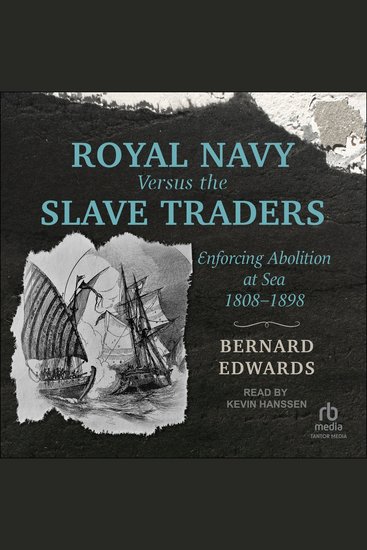
    On 16 March 1807, the British Parliament passed The Abolition of the Slave Trade Act. In the following year the Royal Navy's African Squadron was formed, its mission to stop and search ships at sea suspected of carrying slaves from Africa to the Americas and the Middle East. With typical thoroughness, the Royal Navy went further, and took the fight to the enemy, sailing boldly up uncharted rivers and creeks to attack the barracoons where the slaves were assembled ready for shipment. 


    For much of its long campaign against the evil of slavery, Britain's Navy fought alone and unrecognized. Its enemies were many and formidable. Ranged against it were the African chiefs, who sold their own people into slavery, the Arabs, who rode shotgun on the slave caravans to the coast, and the slave ships of the rest of the world, heavily armed, and prepared to do battle to protect their right to traffic in the forbidden so-called "black ivory." 


    The war was long and bitter and the cost to the Royal Navy in ships and men heavy, but the result was worthy of the sacrifices made. The abolition of the slave trade led to a scramble for empires and, in place of slaves, Africa began to export cocoa, coffee, timber, palm oil, cotton and ores, all very much in demand in the West.
    Show book
  • Civil Resistance - What Everyone Needs to Know - cover

    Civil Resistance - What Everyone...

    Erica Chenoweth

    • 0
    • 0
    • 0
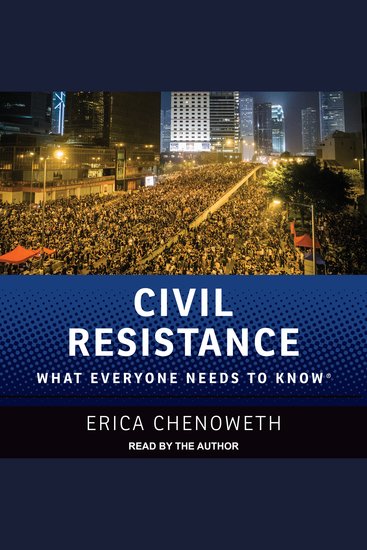
    Civil resistance is a method of conflict through which unarmed civilians use a variety of coordinated methods (strikes, protests, demonstrations, boycotts, and many other tactics) to prosecute a conflict without directly harming or threatening to harm an opponent. Sometimes called nonviolent resistance, unarmed struggle, or nonviolent action, this form of political action is now a mainstay across the globe. It was been a central form of resistance in the 1989 revolutions and in the Arab Spring, and it is now being practiced widely in Trump's America. If we are going to understand the manifold protest movements emerging around the globe, we need a thorough understanding of civil resistance and its many dynamics and manifestations. 


    In Civil Resistance: What Everyone Needs to Know®, Erica Chenoweth—one of the world's leading scholars on the topic—explains what civil resistance is, how it works, why it sometimes fails, how violence and repression affect it, and the long-term impacts of such resistance. Featuring both historical cases of civil resistance and more contemporary examples such as the Arab Awakenings and various ongoing movements in the United States, this book provides a comprehensive yet pithy overview of this enormously important subject.
    Show book
  • Pigeons - The Fascinating Saga of the World's Most Revered and Reviled Bird - cover

    Pigeons - The Fascinating Saga...

    Andrew D. Blechman

    • 0
    • 0
    • 0
    A "quirky, endlessly entertaining" look at the surprising history of the pigeon (Simon Winchester). 


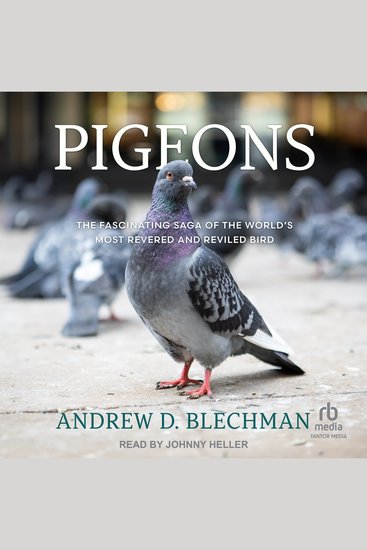
    Domesticated since the dawn of man, pigeons have been used as crucial communicators in war by every major historical superpower from ancient Egypt to the United States and are credited with saving thousands of lives. They have been worshipped as fertility goddesses and revered as symbols of peace. Charles Darwin relied heavily on pigeons to help formulate and support his theory of evolution. Yet today they are reviled as "rats with wings." 


    To research this lively history of the humble pigeon, the author traveled across the United States and Europe to meet with pigeon fanciers and pigeon haters in a quest to find out how we came to misunderstand one of mankind’s most helpful and steadfast companions. Pigeons captures a Brooklyn man's quest to win the Main Event (the pigeon world's equivalent of the Kentucky Derby), as well as a convention dedicated to breeding the perfect bird. The author participates in a live pigeon shoot where entrants pay $150; he tracks down Mike Tyson, the nation's most famous pigeon lover; he spends time with Queen Elizabeth's Royal Pigeon Handler; and he sheds light on a radical "pro-pigeon underground" in New York City. In Pigeons, Andrew D. Blechman reveals for the first time the remarkable story behind this seemingly unremarkable bird.
    Show book
  • Nietzsche in 3 Hours - Philosophy Core Concepts and Misreadings — A Complete Guide for Readers in a Hurry - cover

    Nietzsche in 3 Hours -...

    Civitas Ratio

    • 0
    • 0
    • 0
    Pressed for time—but want to finally understand Nietzsche? 
    Want to sound sharp in conversation—without dropping random quotes? 
    Got an exam coming up—but no time to wade through five dense volumes? 
    This book was made for you. 
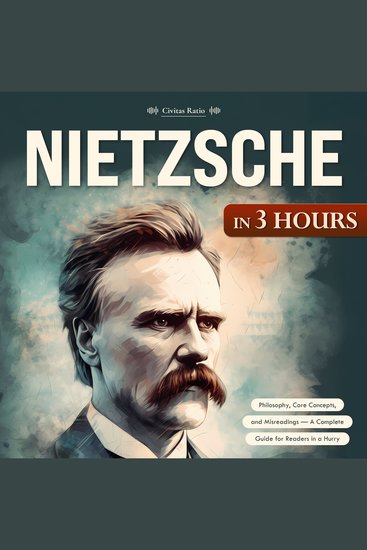
    Nietzsche in 3 Hours delivers the essentials of one of modernity’s most radical—and most misinterpreted—thinkers. No shortcuts, no empty simplifications. Just the real Nietzsche: sharp, provocative, ruthless toward lazy thinking and moral complacency. 
    What you’ll find inside: 
    – A clear, structured overview of his most important works 
    – Key concepts explained: will to power, eternal return, Übermensch, nihilism 
    – Authentic quotes, not distorted clichés from the internet 
    – A guided path through his shifting ideas and writing phases 
    – Common misreadings exposed—from nationalist myths to self-help distortions 
    – His impact on modern thought, from psychoanalysis to postmodernism 
    – A tight, rigorous format designed for real understanding—even under time pressure 
    This book is for you if: 
    – You’re studying and need clarity, fast 
    – You want to understand, not just name-drop 
    – You’re tired of vague takes and butchered quotes 
    – You’re short on time but serious about getting it right 
    You don’t need years to get Nietzsche. 
    Just the right guide—and three hours that count.
    Show book