Join us on a literary world trip!
Add this book to bookshelf
Grey
Write a new comment Default profile 50px
Grey
Subscribe to read the full book or read the first pages for free!
All characters reduced
The Master Builder - cover

The Master Builder

Henrik Ibsen

Publisher: DD Sales & Distributors

  • 0
  • 0
  • 0

Summary

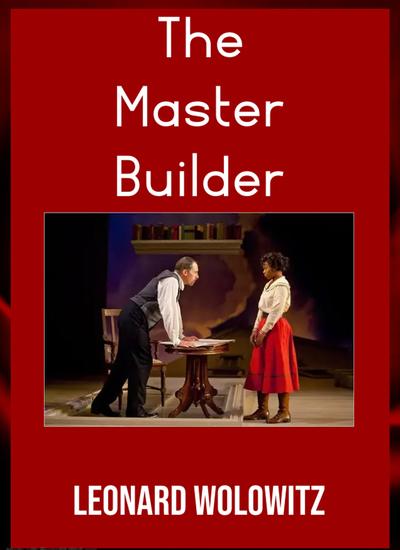
The Master Builder is a play by Norwegian playwright Henrik Ibsen. It was first published in December 1892 and is regarded as one of Ibsens more significant and revealing works.
Available since: 09/19/2023.
Print length: 103 pages.

Other books that might interest you

  • Far From The Madding Crowd - cover

    Far From The Madding Crowd

    Thomas Hardy

    • 0
    • 0
    • 0
    "Far From the Madding Crowd" is a novel written by Thomas Hardy, first published in 1874. The story is set in the rural English countryside and revolves around the life and romantic entanglements of Bathsheba Everdene, a headstrong and independent woman who inherits a farm. The novel explores themes of love, fate, and the complexities of relationships. 
     
    In the early part of the novel, Bathsheba Everdene inherits a farm called Weatherbury from her uncle. She is a beautiful and spirited young woman who attracts the attention of three very different suitors: Gabriel Oak, a humble and dependable shepherd; William Boldwood, a wealthy and reserved bachelor; and Sergeant Francis Troy, a dashing but reckless soldier. Bathsheba's choices and interactions with these men form the central focus of the story. Her decisions and the consequences of her actions drive the narrative forward and showcase the challenges and choices that women of the time faced in matters of love and marriage. 
     
    As the novel unfolds, Bathsheba's character undergoes significant development, and she grapples with her own emotions and the repercussions of her choices. "Far From the Madding Crowd" delves into the complexities of love and relationships, portraying the rural landscape and its inhabitants in vivid detail. Thomas Hardy's evocative prose and compelling characters make this novel a timeless classic that continues to resonate with readers, exploring timeless themes of human nature and the rural life in 19th-century England.
    Show book
  • A Single Man - cover

    A Single Man

    Christopher Isherwood

    • 0
    • 0
    • 0
    George is heartbroken after the death of his lover, Jim.
    A professor of English in sunny, suburban California, George grieves in solitude, surrounded by easy-going, uncomprehending youth. Beneath his British restraint, waves of sorrow and anger surge. He doggedly persists with the routines of his past life, heading out to work, to the gym, on again to dinner. From his solitude springs defiance; he will triumph over loneliness and alienation, he will find love again, he will feel joy.
    Isherwood’s short, poignant novel, long recognized as a masterpiece, is a founding work of contemporary gay literature. Alex Jennings, in this celebrated performance, captures every nuance.
    Show book
  • Tobermory - From their pens to your ears genius in every story - cover

    Tobermory - From their pens to...

    Saki Saki

    • 0
    • 0
    • 0
    Hector Hugh Munro, more familiarly known by his pen-name ‘Saki’ was born in what was then Akyab in British Burma on 18th December 1870. His father was an Inspector General for the Indian Imperial Police, and his mother the daughter of a Rear Admiral. 
    When he was 2 his mother died and he and his siblings were sent back to England to be raised by their grandmother and paternal maiden aunts in a strict, puritanical household near Barnstaple, Devon. Educated by governesses Saki used many of these women as character models for his later writing. 
    At 17 his father retried and returned to England and then embarked on a series of European travels with Saki and his siblings. 
    After a short stint working in Burma with the Indian Imperial Police Saki decided to move to London to make a living as a writer. Initially he wrote as a journalist for a number of newspapers and magazines before attempting an historical study, ‘The Rise of the Russian Empire’, whose real value lay in directing him to writing short stories instead, the first of which, ‘Dogged’, he published in 1899. 
    From here it was a short stab of the pen to writing political satire before in 1902 he became the foreign correspondent for The Morning Post, first in the Balkans, then Russia, Paris and back to London in 1908, where 'the agreeable life of a man of letters with a brilliant reputation awaited him.'  
    Collections of his short stories full of witty, mischievous and often macabre stories that satirized Edwardian society and two novels now appeared in the years up to the Great War.  At its’ outbreak he was 43 but managed to join as an ordinary trooper. More than once he returned to the battlefield when officially too sick or injured.  
    On 14th November 1916 Hector Hugh Munro was sheltering in crater during the Battle of the Ancre, when he was shot and killed by a German sniper. According to several sources, his last words were "Put that bloody cigarette out!"
    Show book
  • Fairy Tales Collection by Hans Christian Andersen - cover

    Fairy Tales Collection by Hans...

    Hans Christian Andersen

    • 0
    • 0
    • 0
    A beautifully curated collection of timeless fairy tales enriched with valuable notes and insights.
    
    This anthology presents Andersen's beloved stories alongside annotations that illuminate their history, meaning, and cultural significance. Filled with imagination, wonder, and unforgettable characters, these tales continue to inspire readers of all ages.
    
    Written by Hans Christian Andersen, this collection is an essential addition to every fairy tale library.
    Show book
  • Meet Mr Mulliner - cover

    Meet Mr Mulliner

    P. G. Wodehouse

    • 0
    • 0
    • 0
    In Mr Mulliner, P.G Wodehouse (1881 -1975) has created a conduit for all manner of tall tales. The amiable gentleman happily regales the drinkers in the Angler’s Rest Pub with fascinating stories, usually about his own relatives, which range from the somewhat dubious, to the downright unbelievable.  
    Welcome to this eccentric world inhabited by Curates and Bishops high on health tonic, and a lovesick chap who utilises beauty remedies to win his love. A world where a deceased author’s cottage appears to exert a sentimental influence on all who enter, and where an earthquake can lead to marriage. 
      
    Wodehouse’s most famous creations the implacable “Jeeves” and the archetypal English toff “Bertie Wooster” are only the tip of the author’s considerable output. A master of humorous prose, he published over ninety books, forty plays and two hundred short stories.  
    Head Stories presents " Meet Mr Mulliner" - narrated by Simon Hester
    Show book
  • The Assassin - From their pens to your ears genius in every story - cover

    The Assassin - From their pens...

    Karl Hans Strӧbl

    • 0
    • 0
    • 0
    Karl Hans Strӧbl was born in Jihlava, Moravia in the Czech Republic, then part of the Austro-Hungarian Empire, on the 18th of January 1877. 
    His education finished with his studies at the University of Prague, where he became involved in nationalist student politics, a precursor to his later right-wing and anti-semitic viewpoints. 
    In 1910 he wrote an apocalyptic novel ‘Eleagabal Kuperus’, which was later adapted into a silent film. 
    His literary output was prolific and ranged from macabre, supernatural and weird short stories, through fantasy novels to a trilogy of books about Otto von Bismarck.  
    In 1919 he also founded the world’s first specialised fantasy magazine the short-lived ‘Der Orchideengarten’. 
    Although highly regarded as one of the Dark Princes of Austrian literature his life outside literature is tainted by his fervent support of the Nazis.  After the Second World War his work was briefly banned by Allied forces.  He himself served a period of forced labour at the hands of the Red Army. 
    Karl Hans Strӧbl died in a poorhouse in Perchtoldsdorf, Austria on the 10th March 1946.  He was 69.
    Show book