Join us on a literary world trip!
Add this book to bookshelf
Grey
Write a new comment Default profile 50px
Grey
Subscribe to read the full book or read the first pages for free!
All characters reduced
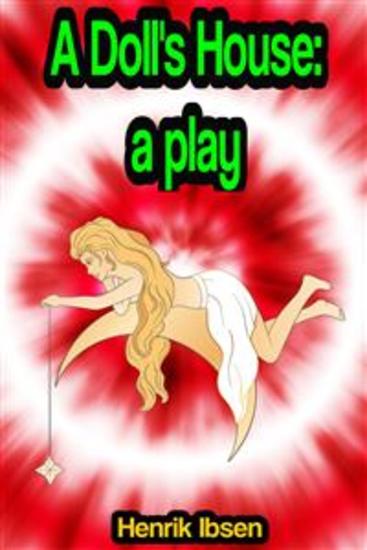
A Doll's House : a play - cover

A Doll's House : a play

Henrik Ibsen

Publisher: Memorable Classics eBooks

  • 0
  • 0
  • 0

Summary

A Doll's House : a play by Henrik Ibsen -  (Danish and Bokmål: Et dukkehjem; also translated as A Doll House) is a three-act play written by Norwegian playwright Henrik Ibsen. It premiered at the Royal Theatre in Copenhagen, Denmark, on 21 December 1879, having been published earlier that month. The play is set in a Norwegian town circa 1879.

The play is significant for the way it deals with the fate of a married woman, who at the time in Norway lacked reasonable opportunities for self-fulfillment in a male-dominated world, despite the fact that Ibsen denied it was his intent to write a feminist play. It aroused a great sensation at the time, and caused a "storm of outraged controversy" that went beyond the theatre to the world of newspapers and society.

In 2006, the centennial of Ibsen's death, A Doll's House held the distinction of being the world's most performed play that year. UNESCO has inscribed Ibsen's autographed manuscripts of A Doll's House on the Memory of the World Register in 2001, in recognition of their historical value.

The title of the play is most commonly translated as A Doll's House, though some scholars use A Doll House. John Simon says that A Doll's House is "the British term for what [Americans] call a 'dollhouse'". Egil Törnqvist says of the alternative title: "Rather than being superior to the traditional rendering, it simply sounds more idiomatic to Americans."
Available since: 05/31/2022.
Other books that might interest you

  • Cruise of the Coracle The (Unabridged) - cover

    Cruise of the Coracle The...

    Robert Louis Stevenson

    • 0
    • 0
    • 0
    Robert Louis Stevenson (born Robert Lewis Balfour Stevenson; 13 November 1850 - 3 December 1894) was a Scottish novelist, essayist, poet and travel writer. He is best known for works such as Treasure Island, Strange Case of Dr Jekyll and Mr Hyde, Kidnapped and A Child's Garden of Verses. Born and educated in Edinburgh, Stevenson suffered from serious bronchial trouble for much of his life, but continued to write prolifically and travel widely in defiance of his poor health. As a young man, he mixed in London literary circles, receiving encouragement from Andrew Lang, Edmund Gosse, Leslie Stephen and W. E. Henley.
    THE CRUISE OF THE CORACLE: It was broad day when I awoke, and found myself tossing at the southwest end of Treasure Island. The sun was up, but was still hid from me behind the great bulk of the Spy-glass, which on this side descended almost to the sea in formidable cliffs.
    Show book
  • The Purple Cloud - cover

    The Purple Cloud

    M. P. Shiel

    • 0
    • 0
    • 0
    "The Purple Cloud" is a science fiction novel written by M. P. Shiel, first published in 1901. The novel is set in a post-apocalyptic world and follows the story of Adam Jeffson, an explorer who discovers a mysterious purple cloud that wipes out all life on Earth, except for himself. As the last man alive, Jeffson grapples with loneliness, madness, and the consequences of his discovery.
    Show book
  • Bliss - cover

    Bliss

    Katherine Mansfield

    • 0
    • 0
    • 0
    "Bliss" is a modernist short story by Katherine Mansfield first published in 1918. It was published in the English Review in August 1918 and later reprinted in Bliss and Other Stories.
    The story follows a dinner party given by Bertha Young and her husband Harry.
    Show book
  • God Sees the Truth But Waits - From their pens to your ears genius in every story - cover

    God Sees the Truth But Waits -...

    Leo Tolstoy

    • 0
    • 0
    • 0
    Leo Tolstoy was born in 1828 in the Russian province of Tula to a wealthy noble family. As a child, he had private tutors but he showed little interest in any formal education. When he went to the University of Kazan in 1843 to study oriental languages and law, he left without completing his courses.  Life now was relaxed and idle but with some writing also taking place.  Gambling debts forced an abrupt change of path and he joined the army to fight in the Crimean War.  He was commended for his bravery and promoted but was appalled at the brutality and loss of life.  He recorded these and other earlier experiences in his diaries which formed the basis of several of his works. 
    In 1852 ‘Childhood’ was published to immediate success and was followed by ‘Boyhood’ and ‘Youth’. 
    His experience in the army and the horrors he witnessed resulted in ‘The Cossacks’ in 1862 and the trilogy ‘Sevastopol Tales’. After the war he travelled around Europe, visiting London and Paris and meeting such luminaries as Victor Hugo and Charles Darwin.  
    It was now that Tolstoy began his masterpiece, ‘War and Peace’. Published in 1869 it was an epic work that changed literature. He quickly followed this with ‘Anna Karenina’.  
    These successes made Tolstoy rich and helped him accomplish many of his dreams but also brought problems as he grappled with his faith and the lot of the oppressed poor. These revolutionary views became so popular that the authorities now kept him under surveillance.  
    He led a life of asceticism and vegetarianism and put his socialist ideals into practice by establishing numerous schools for the poor and food programmes. He also believed in giving away his wealth, which caused much discord with his wife.  
    His writing continued to bring forth classics such as ‘The Death of Ivan Ilyich’ and many brilliant and incisive short stories such as ‘How Much Land Does A Man Need’.  
    In 1901 Tolstoy was excommunicated from the Church and controversially deselected for the Nobel Prize for Literature. 
    Whilst undertaking a pilgrimage by train in October 1910 with his daughter Aleksandra he caught pneumonia in the nearby town of Astapovo.  Leo Tolstoy died on November 9th, 1910, he was 82.
    Show book
  • Boots - cover

    Boots

    Anton Pavlovich Chekhov

    • 0
    • 0
    • 0
    Classic short story about a man who wakes up to find his shoes missing.
    Show book
  • Diary of a Mad Man - cover

    Diary of a Mad Man

    Guy de Maupassant

    • 0
    • 0
    • 0
    Title: The Diary of a Madman 
    Author: Guy de Maupassant 
    Narrator: Jonathan Dunne 
    Original Publication: 1885 
    Public Domain: Yes 
    Series Placement: Number 14 in the Timeless Terrors series 
    Description: 
    The Diary of a Madman by Guy de Maupassant is a chilling study of psychological horror and the fragility of sanity. First published in 1885, it presents the private writings of a respected judge whose outward civility hides a dark descent into obsession and cruelty. 
    Told through the intimate form of diary entries, the story reveals the gradual unraveling of a mind — a voice both rational and terrifyingly unhinged. Maupassant strips away the veneer of normalcy to expose the horrors lurking within the human psyche. 
    This recording, narrated by Amazon bestselling horror author Jonathan Dunne, captures the eerie intimacy and creeping dread that defines Maupassant’s tale. While the text is in the public domain, this performance is an original work and copyright © 2025 Jonathan Dunne. 
    This audiobook is part of Timeless Terrors, a dedicated series bringing classic horror back to life — stories from the great masters of the macabre, narrated afresh to haunt a new generation. 
    Listeners should be prepared for an unsettling exploration of madness, hidden violence, and the shadows that dwell in ordinary men.
    Show book