
Join us on a literary world trip!
Add this book to bookshelf
Grey
Write a new comment Default profile 50px
Grey
Subscribe to read the full book or read the first pages for free!
All characters reduced
This Country of Ours: The Story of the United States - cover

This Country of Ours: The Story of the United States

Henrietta Elizabeth Marshall

Publisher: e-artnow

  • 0
  • 0
  • 0

Summary

"This Country of Ours" is a collection of extraordinary stories from the history of the United States beginning with accounts of exploration and settlement and ending with the presidency of Woodrow Wilson.  This is a book which when you lay it down will make you say, "I'm glad that I was born an American." Contents:  Stories of Explorers and Pioneers How the Vikings of Old Sought and Found New Lands The Sea of Darkness and the Great Faith of Columbus How Columbus Fared Forth Upon the Sea of Darkness and Came to Pleasant Lands Beyond How Columbus Returned in Triumph How America Was Named How the Flag of England Was Planted on the Shores of the New World How the Flag of France Was Planted in Florida How the French Founded a Colony in Florida How the Spaniards Drove the French Out of Florida How a Frenchman Avenged the Death of His Countrymen The Adventures of Sir Humphrey Gilbert About Sir Walter Raleigh's Adventures in the Golden West Stories of Virginia The Adventures of Captain John Smith  More Adventures of Captain John Smith  How the Colony Was Saved  How Pocahontas Took a Journey Over the Seas  How the Redmen Fought Against Their White Brothers  How Englishmen Fought a Duel With Tyranny  The Coming of the Cavaliers  Bacon's Rebellion  The Story of the Knights of the Golden Horseshoe Stories of New England The Story of the Pilgrim Fathers  The Founding of Massachusetts  The Story of Harry Vane  The Story of Anne Hutchinson and the Founding of Rhode Island  The Founding of Harvard  How Quakers First Came to New England  How Maine and New Hampshire Were Founded  The Founding of Connecticut and War With the Indians  The Founding of New Haven  The Hunt for the Regicides  King Philip's War  How the Charter of Connecticut Was Saved  The Witches of Salem Stories of the Middle and Southern Colonies Stories of the French in America Stories of the Struggle for Liberty The Boston Tea-party  Stories of the United States Under the Constitution
Available since: 12/15/2023.
Print length: 516 pages.

Other books that might interest you

  • Thinking about Thinking - cover

    Thinking about Thinking

    Darin Jewell

    • 0
    • 0
    • 0
    "Thinking About Thinking" is a based on a series of lectures delivered at Harvard University in 1996 by Professors Alan Dershowitz (lawyer), Robert Nozick (philosopher) and Stephen Jay Gould (paleontologist) about perennial issues such as truth, free will, race, gender and religion.
    Show book
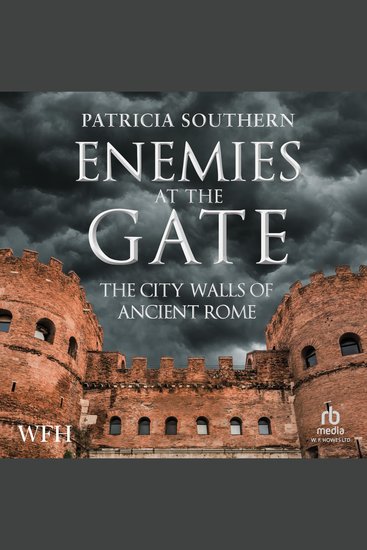
  • Enemies at the Gate - The City Walls of Ancient Rome - cover

    Enemies at the Gate - The City...

    Patricia Southern

    • 0
    • 0
    • 0
    The legend of the foundation of Rome by Romulus in 753BC accords very well with the earliest defensive walls on the Palatine Hill, made of clay and timber and showing evidence of animal sacrifices. To trace the continual efforts to fortify Rome is to trace the rise and fall of the Roman Empire - through the taking of the city by the Gauls in 390/387, the wars with the Italian states, the threat of Hannibal, the establishment of the Republic, attacks by the northern tribes and eventual division and collapse. By the 6th century AD, General Belisarius was desperately shoring up the walls with marble slabs from altars and gravestones. 
     
    Before the final dissolution, Emperor Aurelius had reunited the Eastern and Western Empires and earned the title of 'Restitutor orbis', restorer of the world. While doing so he initiated the building of the Aurelian Wall, much of which stands today. Its millions of bricks were placed by thousands of workers and 30 years after it was built it would withstand sieges by two Roman armies under Severus II and Galerius. During the civil wars a rampart walk was added over the interior galleries, fronted by a parapet with merlons, so in effect Rome was converted into an extremely large castle. Patton said that 'fixed fortifications are a monument to man's stupidity.' Perhaps the walls of Rome are the greatest example.
    Show book
  • TANTRUMS Tips and Tricks Effective Methods to Calm Your Child Fast! - cover

    TANTRUMS Tips and Tricks...

    Dr. Emily Rodriguez

    • 0
    • 0
    • 0
    Are you tired of dealing with your child's tantrums? Do you want to learn effective strategies to prevent and calm tantrums quickly? 
    Tantrums can be frustrating for both parents and children. But there are practical ways to manage them, and this book provides all the tips and tricks you need to know. 
    In Tantrums: Tips and Tricks, Effective Strategies to Calm Your Child Fast!, you will learn: 
    1.The causes and signs of tantrums 
    2.How to recognize and differentiate between a tantrum and a meltdown 
    3.Practical ways to create a calm environment at home 
    4.The benefits of routines and how to establish them effectively 
    5.Effective communication strategies to connect with your child 
    6.How to teach emotional regulation and coping skills 
    7.The power of positive reinforcement and practical examples 
    8.The benefits of time-outs and how to use them effectively 
    9.Strategies for distraction and redirection 
    10.The importance of acknowledging your child's feelings 
    11.How to establish boundaries and consequences 
    12.Relaxation techniques to calm your child 
    13.Coping strategies for tantrums in public places 
    With Tantrums: Tips and Tricks, Effective Strategies to Calm Your Child Fast!, you can say goodbye to the frustration of tantrums and hello to a more peaceful home environment. Don't wait any longer and get your copy today!
    Show book
  • Money in the Mountains - The Cultural Trauma of Appalachia - cover

    Money in the Mountains - The...

    Rayelle Davis

    • 0
    • 0
    • 0
    The United States is in a state of decline—a reality decades in the making. At the thin end of the wedge sits Appalachia, one of the nation's most deprived regions, mythologized by outsiders and misunderstood the world over. 
     
    Embedded as a therapist within this community, Rayelle Davis frames the addiction, suicide, and "diseases of despair" that plague the region as a consequence of cultural trauma, exploitation, and systemic neglect. Her work is a searing exploration of generational adversity and a powerful indictment of the psychological abuse of the American Dream. 
     
    Davis reveals a profound truth: Appalachian trauma is colonial trauma. As in exploited nations abroad, everything of value—from wealth and health to life itself—is extracted by a distant elite. This courageous book exposes the predatory systems of power and challenges everything we think we know about identity, sovereignty, and the actual cost of inequality in America. 
     
    In a time of extreme political polarization, Money in the Mountains is not a requiem for Appalachia, but a manifesto for collective healing.
    Show book
  • Anand Sahib Da Guhaj - Saachi Live ton Sehaj Atte Anand teek - cover

    Anand Sahib Da Guhaj - Saachi...

    Ram Singh California

    • 0
    • 0
    • 0
    Book: Anand Sahib Da Guhaj 
    Author: Ram Singh California 
    Anand Sahib Da Guhaj offers a deep and insightful commentary on Guru Amar Das Ji’s Anand Sahib, revealing its spiritual essence and timeless wisdom. Ram Singh California explores the path to inner bliss and contentment, making the teachings of this sacred Sikh composition accessible and relevant for modern readers. A valuable guide for seekers and scholars of Sikh spirituality. 
    You can order it from Sikh Siyasat and get it delivered anywhere in the world.
    Show book
  • The Pacific Empire - Japan's Victory in World War II (Alternate History) - cover

    The Pacific Empire - Japan's...

    Marcus Draysun

    • 0
    • 0
    • 0
    Japan’s path to dominance in the Pacific did not begin with a single battle, but with decades of careful planning, industrial growth, and a vision of empire. By the late 1930s, Japan had already established itself as a formidable power, securing control over Manchuria and waging a brutal war against China. The empire's leaders saw their nation as the rightful ruler of East Asia, destined to replace the declining Western colonial powers. When war finally erupted, Japan seized the opportunity to reshape the balance of power. 
    The attack on Pearl Harbor was not just a preemptive strike; it was a masterstroke of military strategy. Unlike in our timeline, where key American aircraft carriers survived, Japan’s forces successfully located and destroyed them in this alternate history. The U.S. Pacific Fleet was left crippled, unable to mount an immediate counteroffensive. With Hawaii effectively neutralized, Japan launched an aggressive wave of invasions, capturing the Philippines, Singapore, and the Dutch East Indies with little resistance. The British and Dutch colonial forces were overwhelmed, and American troops in the Philippines were forced into a swift surrender. 
    With these early victories, Japan secured the vital resources it desperately needed, including oil, rubber, and metals. The industrial centers of Southeast Asia were repurposed to fuel the empire’s war machine, allowing Japan to maintain its aggressive expansion. Australia found itself isolated, its northern defenses exposed. Fearing invasion, the Australian government negotiated a neutrality pact, ensuring that its territory would not be used as a base for counterattacks against Japan.
    Show book