Join us on a literary world trip!
Add this book to bookshelf
Grey
Write a new comment Default profile 50px
Grey
Subscribe to read the full book or read the first pages for free!
All characters reduced
The Principles of Mathematical Physics - cover

The Principles of Mathematical Physics

Henri Poincaré

Translator George Bruce Halsted

Publisher: e-artnow

  • 0
  • 0
  • 0

Summary

You will marvel at these principles of mathematical physics written by Henri Poincare, one of the most famous French mathematicians. Contents: History of Mathematical Physics, The Present Crisis of Mathematical Physics, The Future of Mathematical Physics.
Available since: 12/07/2023.
Print length: 23 pages.


Other books that might interest you

  • The Farmer's Code - How Legacies Are Built - cover

    The Farmer's Code - How Legacies...

    Mike C. Young

    • 0
    • 0
    • 0
    The Farmer’s Code takes you on a hero’s journey of self-development. It follows a path of transformation and growth to help you become your true, highest self. This journey will lead to a greater understanding of the self and a deeper connection to one’s own values and core principles, which paves the way for a long-lasting legacy.  Legacies provide a roadmap for future generations, showing those who follow your footsteps what is possible as they strive to reach their full potential. Filled with personal stories of the struggles and triumphs of one American farming family, the Code shows how legacies are about more than just personal fulfillment. They can have a profound impact on the lives of others by serving as a guiding light to those who are seeking a better way to live. Just as airline passengers are instructed to see to their own oxygen masks first in the event of an emergency before helping others, legacy building has to start with the self. When you are safe, secure, and strong, you are in a much better position to turn outward to help others. It is then that you can help address societal challenges, advance knowledge and innovation, promote social change, or support the important causes you see in your community.  The Farmer’s Code should spark aspirations, ignite passion, and encourage everyone to strive for greatness. By considering the lasting impact you can make, you will be able to live more purposefully and leave a more positive imprint on the world.
    Show book
  • Mastering Data to Win - Understand your instruments to make the right calls & win races - cover

    Mastering Data to Win -...

    Mark Chisnell, Gilberto Pastorella

    • 0
    • 0
    • 0
    The modern racing yacht is awash with onboard instruments and electronics giving enormous amounts of data. But few people fully understand how to get the most out of all the information at their fingertips, let alone make it useful for the team to enable them to win races. But ace navigators, Mark Chisnell and Gilberto Pastorella, do – both have worked with professional sailing programmes all over the world – from America's Cup to Maxi, ORC / IRC and one-design fleets. In Mastering Data to Win they take the reader through the process: from understanding the concepts, ensuring accuracy, using the data to win races and then post-race analysis to find performance gains. By mastering your instruments you can make the right calls every time and know for certain when to tack, which shift to look out for and how the tide can work with or against you. With colour diagrams and photographs throughout, this instructional guide turns information into excellence.  Accessible to those new to racing, it also has a depth of information that will transform the performance of even professional sailors.
    Show book
  • Technologies of Human Rights Representation - cover

    Technologies of Human Rights...

    James Dawes, Alexandra S. Moore

    • 0
    • 0
    • 0
    The speed of technological development, from cell phones to artificial intelligence, opens up exciting new opportunities for promoting human flourishing. It also raises grave risks, threatening not only personal privacy and dignity but also our collective survival. Technologies of Human Rights Representation brings together three fields of research critical to securing our future: changing technologies, human rights, and representation. For each of these fields, this book asks key questions: How can we open the black box of technological advances so that we can more fully understand their effects upon our lives? What can we do to make sure that these effects align with the values of human rights? And how does the way we talk about technology and rights—from military reports and corporate marketing to human rights reports and poetry—amplify or diminish our capacity both to understand and to control what happens next? Contributors from anthropology, communications, criminology, global studies, law, literary and cultural studies, and women and gender studies bring diverse methodological approaches to these crucial questions.
    Show book
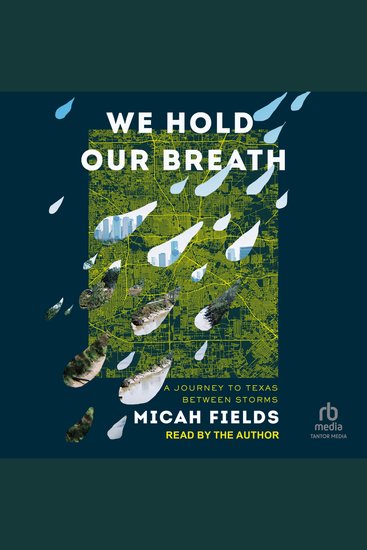
  • We Hold Our Breath - A Journey to Texas Between Storms - cover

    We Hold Our Breath - A Journey...

    Micah Fields

    • 0
    • 0
    • 0
    Developed as the commercial hub of the Texas cotton and sugarcane industries, Houston was designed for profit, not stability. Its first residents razed swamplands into submission to construct a maze of highways and suburbs, giving the city a sprawling, centerless energy as storms and floods rattled coastal Texas. 


    When Hurricane Harvey made landfall in 2017, Fields set off from his home in Iowa back to the battered city of his childhood to rescue his mother. Fields tracks the devastation of Hurricane Harvey, one storm in a long lineage that threatens the fourth largest city in America. 


    Fields depicts the history of Houston with reverence and lyrical certainty, investigating the conflicting facets of Texan identity that are steeped in racial subjugation, environmental collapse, and capitalist greed. He writes of the development of the modern city in the wake of the destruction of Galveston in 1900; of the oil booms and busts that shaped the city; of the unchecked lust for growth that makes Houston so expressive of the American dream. 


    We Hold Our Breath is a portrait of a city that exists despite it all, a city whose story has always been one of war waged relentlessly against water.
    Show book
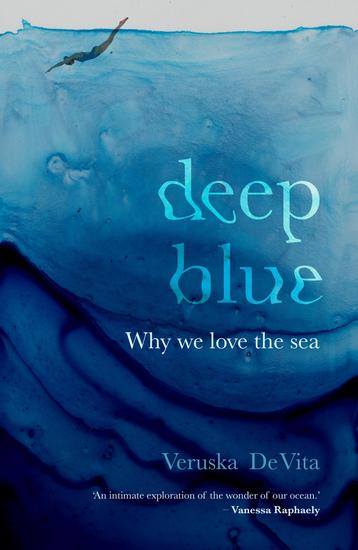
  • Deep Blue - Why we love the sea - cover

    Deep Blue - Why we love the sea

    Veruska De Vita

    • 0
    • 0
    • 0
    '. . . there is a quiet here that doesn't exist on land, a fluid suspension that reminds me that humans were never meant to be so rigid, so fixed in place. In the sea, we are both vulnerable and free . . .'
    Deep Blue is a love letter to the sea, exploring humans' deep connection with the ocean and the bliss of swimming, diving, dipping and simply being in salt water.
    Join Veruska De Vita, a learner free diver and open-water swimmer, as she delves into why the ocean calls to us. Along the way she talks to those who find healing and wellness in swimming groups and cold-water immersion, scientists who study complex marine environments, elite athletes who swim super-human distances along our coasts and free divers who plumb the depths with one breath.
    Water is primordial. It gives life. It represents hope and renewal. This book is not only for sea worshippers. It promises to inspire everyone to jump with joy into the waves – and offers reflections on our intimate relationship with the sea, which supports life on earth and requests that we respect it.
    Show book
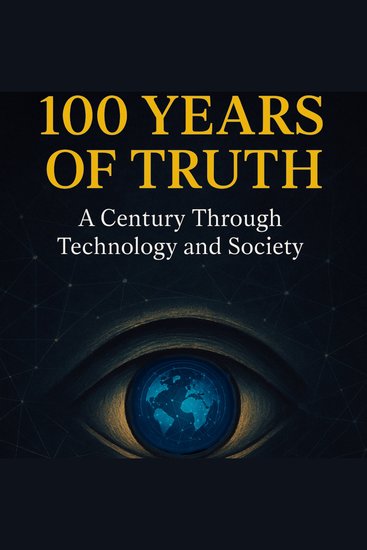
  • 100 Years of Truth - A Century Through Technology and Society - cover

    100 Years of Truth - A Century...

    Ylia Callan

    • 0
    • 0
    • 0
    This audiobook is narrated by an AI Voice.   
    For a century, technology has transformed how humanity seeks and understands truth. From the first flickering broadcasts of television to the rise of the internet, social media, and blockchain, each wave of innovation has reshaped society's relationship with knowledge, power, and trust. 
    100 Years of Truth: A Century Through Technology and Society is both a history and a roadmap. The first half traces global events that marked the rise of broadcast media, the digital revolution and the interconnected world we live in today. The second half looks forward, projecting how decentralisation, transparency and new systems may shape a more just and sustainable future. 
    Clear, compelling, and globally focused, this book is for readers who want to understand not just where we've been - but where we might be headed.
    Show book