¡Acompáñanos a viajar por el mundo de los libros!
Añadir este libro a la estantería
Grey
Escribe un nuevo comentario Default profile 50px
Grey
Suscríbete para leer el libro completo o lee las primeras páginas gratis.
All characters reduced
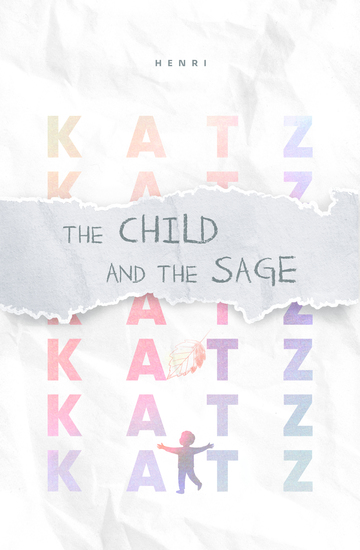
The Child and the Sage - A dialogue on life - cover

The Child and the Sage - A dialogue on life

Henri Katz

Editorial: Publishdrive

  • 0
  • 0
  • 0

Sinopsis

A playful conversation between a wise man and his disciple about human virtues and vices, framed around a child playing in the centre of the courtyard. As they walk around the boy, they unfold an inspiring dialogue about what is essential to living well.
Disponible desde: 15/09/2025.
Longitud de impresión: 86 páginas.

Otros libros que te pueden interesar

  • HorrorBabble's The Boats of the "Glen Carrig" - cover

    HorrorBabble's The Boats of the...

    William Hope Hodgson

    • 0
    • 0
    • 0
    The Boats of the "Glen Carrig" is a horror novel by English writer William Hope Hodgson, first published in 1907. 
    Presented as a true account, the novel tells of the survivors of a shipwreck, whose journey back to civilisation is beset by strangeness. 
    This is a recording of the original, unabridged text.
    Ver libro
  • Moonshine springs - cover

    Moonshine springs

    Mikhail Bulgakov

    • 0
    • 0
    • 0
    Moonshine springs - is a satirical story by Mikhail Afanasyevich Bulgakov (1891 - 1940), an outstanding writer, playwright and theatre worker.
    Bulgakov was a Soviet playwright, novelist, and short story writer best known for his humor and penetrating satire. Because of their realism and humor, Bulgakov's works enjoyed great popularity, but their trenchant criticism of Soviet mores was increasingly unacceptable to the authorities.
    Ver libro
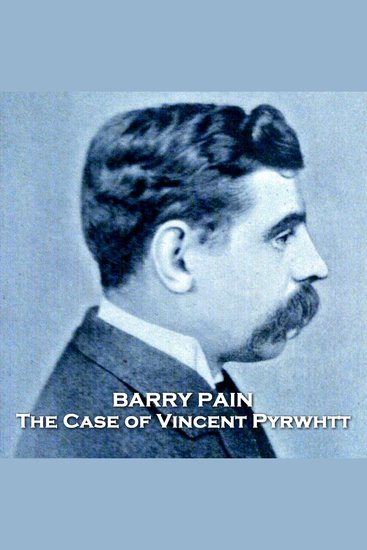
  • The Case of Vincent Pyrwhtt - From their pens to your ears genius in every story - cover

    The Case of Vincent Pyrwhtt -...

    Barry Pain

    • 0
    • 0
    • 0
    Barry Eric Odell Pain was born at 3 Sydney Street in Cambridge on 28th September 1864. He was one of 4 children. 
    He was educated at Sedbergh School and then Corpus Christi College, Cambridge. 
    In 1889, Cornhill Magazine published his short story ‘The Hundred Gates’.  This opened the way for Pain to advance his literary career on several fronts. He became a contributor to Punch and The Speaker, as well as joining the staff of both the Daily Chronicle and Black and White.  
    Pain was also a noted and prominent contributor to The Granta and from 1896 to 1928 a regular contributor to the Windsor Magazine. 
    It is often said that Pain was discovered by Robert Louis Stevenson, who compared his work to that of Guy de Maupassant.  It’s an apt comparison. Pain was a master of disturbing prose but was also able to inject parody and light comedy into many of his works.  A simple premise could in his hands suddenly expand into a world very real but somehow emotionally fraught and on the very edge of darkness. 
    Barry Pain died on 5th May 1928 in Bushey, Hertfordshire.
    Ver libro
  • Splinter & Shard - Stories - cover

    Splinter & Shard - Stories

    Lulu Keating

    • 1
    • 2
    • 0
    A smashing debut collection from award-winning filmmaker Lulu Keating
    		 
    Splinter & Shard is the debut story collection by acclaimed filmmaker-turned-writer Lulu Keating. Vivid and precise, the stories in this collection offer an uncompromising journey into what it means to be human.
    		 
    Keating catches her characters at their pivotal moments of discovery, self-reckoning, and change. A dutiful mother of grown children learns a life-shattering secret about two of her children that upends her life. A macho man in mid-life must reconcile himself to his new role as a cosmetics consultant. A young woman, pregnant and unhappy, travels to the Yukon to bury her husband. An old woman turns away from her family to bond with the convicts of the small jail next door. An orphaned girl stumbles onto an unexpected connection with a stranger.
    		 
    In these stories, flaws and strengths are writ large as characters fumble toward redemption.
    		 
    From flash fiction to deep-dive character studies, Splinter & Shard turns over the rocks of everyday experience to reveal the psychological and philosophical truths underneath. The stories range back and forth in time, from Nova Scotia to the Yukon (with a side trip to Florida), and explore universal themes — loss, infidelity, faith, mortality, and love.
    Ver libro
  • Twenty-Six Men and a Girl - From their pens to your ears genius in every story - cover

    Twenty-Six Men and a Girl - From...

    Maxim Gorky

    • 0
    • 0
    • 0
    Alexei Maximovich Peshkov was born on 28th March 1868, in Nizhny Novgorod, Russia. 
    Better known as Maxim Gorky he was orphaned at 11 and ran away from home at 12.  At 19 he had already attempted suicide and thereafter travelled, by foot, across the Russian Empire for 5 years. 
    His first book ‘Essays & Stories’ in 1898 was a sensation and so began a long career as an author of short stories, novels and plays.  Gorky saw writing as a moral and political act that would help to change the unjust world around him.  He was an ardent early advocate of the emerging Marxist movement and publicly opposed the Tsarist regime leading several times to his arrest.  
    In 1904 he began his own theatre but the censor banned every play and Gorky was forced to abandon the project. 
    But Gorky was a financially successful author, editor, and playwright and gave monies to political parties as well as for civil rights and social reform.  The brutal shooting of workers, which set in motion the Revolution of 1905, pushed Gorky more decisively toward radical solutions.  
    In 1906 he went to the United States to raise funds for the Bolsheviks. Those experiences including a scandal over travelling with his lover and not his wife deepened his contempt for the ‘bourgeois soul.’ 
    Gorky now moved to Capri in Italy, both for health reasons and to escape the increasingly repressive times in Russia.  
    An amnesty for the 300th anniversary of the Romanov dynasty saw him return to Russia in 1914. His politics remained close to the Bolshevik cause.  But soon, after the 1918 revolution, his essays referred to Lenin as a tyrant for his senseless arrests and repression.  He was soon appealing to the outside world for food aid after the catastrophic crop failure. 
    In October 1921 Gorky returned to Italy, now in Fascist hands, and settled in Sorrento until 1932.  His health worsened with the onset of tuberculosis. 
    He wrote several successful books there but now decided to find an understanding with the communist regime. Stalin invited him home and his return was hailed as a major propaganda victory.  He was decorated with the Order of Lenin, and a province, a park, and various streets re-named in his honour. 
    But he had his faults too.  In 1933, Gorky co-edited a book on the White Sea-Baltic Canal and denied even a single prisoner died during its construction, but thousands had. As well, knowing that some Nazis were homosexual, a phrase was attributed to him that said ‘exterminate all homosexuals and fascism will vanish’.  Although he was himself was quoting another he was decidedly homophobic. 
    With the increase of Stalinist repression in 1935 Gorky was placed under unannounced house arrest. 
    Maxim Gorky died on the 18th June 1936 from pneumonia.  He was 68. 
    Stalin and Molotov were among those who carried Gorky's urn of ashes at his funeral.
    Ver libro

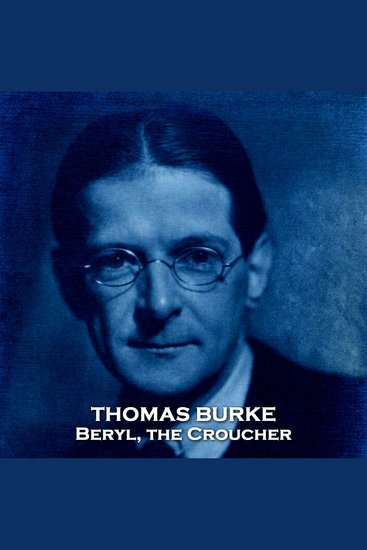
  • Beryl the Croucher and the Rest of England - From their pens to your ears genius in every story - cover

    Beryl the Croucher and the Rest...

    Thomas Burke

    • 0
    • 0
    • 0
    Thomas Burke was born Sydney Thomas Burke on November 29th, 1886 in Eltham, London (at the time it was part of Kent). 
    An author in the early years of the 20th Century Burke brought his skills of pen and eye to parts of London, specifically the Limehouse district of the East End, to write with drive and vigour about the characters he met and the places that he knew.  Whether he turned that material into fiction or non-fiction the words seep quality.  His publications ranged from these wonderful vignettes of down-at-heel London to writings on homosexuality and the English Countryside. 
    Thomas Burke died in the Homeopathic Hospital in Queens Square, Bloomsbury on 22 September 1945.
    Ver libro