Join us on a literary world trip!
Add this book to bookshelf
Grey
Write a new comment Default profile 50px
Grey
Subscribe to read the full book or read the first pages for free!
All characters reduced
Joutel's Journal of La Salle's Last Voyage 1684-7 - Fateful Expedition: A Historic Journey into New France - cover

Joutel's Journal of La Salle's Last Voyage 1684-7 - Fateful Expedition: A Historic Journey into New France

Henri Joutel

Publisher: Good Press

  • 0
  • 0
  • 0

Summary

In "Joutel's Journal of La Salle's Last Voyage, 1684-7," Henri Joutel presents a meticulously detailed account of the ill-fated expedition led by the renowned French explorer Robert Cavelier de La Salle. Through a combination of vivid narrative and insightful observations, Joutel chronicles the trials and tribulations of the voyage, revealing the dynamic between explorers and the indigenous peoples they encountered. Written in the style of a firsthand narrative common in 17th-century travel literature, Joutel's work not only serves as an adventure chronicle but also reflects the broader European worldview of exploration and imperial ambition at the time, positioning it within the context of both scientific curiosity and colonial endeavor. As a seasoned cartographer and member of La Salle's crew, Joutel was uniquely positioned to document the expedition's successes and failures. His acute awareness of the geopolitical climate, as well as personal experiences of loss and hope throughout the journey, profoundly influenced his writing. Joutel's dual role as participant and chronicler enables him to provide a nuanced perspective on both the expedition's objectives and its human cost, making his reflections instrumental in understanding the era'Äôs cultural dynamics. This compelling journal is highly recommended for readers interested in early North American exploration, 17th-century French colonial ventures, or the intersection of adventure and tragedy in historical literature. Joutel's poignant observations and rich descriptions offer invaluable insights for historians, scholars, and general readers alike, inviting them to explore the complexities of human endeavor in the face of vast unknowns.
Available since: 11/20/2023.
Print length: 226 pages.
Other books that might interest you

  • The Book of Persuasion - How You Can Change People's Minds and Influence Their Decisions While Building Trust - cover

    The Book of Persuasion - How You...

    Paul du Toit

    • 0
    • 0
    • 0
    Whether you're a professional, business executive, manager, salesperson, coach or parent - we're all required to call on our persuasive powers to get others to do what we'd like them to do. 
    This book helps you to uncover these gifts. It reveals the secrets of persuasion and the skills you need to become a better, more effective influencer. 
    "This is an easy read packed with real case studies and outstanding personal experiences and anecdotes that will inspire you as you learn. Paul's book reveals the psychology and science of persuasion in simple, practical terms, while showcasing ing an abundance of amazing ideas and opportunities for you. Comprehensive, captivating and riveting, this book will dramatically improve your ability to influence others and is a must-read." 
    -	Prof Allan Pease, Author of 11 #1 bestsellers
    Show book
  • Scottish Mythology: Enthralling Myths Folktales and Legends from Scotland - cover

    Scottish Mythology: Enthralling...

    Billy Wellman

    • 0
    • 0
    • 0
    Discover the Mystical World of Scottish Mythology and History 
    Do you long to explore a land filled with magical creatures, brave heroes, and ancient mysteries? This audiobook opens the door to a land where myths and history intertwine, revealing tales that have shaped the heart and soul of the Scottish people. From captivating fairies to daring warriors, these stories will whisk you away to a world of wonder and adventure. 
    Dive into these fascinating myths and legends:The Winter Hag: Discover how the icy touch of the Cailleach carved Scotland’s rugged landscape.Giants of Legend: Witness the epic battle of two giants that created the awe-inspiring Giant’s Causeway.William Wallace’s Fate: Relive the stirring saga of Scotland’s greatest hero and his fight for freedom.Haunted Castles: Feel the eerie presence of ghosts wandering the ancient halls of Scotland’s castles.Selkies and Love: Be moved by the poignant love stories of the magical seal-people, the Selkies.Blue Men of the Minch: Encounter the mysterious Blue Men who both aided and haunted sailors on the high seas.Bean Nighe’s Death Omen: Uncover the chilling legend of the washerwoman who foretells death. 
    This audiobook isn’t just a collection of stories; it’s a journey into Scotland’s mystical past. Each tale is crafted to be easy to read, yet rich with the magic and history that make Scotland so unique. Whether you’re a fan of ghost stories, fascinated by historical legends, or simply love a good tale, this audiobook promises to captivate your imagination. 
    Unlock the mysteries of Scotland! Scroll up and click the “add to cart” button now to start your magical journey into Scottish mythology!
    Show book
  • Mary and Margaret - Whence Comes Freedom - cover

    Mary and Margaret - Whence Comes...

    Clark Thomas Riley

    • 0
    • 0
    • 0
    Mary Bennet and Margaret Dashwood, the youngest sisters of Pride and Prejudice and Sense and Sensibility. were women on surpassing intelligence and strength of character. Mary joins forces with the nascent abolition movement in collaboration with the underappreciated William Collins. Under the pen name of Joseph Weatherstone, they create together a philosophic giant who advances the cause. Margaret with her minder Jane siezes her wanderlust and escapes from cold gray England for the warm, spice filled air of the Caribbean. Each achieves great victories, overcoming the strictures of a male dominated society.
    Show book
  • Addiction Trauma and Recovery: A Guided Meditation Journey - cover

    Addiction Trauma and Recovery: A...

    Deepak Bhosle

    • 0
    • 0
    • 0
    This book offers a guided meditation journey to help people recovering from addiction and trauma. The book includes a variety of meditations to help with PTSD, anxiety, and depression. 
    Meditation can be defined as a practice where an individual uses a technique – such as mindfulness, body scan or breathing – to train attention and awareness, and achieve a mentally clear and emotionally calm state. 
    Addiction is defined as a chronic, relapsing brain disease that is characterized by compulsive drug seeking and use, despite harmful consequences. It is considered a brain disease because drugs change the brain—they change its structure and how it works. These changes can be long-lasting and can lead to the harmful behaviors seen in people who abuse drugs. 
    Trauma is defined as a deeply distressing or disturbing experience. It can occur when someone experiences an event that threatens their life or safety, or that of someone close to them. Trauma can also occur when someone witnesses or is confronted with events that threaten the physical integrity of others. 
    When it comes to addiction, trauma and recovery, meditation can be a powerful tool. This guided meditation journey can help you to let go of the past, heal your wounds and find inner peace. The first step is to sit in a comfortable position and close your eyes. Take a few deep breaths and allow yourself to relax. Once you are relaxed, begin to visualise a safe place. It can be anywhere that makes you feel calm and peaceful. Allow yourself to sink into the peacefulness of this place. Breathe in the tranquil energy and feel it flow through your body. Feel your muscles relax and any tension melting away. Now, imagine that you are surrounded by a white light. This light is filled with love, compassion and healing energy. Allow this light to wash over you, filling you with its positive force.  
    This is an example of how we will help you with your challenges.
    Show book
  • Longbow The: The History of the Weapon that Revolutionized Warfare in the Middle Ages - cover

    Longbow The: The History of the...

    Editors Charles River

    • 0
    • 0
    • 0
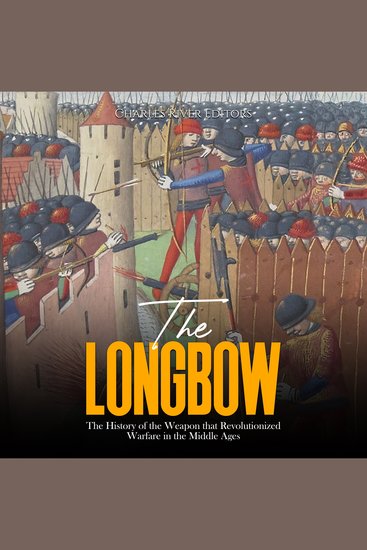
    While the bow was used throughout ancient times and the Middle Ages, on mainland Europe it was mostly replaced by the crossbow in the early 13th century, but that would change with the introduction of the longbow, a more powerful weapon than the traditional hunting bows. The original longbowmen were Welshmen recruited by King Edward I of England after he conquered Wales, and the weapon got its name from the fact that it was almost as tall as the man using it. This gave it a longer draw and therefore more force, as longbows were generally made of yew, a strong and pliable wood. The longbow was cheap and easy to make, but they required extensive training to be used well, so in England, commoners were encouraged and at times required to practice archery. A statute of Richard II dating from 1388 reads, “Servants and Laborers shall have Bows and Arrows, and use the same the Sundays and Holydays, and leave all playing at tennis or foot-ball, and other games called coits, dice, casting of the stone, kaikles [skittles], and other such importune games.” 
    	The longbow’s greatest day was at Agincourt in 1415, but the fact that this did not end the age of heavy plate cavalry indicated the longbow did have some limitations. For example, modern tests show that longbow arrows had trouble piercing plate armor, likely the main reason they were used as a massed weapon. With arrows raining down, it increased the chances of hitting a joint in the armor or an imperfection. Also, horse armor couldn’t protect the entire animal and the knights would soon find themselves dismounted. At some battles like Agincourt, the knights foundered in soft earth, and as their horses fell and the men became confused and hampered by the arrows clanking off their armor, they got mired in the mud and the English infantry could move in and finish them off. 
    Show book
  • Bagavad Gita in Tamil - Chapter 8 - cover

    Bagavad Gita in Tamil - Chapter 8

    Viyasar

    • 0
    • 0
    • 0
    The Bhagavad Gita is a 700-verse Hindu scripture embedded within the epic Mahabharata, depicting a dialogue between Arjuna and Krishna on the battlefield of Kurukshetra. Arjuna, facing his relatives in battle, experiences despair and a crisis of conscience. Krishna, his charioteer and an avatar of Vishnu, provides philosophical and spiritual guidance, addressing themes of duty (dharma), action (karma), devotion (bhakti), and knowledge (jnana). The Gita explores the nature of the self, the divine, and humanity's place in the world, offering paths to liberation and spiritual fulfillment. 
    Show book