Join us on a literary world trip!
Add this book to bookshelf
Grey
Write a new comment Default profile 50px
Grey
Subscribe to read the full book or read the first pages for free!
All characters reduced
Color-Coded Kalimba Gospel Songs for Beginners: Play by Color or by Letter - cover

Color-Coded Kalimba Gospel Songs for Beginners: Play by Color or by Letter

Helen Winter

Publisher: Helen Winter

  • 0
  • 0
  • 0

Summary

Usually, a guide for kalimba offers the possibility of playing by letter or by number, with letters being more common. The modern kalimba often has engraved numbers and letters representing the name of the notes. The numbered musical notation is a cipher notation system used mostly in Asia, including China.

In this e-book, I recommend playing by letter and/or color.
Even if the signs are not engraved on the keys, normally, however, each kalimba has letter-coded stickers included in the set.
Usually, they are not color-coded and since my e-book doesn’t include stickers, I suggest making color-coded stickers yourself or color the including stickers. This is very easy and you can do it with very small pieces of colored paper.
My sheet music is not for a specific kalimba but is universal and suitable for 8-17 note kalimbas.

This e-book includes 35 gospel songs. Many spirituals "sorrow songs" are slow and melancholic and are ideally suitable for kalimba. I made my pictured sheet music as simple as possible, songs have been transposed for a diatonic range. Some melodies might be changed and simplified. You’ll quickly begin to play by letter-coded circles.

Contents
Amazing Grace
Babylon’s Falling
Christ Was Born on Christmas Day
Elijah Rock
Every Time I Feel the Spirit
Go, Tell It on the Mountain
God Is So Good
Great Big Stars
Great Day
He’s God the Whole World in His Hands
Holy, Holy, Holy
I've Got Joy Joy
I've Got Peace Like a River
Jesus Loves Me
Jesus Walked This Lonesome Valley
Joy to the World! The Lord is Come!
Just As I Am
Kumbaya, My Lord
Michael Row the Boat Ashore
Nobody Knows the Trouble I’ve Seen
Praise Him, All You Little Children
Shall We Gather at the River
Silent Night, Holy Night
Sinner Man
Soldier of the Cross
Somebody’s Knockin’ at Your Door
Song of Praise
Swing Love, Sweet Chariot
The Little Light of Mine
There’s a Meeting Here Tonight
We Are Climbing Jacob's Ladder
We Are Marching (Siyahamba)
We Shall Overcome
When the Saints Go Marching In
Who Built The Ark?
Available since: 11/01/2023.
Other books that might interest you

  • The House of Fragile Things - Jewish Art Collectors and the Fall of France - cover

    The House of Fragile Things -...

    James McAuley

    • 0
    • 0
    • 0
    A powerful history of Jewish art collectors in France, and how an embrace of art and beauty was met with hatred and destruction 


    In the dramatic years between 1870 and the end of World War II, a number of prominent French Jews—pillars of an embattled community—invested their fortunes in France's cultural artifacts, sacrificed their sons to the country's army, and were ultimately rewarded by seeing their collections plundered and their families deported to Nazi concentration camps. 


    In this rich, evocative account, James McAuley explores the central role that art and material culture played in the assimilation and identity of French Jews in the fin-de-siècle. Weaving together narratives of various figures, some familiar from the works of Marcel Proust and the diaries of Jules and Edmond Goncourt—the Camondos, the Rothschilds, the Ephrussis, the Cahens d'Anvers—McAuley shows how Jewish art collectors contended with a powerful strain of anti-Semitism: they were often accused of "invading" France's cultural patrimony. The collections these families left behind—many ultimately donated to the French state—were their response, tragic attempts to celebrate a nation that later betrayed them.
    Show book
  • Nature's Harmony of Soothing Waterfall Soundscapes In Tune with Ambient Tones for Deep Relaxation & Serenity - Experience Restful Nights & Complete Sleep using Enhanced BGM 8D Audio Sounds - cover

    Nature's Harmony of Soothing...

    Molly Mey

    • 0
    • 0
    • 0
    Nature's Harmony of Soothing Waterfall Soundscapes In Tune with Ambient Tones for Deep Relaxation & Serenity offers a transformative journey toward achieving serenity, healing, and rejuvenation. Whether you are seeking a way to release stress, enhance mindfulness, or improve your overall sense of well-being, this book provides the tools and insights to help you create meaningful change in your life. 
    This guide introduces holistic approaches to achieving clarity, emotional balance, and inner peace. By incorporating simple yet effective techniques, you’ll learn how to cultivate a sense of stillness and renewal, empowering you to navigate life’s challenges with greater ease and confidence. Whether you are looking to find focus during your day, unwind after a long week, or create space for a restful evening, this book supports your journey toward a harmonious and balanced lifestyle. 
    Perfectly designed for those seeking restorative practices and looking to elevate their daily routines, this audiobook encourages the integration of mindfulness techniques into your life. Discover the transformative power of creating calm and embracing a sense of wellness that goes beyond the physical. Through this guide, you will uncover strategies for aligning your mind, body, and emotions to achieve a deeper sense of connection and fulfillment. 
    Ideal for meditation enthusiasts, wellness seekers, and anyone searching for emotional clarity, this book serves as a companion on your path to personal growth and healing. Whether you are a beginner or experienced practitioner, it offers approachable methods that resonate with those seeking renewal and harmony in their daily lives.
    Show book
  • Icons and Instincts - Choreographing and Directing Entertainment's Biggest Stars - cover

    Icons and Instincts -...

    Vincent Paterson, Amy Tofte

    • 0
    • 0
    • 0
    For the first time, the choreographer of Michael Jackson, Madonna, Björk, and many others reveals stage stories through his extraordinary journey. 


    Vincent Paterson began his professional dancing career late in life. It would take an exceptional turn when he became one of the lead dancers in Michael Jackson's Beat It music video. Through hard work, he rises to the rank of choreographer and director for the world's greatest singers, but also for cinema and musical comedy. 


    He tells with humility the fascinating universe of film sets, the rehearsal sessions where he had to orchestrate and synchronize dozens of dancers, life backstage where it is sometimes necessary to manage a few whims of the stars, his successes and his disappointments. It is a dive into the heart of the world of dance.
    Show book
  • The Brain That Wouldn't Die A Classic Horror Film On Audio - cover

    The Brain That Wouldn't Die A...

    Joseph Green, Doris Brent, Rex...

    • 0
    • 0
    • 0
    The Brain That Wouldn't Die (also known as The Head That Wouldn't Die or The Brain That Couldn't Die) is a 1962 American science fiction horror film directed by Joseph Green and written by Green and Rex Carlton. The film was completed in 1959 under the working title The Black Door but was not theatrically released until May 3, 1962. The film focuses on a mad doctor who develops a means of keeping his fiancée's severed head alive for days, along with a lumbering, malformed brute (one of his earlier failed experiments) imprisoned in a closet. The following is the audio track of the feature film.
    Show book
  • The Crazy Brilliant Philosophical Lectures and Political Speeches of Conservative Activist and Guitar Legend Ted Nugent - Is the Nuge Crazy Brilliant or Both? You Decide! - cover

    The Crazy Brilliant...

    Liam Ben Blackmore

    • 0
    • 0
    • 0
    Is Ted Nugent an absolute genius or batsh!t crazy?  
    Imagine a spectrum where on one side is pure genius, and the other side is utter lunacy. Where would you place Ted Nugent on this genius-lunatic spectrum?  
    In this book, the guitar legend and conservative activist explores:  
    * Violent crime, gun violence, recidivism, and prisons. 
    * The right to bear arms. 
    * The spoiled brats of Hollywood. 
    * Systemic racism in America. 
    * Censorship by Big Tech. 
    * The First Amendment. 
    * The January 6 capitol attack. 
    * The gender control of government, media, and academia.  
    * Turning over Roe V Wade abortion ruling. 
    * Democrats, Marxists, and communists. 
    * Gun control.  
    * Mass shootings at schools.  
    * The toxic hypocrisy of liberals.  
    * Donald Trump.  
    * Joe Biden.  
    * MyPillow CEO Mike Lindell.  
    * Dr. Anthony Fauci. 
    * Kyle Rittenhouse. 
    Is Ted Nugent crazy, brilliant, or both? Read this book, and figure it out!
    Show book
  • Warhol - cover

    Warhol

    Eric Shanes

    • 1
    • 3
    • 0
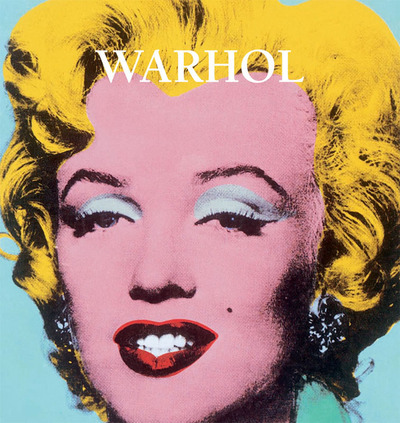
    Andy Warhol was an artist who undoubtedly put his finger on the pulse of modern culture. Through pioneering a variety of techniques, but principally by means of the visual isolation of imagery, its repetition and enforced similarity to printed images, and the use of garish colour to denote the visual garishness that is often encountered in mass culture, he threw much direct or indirect light upon modern anomie or world-weariness, nihilism, materialism, political manipulation, economic exploitation, conspicuous consumption, media hero-worship, and the creation of artificially-induced needs and aspirations. Moreover, in his best paintings and prints he was a very fine creator of images, with a superb colour sense and a brilliant feel for the visual rhythm of a picture which resulted from his intense awareness of the pictorial potentialities inherent in forms. Initially, his images might appear rather simple. Yet because of that very simplicity they not only enjoy a high degree of immediate visual impact, but also possess the rare power of projecting huge implications through the mental associations they set in motion. For example, the visual repetition that Warhol employed within a great many of his images was intended, associatively, to parallel the vast repetition of images that are employed in a mass-culture in order to sell goods and services. This includes vehicles of communication such as movies and TV programmes. By incorporating into his images the very techniques of mass production that are central to a modern industrial society, Warhol directly mirrored larger cultural uses and abuses, while emphasising, to the point of absurdity, the complete detachment from emotional commitment that he saw everywhere around him. Moreover, in addition to employing imagery derived from popular culture in order to offer a critique of contemporary society, Warhol also carried forward the assaults on art and bourgeois values that the Dadaists had earlier pioneered; by manipulating images and the public persona of the artist he was able to throw back in our faces the contradictions and superficialities of contemporary art and culture. Ultimately, it is the trenchancy of his cultural critique, as well as the vivaciousness with which he imbued it, that will surely lend his works their continuing relevance long after the particular objects he represented – such as Campbell’s Soup cans and Coca-Cola bottles – have perhaps become technologically outmoded, or the outstanding people he depicted, such as Marilyn Monroe, Elvis Presley and Mao Zedong, have come to be regarded merely as the superstars of yesterday.
    Show book