Join us on a literary world trip!
Add this book to bookshelf
Grey
Write a new comment Default profile 50px
Grey
Subscribe to read the full book or read the first pages for free!
All characters reduced
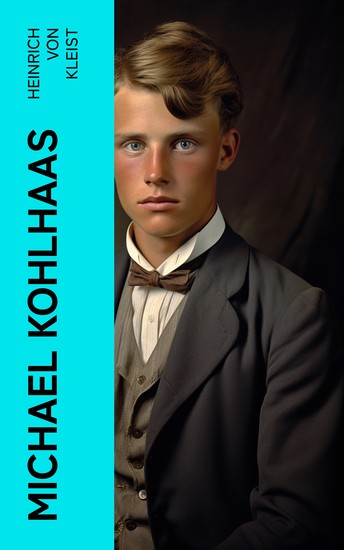
Michael Kohlhaas - cover

Michael Kohlhaas

Heinrich von Kleist

Translator John Oxenford

Publisher: e-artnow

  • 0
  • 0
  • 0

Summary

"Michael Kohlhaas" is an engrossing work by the German author Heinrich von Kleist, based on a 16th-century story of Hans Kohlhase. According to early modern German versions, Kohlhase was a merchant whose grudge against a Saxon nobleman developed into a full-blown feud against the state of Saxony, thus violating the Eternal Peace of 1495. The movement ended in Kohlhase's execution in March 1540.
Available since: 12/07/2023.
Print length: 87 pages.

Other books that might interest you

  • Easy Money - American Puritans and the Invention of Modern Currency - cover

    Easy Money - American Puritans...

    Dror Goldberg

    • 0
    • 0
    • 0
    A sweeping history of the American invention of modern money. 
    Economists endlessly debate the nature of legal tender monetary systems—coins and bills issued by a government or other authority. Yet the origins of these currencies have received little attention. 
    Dror Goldberg tells the story of modern money in North America through the Massachusetts colony during the seventeenth century. As the young settlement transitioned to self-governance and its economy grew, the need to formalize a smooth exchange emerged. Printing local money followed. 
    Easy Money illustrates how colonists invented contemporary currency by shifting its foundation from intrinsically valuable goods—such as silver—to the taxation of the state. Goldberg traces how this structure grew into a worldwide system in which, monetarily, we are all Massachusetts. Weaving economics, law, and American history, Easy Money is a new touchstone in the story of monetary systems.
    Show book
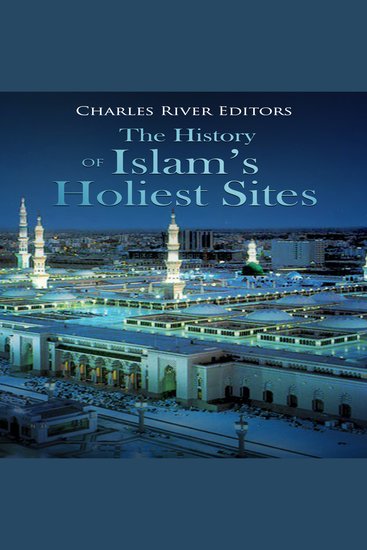
  • The History of Islam's Holiest Sites - cover

    The History of Islam's Holiest...

    Editors Charles River

    • 0
    • 0
    • 0
    Mecca is now best known for being Islam’s holiest city, revered as the birthplace of Muhammad and the site where Allah first revealed the Qu’ran to him. Within Mecca is the Ka’aba, a building housed within the Al-Masjid al-Haram (Great Mosque) that is considered the holiest site, and wherever they are in the world, Muslims face in the direction of the Ka’aba while praying. A pilgrimage to Mecca is considered a necessity for devout Muslims at some point in their lives, and the city itself is off limits to non-Muslims. Indeed, Mecca is so integral to Islam that the name of the city has entered the English lexicon and is a commonplace reference to any area closely associated with something (such as Paris often being called the mecca of fashion). 
    Even centuries before the birth of the Prophet Muhammad, Jews settled in the area that became Medina to escape persecution at the hands of the Babylonians and Romans, meaning the area and its arid environment brought inhabitants precisely because it wasn’t an attractive or resource rich area. In fact, the city fated to become the second holiest city in Islam earned that spot simply by straddling trade routes to the religious city of Mecca, which brought traders and pilgrims in large enough numbers to make it a trade center. 
    Jerusalem’s particular importance to the religion of Islam is without question one of the major sticking points in the Israeli-Palestinian conflict. Prior to Israeli control, Jerusalem had been predominantly controlled by Muslim rulers since the 7th century and had been used as a type of political currency, legitimizing the ruling dynasty’s claim over the city. For the world’s Muslim population, Jerusalem is a holy site because Muslims believe the Prophet Muhammad visited Jerusalem where he ascended to heaven during the famous “Night Journey.” There was also a period of time during the Prophet’s life when Muslims prayed in the direction of Jerusalem, as opposed to Mecca.
    Show book
  • The wonders of chemistry - cover

    The wonders of chemistry

    KidsChoice

    • 0
    • 0
    • 0
    KidsChoice: World knowledge for Children is an engaging audiobook series that takes young listeners on a fascinating journey to explore and understand the world around them. Aimed at curious children aged 7 to 99, this series dives into a variety of topics in science, society, and culture, making complex ideas accessible and exciting.  Each episode brings a unique theme to life—whether exploring the mysteries of space, uncovering the secrets of the human body, or discovering the diversity of cultures and traditions worldwide. With lively narration, interesting facts, and interactive elements, the series guides young listeners on an adventure full of discovery, encouraging them to ask questions and expand their understanding in a fun way.  In the scientific world of KidsChoice, children learn about the wonders of nature and the universe. Concepts like the solar system, animal behavior, the human body, and Earth's various ecosystems are explained in a way that is easy for kids to grasp and find fascinating. Exciting analogies and vivid examples help spark curiosity, turning learning into an adventure.  Societal topics also have a special place in the series. KidsChoice introduces young listeners to the basics of community, compassion, and making a positive impact. Children learn what it means to be a good citizen and how they can make small, meaningful contributions to their communities.  Additionally, KidsChoice opens a window to the vibrant world of global cultures. Through a virtual journey around the globe, children discover how people in other countries live, the customs and traditions they follow, the languages they speak, and the foods they enjoy. This fosters understanding and respect for diverse ways of life, celebrating the richness of human experience as a beautiful, valuable part of the world.  With its vivid language and captivating soundscapes, "KidsChoice: World knowledge for Children" turns learning into an exciting experience, sparking a lifelong curiosity and a deeper understanding of the world around them.
    Show book
  • Forbidden - A 3000-Year History of Jews and the Pig - cover

    Forbidden - A 3000-Year History...

    Jordan D. Rosenblum

    • 0
    • 0
    • 0
    Jews do not eat pig. This (not always true) observation has been made by both Jews and non-Jews for more than three thousand years and is rooted in biblical law. Though the Torah prohibits eating pig meat, it is not singled out more than other food prohibitions. Horses, rabbits, squirrels, and even vultures, while also not kosher, do not inspire the same level of revulsion for Jews as the pig. The pig has become a symbol for people to signal their Jewishness, non-Jewishness, or rebellion from Judaism. 


    Starting with the Hebrew Bible, Jordan D. Rosenblum historicizes the emergence of the pig as a key symbol of Jewish identity, from the Roman persecution of ancient rabbis, to the Spanish Inquisition, to Shakespeare's writings, to modern memoirs of those leaving Orthodox Judaism. The pig appears in debates about Jewish emancipation in eighteenth-century England and in vaccine conspiracies; in World War II rallying cries, when many American Jewish soldiers were "eating ham for Uncle Sam;" and in recent deliberations about the kosher status of Impossible Pork. 


    All told, there is a rich and varied story about the associations of Jews and pigs over time, both emerging from within Judaism and imposed on Jews by others. Expansive yet accessible, Forbidden offers a captivating look into Jewish history and identity through the lens of the pig.
    Show book
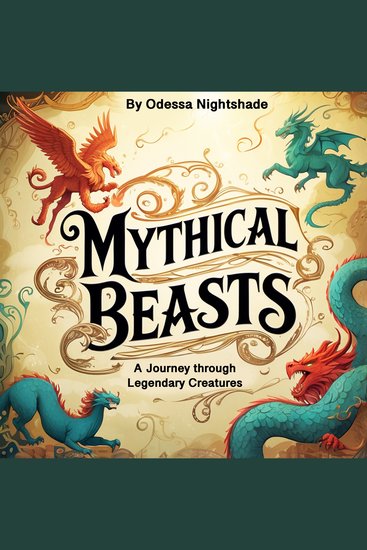
  • Mythical Beasts - Exploring the Realms of the Dead - cover

    Mythical Beasts - Exploring the...

    Odessa Nightshade

    • 0
    • 0
    • 0
    Since the dawn of civilization, humans have woven tales of extraordinary creatures—beasts that soar through the skies, rule the oceans, or guard hidden treasures. These mythical beings have captivated the human imagination, appearing in folklore, literature, and art across the globe. From the mighty dragon to the elusive unicorn, these creatures have not only entertained but also served as symbols of power, wisdom, and even fear. But why do these legends endure? What is it about mythical beasts that continues to fascinate us, even in an age of science and reason?  
    Mythical creatures often serve as reflections of human beliefs, fears, and aspirations. In many cultures, they are more than just fictional beings; they carry deep symbolic meaning. The phoenix, for instance, represents rebirth and resilience, while the werewolf embodies the struggle between human nature and primal instincts. Dragons, depicted as both benevolent and malevolent, can symbolize wisdom or destruction, depending on the culture. These beasts act as metaphors, helping people make sense of the world around them and offering explanations for the unknown.  
    The origins of these legends are often rooted in real-life encounters or natural phenomena. The discovery of dinosaur fossils may have inspired stories of dragons, while exaggerated accounts of distant animals, such as narwhals, could have fueled belief in unicorns. Similarly, shadows on the ocean’s surface or misidentified sea creatures may have given rise to mermaid myths. Over time, these stories evolved, influenced by oral tradition, artistic depictions, and cultural exchange, shaping the diverse legends we know today. 
    Show book

  • How I Changed The World: In My Own Unique Ways - cover

    How I Changed The World: In My...

    Galeeb Kachra

    • 0
    • 0
    • 0
    "Galeeb Kachra truly is one of a kind. A unique combination of optimism, can-do determination and relentless energy, he has the wiliness and moral integrity required to shake up sclerotic systems and sweep away logjams. His detailed account of five projects that mattered intensely to him, which did their little bit to make the world a better place, is sprinkled with humour and charmingly idiosyncratic, while packed with serious intent."  
    -- Michela Wrong, March 2021, author of "It's Our Turn to Eat: the Story of a Kenyan Whistleblower." 
    From the author: 
    Do you want to help achieve change, but don't know how? Other books don't give you practical examples that are within your own reach. This book showcases real cases, based on Galeeb's international experience. It covers disaster preparedness, anticorruption, youth empowerment, judicial reform, book bans, and procurement reform. Be motivated to find a way of helping others whatever your specific interests and technical skills. 
    Show book