Join us on a literary world trip!
Add this book to bookshelf
Grey
Write a new comment Default profile 50px
Grey
Subscribe to read the full book or read the first pages for free!
All characters reduced
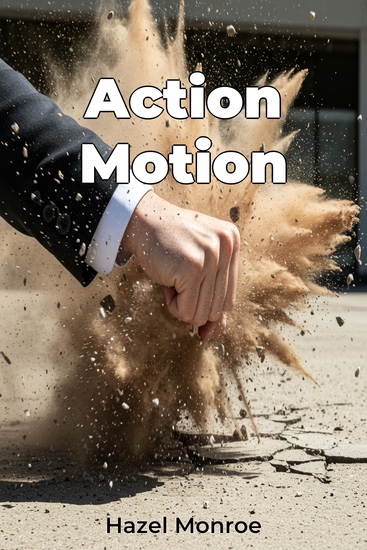
Action Motion - cover

Action Motion

Hazel Monroe

Translator A AI

Publisher: Publifye

  • 0
  • 0
  • 0

Summary

"Action Motion" dives into the art of creating dynamic visuals, a crucial skill for artists in comic art, illustration, and animation. The book reveals how static images can convey intense speed and power through the strategic use of motion lines, impact effects, and pose exaggeration. By mastering these elements, artists can elevate their visual storytelling and captivate audiences.

 
The book's unique value lies in its practical approach, breaking down complex techniques into actionable steps. For example, motion lines are not just simple streaks but communicate speed, direction, and force. Similarly, exaggerated poses, though seemingly unrealistic, heighten drama and emphasize physical exertion. 

 
"Action Motion" progresses logically, starting with fundamental principles and dedicating sections to motion lines, impact effects, and pose exaggeration, culminating in case studies of successful action sequences. This comprehensive guide also explores how digital tools can enhance these techniques. It emphasizes the interplay of these elements, providing a deeper understanding of their individual functions and how they contribute to the overall dynamism of a scene.

 
The book's insights extend beyond comics, offering valuable lessons for animators, filmmakers, and graphic designers seeking to infuse their work with dynamic energy.
Available since: 03/10/2025.
Print length: 77 pages.

Other books that might interest you

  • The Book Of Tea - How A Humble Brew Shaped Japanese Art Architecture Fashion Flowers And Philosophy - cover

    The Book Of Tea - How A Humble...

    Okakura Kakuzō

    • 0
    • 0
    • 0
    "Tea began as a medicine and grew into a beverage...  Teaism is a cult founded on the adoration of the beautiful among the sordid facts of everyday existence... It inculcates purity and harmony, the mystery of mutual charity, the romanticism of the social order. It is essentially a worship of the Imperfect." 
     
    In this short but enlightenimg book, Okakura Kakuzo reveals that tea is a doorway to the soul of the East and the essence of Japanese art and culture. He traces tea's journey from Chinese medicine to Japanese ceremony. The essence of the journey is in the tea masters, who influence everything from architecture and home decor to fashion and social norms. The Sukiya tearoom, or Abode of Fancy, is "an oasis in the dreary waste of existence", intentionally simple and asymmetical, for "true beauty could be discovered only by one who mentally completed the incomplete", . 
     
    Through the twin philosophies of Daoism and Zen, Okakura shows how tea infuses the art of living: how to arrange flowers as an offering, how to walk a garden path as a meditation, how to approach a masterpiece as one would "approach a great prince." "The truly beautiful must be always in it", whether in a single perfect flower plucked from a garden, a kettle that sings of distant seas, or a bowl that holds "the sweet reticence of Confucius, the piquancy of Laotse, and the ethereal aroma of Sakyamuni himself." 
     
    As Kakuzo says, "Let us have a sip of tea. The afternoon glow is brightening the bamboos, the fountains are bubbling with delight, the soughing of the pines is heard in our kettle. Let us dream of evanescence, and linger in the beautiful foolishness of things."
    Show book
  • How to Be Avant-Garde - Modern Artists and the Quest to End Art - cover

    How to Be Avant-Garde - Modern...

    Morgan Falconer

    • 0
    • 0
    • 0
    Reacting to the tumultuous crises of the twentieth century, especially the horrors of World War I, avant-garde artists and writers sought to destroy art by transforming it into the substance of everyday life. Following the evolution of these revolutionary groups, How to Be Avant-Garde charts its pioneers and radical ideas. 


    Avant-gardists challenged the confines of the definition of art along with the confines of the canvas itself. Art historian Morgan Falconer starts with the Futurist founder Filippo Tommaso Marinetti, whose manifesto seeded avant-gardes across Europe. In turn, Dadaists Hugo Ball and Emmy Hennings sought to replace art with political cabaret, and the Surrealists tried to exchange it for tools to plumb the unconscious. He guides us through the Russian Constructivists with their adventures in advertising and utopianism and De Stijl with the geometric abstractions of Piet Mondrian. The Bauhaus broke more boundaries, transmuting art into architecture and design. Finally, the Situationists swapped art for politics, with their ideas inspiring the 1968 Paris student protests. 


    How to Be Avant-Garde is a journey through the interlocking networks of these creative lives with their visions of a better world, their sometimes sympathetic but often strange conversations, and their objects and writings that defied categorization.
    Show book
  • Apocalypse Television - How The Day After Helped End the Cold War - cover

    Apocalypse Television - How The...

    David Craig, Robert Iger

    • 0
    • 0
    • 0
    On November 20, 1983, a three-hour made-for-TV movie, The Day After, premiered on ABC. Set in the heartland of Lawrence, Kansas, the film depicted the events before, during, and after a Soviet nuclear attack with vivid scenes of the post-apocalyptic hellscape that would follow. The film was viewed by over 100 million Americans and remains the highest rated TV movie in history. 


    The path to primetime for The Day After proved nearly as treacherous as the film's narrative. Battles ensued behind the scenes at the network, between the network and the filmmakers. But these skirmishes pale in comparison to the culture wars triggered by the film in the press, alongside a growing Nuclear Freeze movement, and from a united, pro-nuclear Right. Once efforts to alter the script failed, the White House conducted a full-throttled propaganda campaign to hijack the film's message. 


    Apocalypse Television features a dramatic insider's account of the making of and backlash against The Day After. No other book has told this story in similar fashion, venturing behind-the-scenes of the programming and news divisions at ABC, the backlash from the conservative movement and Religious Right, the challenges encountered by the film's production team, and the experiences of the citizens of Lawrence, Kansas, where the film was set and shot.
    Show book
  • How to Succeed - cover

    How to Succeed

    Orison Swett Marden

    • 0
    • 0
    • 0
    In this volume, Orison Swett Marden explains the road to success in simple terms for the benefit of anyone, who wishes to follow in his footsteps. Over 100 years after publication, most of these lessons are still valid today.
    Show book
  • Rich Mullins - An Arrow Pointing to Heaven - cover

    Rich Mullins - An Arrow Pointing...

    James Bryan Smith

    • 0
    • 0
    • 0
    Experience Rich Mullins's Legacy of Joy and Real Compassion
    Beloved contemporary Christian musician Rich Mullins lived his life with abandon for God, leaving the spotlight to teach music among a Navajo community. An accident cut his life short in 1997, but his songs and ragamuffin spirit continue to teach many.
    In honor of the twenty-fifth anniversary of Rich's homegoing, this edition of Rich Mullins: An Arrow Pointing to Heaven delivers an intimate look at the experiences that sparked praise hits and the values behind his Christ-like candor. James Bryan Smith captures just what Rich wished for when he said, "I hope I would leave a legacy of joy—a legacy of real compassion."
    See the layers of his story through reflections from friends and family, an afterword by Rich's brother David Mullins, and Smith's own bond with him. And in remembrance, be inspired to enjoy God's world as Rich did.
    Show book
  • Towards a New Architecture - cover

    Towards a New Architecture

    Le Courbusier

    • 0
    • 0
    • 0
    Towards a New Architecture is a seminal work by the Swiss-French architect Le Corbusier, first published in 1923.
    
    Le Corbusier presents his vision for modern architecture, advocating for a break from traditional architectural forms and a move towards a more functional, rational, and utilitarian approach to design. The book is a manifesto for the principles that would later influence the International Style and modernist architecture.
    
    Le Corbusier argues that architecture should be shaped by the needs of modern society, particularly the advancements in technology, industry, and engineering. He calls for a design language that reflects these changes, emphasizing clean lines, open spaces, and the use of new materials such as steel and concrete. He famously promotes the idea of the "machine for living," where buildings should serve as efficient, functional spaces rather than decorative structures.
    Towards a New Architecture is a foundational text for modern architecture which has significantly influenced the development of the International Style, urban planning, and the way we think about the built environment today.
    Show book