
Join us on a literary world trip!
Add this book to bookshelf
Grey
Write a new comment Default profile 50px
Grey
Subscribe to read the full book or read the first pages for free!
All characters reduced
A Vagabond Journey Around the World - A Narrative of Personal Experience - cover

A Vagabond Journey Around the World - A Narrative of Personal Experience

Harry Alverson Franck

Publisher: DigiCat

  • 0
  • 0
  • 0

Summary

In "A Vagabond Journey Around the World," Harry Alverson Franck chronicles his expansive travels across diverse cultures and landscapes during the early 20th century. Written in a vivid, conversational style, Franck invites readers to experience the serendipity of travel as he encounters the myriad nuances of life from bustling cities to remote villages. Rich with anecdotal passages, this travelogue reflects the zeitgeist of its era—a time when wanderlust was awakening within the collective consciousness, pushing boundaries and redefining personal exploration. Franck, an American author and explorer, embarked on this journey in pursuit of adventure and a deeper understanding of humanity. His diverse background, including stints as a newspaper reporter and a mining engineer, provided him with a unique lens through which to observe and interpret the world. His genuine curiosity about the cultures he traversed imbues the narrative with both authenticity and insight, motivating readers to reconsider their own perceptions of faraway places. This book is highly recommended for anyone captivated by travel literature or interested in early 20th-century global perspectives. Franck's engaging prose and rich descriptions of his encounters make it not just a record of his journey, but a celebration of the universal human experience, urging contemporary readers to embrace the spirit of adventure.
Available since: 08/15/2022.
Print length: 580 pages.

Other books that might interest you

  • The Real Death in Paradise - Mystery Murder and Mayhem - A true story of a British detective fighting crime in the Caribbean - For fans of the Hit BBC show - cover

    The Real Death in Paradise -...

    Richard Preston

    • 0
    • 0
    • 0
    For fans of the hit show, Death in Paradise, comes the real story of a British detective fighting crime and uncovering mysteries in the Caribbean sun...  The Real Death in Paradise recounts the two years ex-DCI Richard Preston spent as one of the twelve young police officers sent to work on the tropical island of the Cayman Islands, in the Caribbean. Who wouldn't love the opportunity to work in a tropical paradise, meet the locals and experience the idyllic local culture, while learning to scuba dive and buy a share in a speedboat? What could possibly go wrong...?When faced with the reality of life in the Caribbean - including drug raids, kidnappings and mysterious murders - Richard soon found out that the truth was far more interesting than he ever could have imagined.Follow along in the adventures in this sun-kissed memoir, for fans of the BBC show everywhere!
    Show book
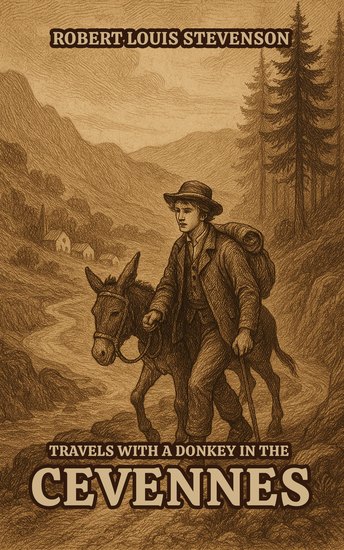
  • Travels with a Donkey in the Cevennes - cover

    Travels with a Donkey in the...

    Robert Louis Stevenson

    • 0
    • 0
    • 0
    First published in 1879, Travels with a Donkey in the Cévennes is a charming and deeply personal travel memoir that captures Robert Louis Stevenson's early literary voice and his enduring love of adventure, nature, and quiet reflection.
    
    In this delightful account, Stevenson sets out on a solitary walking tour through the rugged Cévennes mountains of south-central France, accompanied only by his stubborn yet endearing donkey, Modestine. What begins as a simple journey on foot soon becomes an intimate exploration of the landscape, the people he meets along the way, and his own inner thoughts.
    
    Through winding mountain paths, remote villages, and open countryside, Stevenson records his observations with warmth, humor, and poetic sensitivity. He describes nights spent camping under the stars, encounters with local farmers and innkeepers, and the small challenges of travel—weather, fatigue, and Modestine's famously independent spirit. Each episode offers insight into the pleasures of slow travel and the joy of experiencing the world at a human pace.
    
    Beyond its surface charm, the book is also a thoughtful meditation on solitude, freedom, and the restorative power of nature. Stevenson reflects on history, religion, and human character, blending personal anecdote with philosophical insight. His prose brings the Cévennes vividly to life, turning a modest walking tour into a timeless celebration of curiosity and independence.
    
    Travels with a Donkey in the Cévennes remains a beloved classic of travel literature, inspiring generations of readers, hikers, and writers. Gentle, humorous, and quietly profound, it is a perfect read for those who love travel memoirs, outdoor adventures, and the enduring pleasure of discovering both the world and oneself along the way.
    Show book
  • Wild Cities: Discovering New Ways of Living in the Modern Urban Jungle - cover

    Wild Cities: Discovering New...

    Chris Fitch

    • 0
    • 0
    • 0
    'Mind-shifting, heart-lifting' ISABELLA TREE 
    'Inspiring and essential' ALASTAIR HUMPHREYS 
    'As entertaining as it is enlightening' INDEPENDENT, ★★★★★ 
    Nature isn’t a luxury, it’s a necessity. But today the majority of the world’s population lives in some form of urban environment. And by 2050, two-thirds of humanity will live in towns and cities. 
    Studies have shown that a daily walk in the woods can improve our health and happiness, that those who can observe a natural scene through a hospital window will recover faster. The sound of birds, the smell of tree oils, the presence of free-flowing water – these are all vital to our wellbeing. So as the human footprint of brick, concrete and metal expands, how do we protect our connection to the natural world? 
    In Wild Cities, Chris Fitch leads us around the world in search of answers, visiting pioneering cities and meeting the people working at the forefront of this issue. From the tiny urban forests in Tokyo and the star-rich skies of Flagstaff, to the meandering river of Munich and lions prowling through gardens in Nairobi, this is a globe-spanning look at how to bring nature into the places we live – and how to create the wild cities of the future. 
    In Wild Cities, Chris Fitch takes us on a journey through the latest advancements in architecture and planning, focusing on the integration of natural habitats into our urban landscapes. This non-fiction book is a must-read for those with an interest in ecotourism and community gardening, offering a unique perspective on how we can use land to create ecosystems within our cities. 
    For fans of Travis Elborough (The Writer's Journey), Alastair Bonnett (Off the Map), Edward Brooke-Hitching (The Devil's Atlas), Ian Mortimer (Medieval Horizons), and Merlin Sheldrake (Entangled Life). 
    HarperCollins 2025
    Show book
  • Travels with Plotinus - A Journey in Search of Unity - cover

    Travels with Plotinus - A...

    Moin Mir

    • 0
    • 0
    • 0
    In Travels with Plotinus, Moin Mir follows Plotinus's 1,780-year-old journey of personal discovery across India, Egypt, Italy, Greece and Turkey as he tries to understand the core concept of Plotinian thought, derived from studying the Upanishads – 'Unity and Oneness'.
    
    He uses Plotinus's philosophy to observe how the free will of intellect uses 'Unity' for good and evil. Intimate conversations with refugees escaping war, innocent boatmen drifting down the Nile, simple farmers and monks in Greece along with observations of ancient art and modern technological accomplishments inform his thoughts and writing on the concept of the oneness of humankind – its immense power to bring good and yet its vulnerability to the stealth of intellect to destroy and self-destruct.
    Show book
  • Exploring Our National Parks; Volume 3 - A photographic and literary album - cover

    Exploring Our National Parks;...

    Michael Finney

    • 0
    • 0
    • 0
    Exploring the National Parks across the United States is an opportunity that should not be taken for granted. To understand the profound notion of stewardship, in terms of responsibility and accountability, we must know the land as intimately as possible. This album seeks to nurture further the seeds planted in the previous entries of the series. 
    Captured in photographs are views of seven parks around the country that accompany the author’s writing about experiences and thoughts while traveling through them. 
    Parks included: Hot SpringsBig BendGuadalupe MountainsCarlsbad CavernsWhite SandsGreat Sand DunesGateway Arch
    Show book
  • Egyptian Science and Technology - Innovations of the Ancient World - cover

    Egyptian Science and Technology...

    Omar Khalil

    • 0
    • 0
    • 0
    Ancient Egypt, renowned for its monumental architecture and sophisticated culture, was also a hub of intellectual and scientific advancements. At the heart of Egyptian knowledge was a unique blend of practical experience, religious beliefs, and cultural traditions. Understanding the foundations of their knowledge requires examining the interplay between mythology, early scientific thought, and the ways this knowledge was transmitted through generations. 
    The role of religion and mythology in ancient Egypt cannot be overstated. Egyptian cosmology deeply influenced how people understood the world around them. Deities associated with creation, the afterlife, and natural phenomena shaped the Egyptians' perception of science and technology. For example, the god Thoth was believed to be the deity of wisdom, writing, and mathematics, and his influence permeated educational practices. Priests and scribes, who were often part of temple schools, acted as custodians of this sacred knowledge. Their training combined religious teachings with practical subjects like astronomy, mathematics, and medicine. 
    Early scientific thought in ancient Egypt was pragmatic rather than theoretical. Egyptians were skilled observers, and much of their knowledge arose from practical problem-solving. Whether it was calculating the Nile's flooding patterns or designing complex irrigation systems, their science emerged from the need to manage everyday challenges. For instance, their understanding of geometry developed out of the necessity to remeasure fields after the annual inundation of the Nile. Similarly, medical practices were rooted in practical observations of ailments and their treatments, blending empirical knowledge with spiritual beliefs.
    Show book