Join us on a literary world trip!
Add this book to bookshelf
Grey
Write a new comment Default profile 50px
Grey
Subscribe to read the full book or read the first pages for free!
All characters reduced
Press Freedom Debate - cover

Press Freedom Debate

Harrison Stewart

Translator A AI

Publisher: Publifye

  • 0
  • 0
  • 0

Summary

Press Freedom Debate explores the evolution of press freedom during the revolutionary era in France, Britain, and America. It delves into the dynamic interplay between journalism and political thought, revealing how the explosion of print media transformed societies. The book uncovers intriguing facts, such as the varying censorship strategies employed by each government to control public opinion and the emergence of journalistic ethics amidst political upheaval.

 
The book progresses by first introducing the diverse landscape of revolutionary-era newspapers. It then delves into government censorship and propaganda techniques. Finally, it examines intellectual debates surrounding journalistic freedom and responsibility.

 
By drawing upon extensive primary sources, including newspaper archives and personal correspondence, the book offers a comparative perspective on the development of press freedom, underscoring both shared trends and national specificities. This historical analysis provides valuable insights into the enduring challenges of balancing freedom of expression with societal order and offers a deeper understanding of the roots of contemporary journalistic practices, as well as debates surrounding media bias and journalistic ethics. It highlights how the revolutionary period shaped enduring legal and ethical frameworks for journalism, making it a valuable resource for scholars, students, and media professionals alike.
Available since: 02/25/2025.
Print length: 70 pages.

Other books that might interest you

  • Every Day Counts : The Power of Small Steps to Greatness - cover

    Every Day Counts : The Power of...

    Malik LEFFAD

    • 0
    • 0
    • 0
    In a world where everything seems to move at top speed, where instantaneity is king, this book is a breath of fresh air for all those who seek to grow and evolve at their own pace. "Every Day Matters" is much more than a simple guide to personal development: it's an invitation to rediscover the power of small gestures, daily decisions, and the cumulative impact of our actions on our life's journey. 
    The author takes us on an introspective journey, peppered with inspiring anecdotes, touching testimonials and universal life lessons. Discover proven strategies for defining meaningful goals, establishing routines that promote growth and overcoming the inevitable obstacles life puts in our path. Each chapter is designed to provide you with practical tools, deep insights and actionable exercises that will help you move forward, step by step, toward your ideal vision of yourself. 
    This book is for you if :You feel like you're stagnating despite your best efforts.You're looking for a sustainable and authentic means of personal growth.You want to understand how small, everyday gestures can lead to major transformations.You need inspiration to keep going, even when the going gets tough. 
    Join a growing community of readers who have chosen to embrace the "small steps" philosophy, and discover how every day can be a new opportunity to grow, learn and flourish.
    Show book
  • The Cleveland John Doe Case - cover

    The Cleveland John Doe Case

    Thibault Raisse

    • 0
    • 0
    • 0
    Ohio. A suicide, no fingerprints, no identity. 


    In July 2002, the Eastlake police discovered a decomposed body in a modest studio apartment in Cleveland, Ohio. It appeared to be a suicide by firearm. The man was Joseph Newton Chandler III, a retiree whom neighbors and former colleagues described as quiet, secretive, and strange. But as the investigation progressed, less and less about Joseph's life and identity made sense. 


    In 2018, thanks to scientific advances in DNA, the man's true identity was finally discovered: Robert Ivan Nichols. A veteran with a wife and three sons, Nichols eventually left his family, telling his wife "One day you will know why." A few years later, in 1965, his family reported him missing. By 1978, he had stolen the identity of Joseph Newton Chandler III, who had been killed in a car accident at eight years old. But who was this man and why did he change his name? What secret was he trying to hide? 


    Thibault Raisse examines the case, exploring the many theories that have emerged, from the craziest to the most credible. Among these theories is a possible connection to the Zodiac Killer, whose murders date back to 1968 and 1969 in California.
    Show book
  • Edinburgh: The Autobiography - cover

    Edinburgh: The Autobiography

    Alan Taylor

    • 0
    • 0
    • 0
    Relive the history of Edinburgh through the eyes of those who witnessed it.
    From one of the earliest mentions of its name in the sixth century to the Covid lockdowns of the twenty-first, this is a magnificent portrait of one of the world's great cities in its many iterations, from 'Edinburgh, the sink of abomination' to the Athens of the North and everything – including the home of the Enlightenment, the Festival City, the Aids Capital of Europe and a Mecca for tourists seeking tartan tat – in between.
    As the nation's capital it has been critical to its progress and a witness to epochal events, such the tumultuous reign of Mary, Queen of Scots, the Reformation, the Forty-Five rebellion, the Disruption of the Church of Scotland and the reconvening of the Scottish Parliament. All of these and more feature. But this is not simply a book about the great and good, the famous and infamous. There is testimony aplenty from ordinary folk who may not have made their mark on history but who have contributed to Edinburgh's ever-expanding tapestry.
    There are stories of body snatching and murder, drunkenness and drug-taking, sex and shopping, as well rants against inclement weather and the city council.
    Show book
  • Little Women Podcast: Meg Goes To Vanity Fair - cover

    Little Women Podcast: Meg Goes...

    Niina Niskanen, Emily Lau

    • 0
    • 0
    • 0
    In this engaging episode of Little Women Podcast, Niina and Emily delve deep into the thought-provoking chapter "Vanity Fair" from Louisa May Alcott's classic novel Little Women. Join them as they explore Meg's transformative experience at the ball, where she’s swept into the dazzling world of wealth and glamour. As the rich girls dress her up in their finest attire, Meg is faced with an internal conflict that challenges her values and ambitions. 
    In this lively discussion, Niina and Emily reflect on Meg’s journey of self-discovery, revealing her struggles with vanity, materialism, and the pursuit of societal approval. What does it mean to stay true to oneself in the face of luxury and outward appearances? Meg's emotional journey offers timeless insights that resonate with listeners today. 
    Tune in to hear a thoughtful, in-depth conversation about one of the most pivotal moments in Little Women, as well as fascinating reflections on character development, values, and personal growth. Whether you're revisiting the novel or experiencing it for the first time, this episode will make you see Meg’s story in a whole new light.
    Show book
  • Schism - The Story of Sectarianism in the Modern Middle East - cover

    Schism - The Story of...

    Simon Mabon

    • 0
    • 0
    • 0
    A sophisticated new account of sectarianism in the Middle EastSectarianism saturates our conversations about the Middle East, its politics and society, and the divide between Sunni and Shi'a captures headlines the world over. But in reality, sectarian difference is far from a uniquely Islamic phenomenon. Throughout the region, religious and communitarian schisms play out in politics, economics and theology, across religions and borders.But how did these divisions come to be? And who is gaining from them?Simon Mabon examines sectarianism in the modern Middle East, moving beyond our simplistic conceptions of ancient religious hatreds and violence. Sectarian identities are as much a product of colonial and post-colonial state building as they are of religious belief, and they operate as a means to include and exclude certain groups. Ranging from Iraq and Iran to Lebanon, Saudi Arabia and Israel, Mabon explores how divisions are produced, regulated and contested over time—and how they have shaped the lives of people across the region.
    Show book
  • The Life Of Buddha - cover

    The Life Of Buddha

    Sripad Jagannatha Das

    • 0
    • 0
    • 0
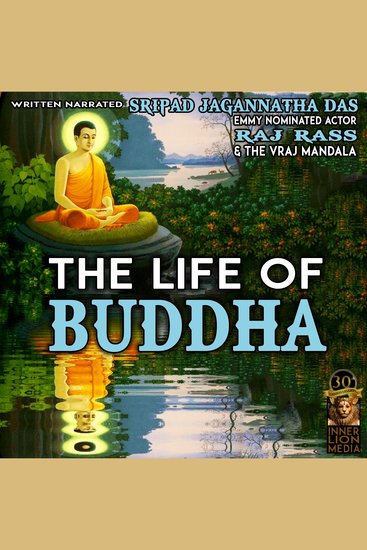
    Gautama Buddha, also known as Siddhartha Gautama, was a spiritual teacher who lived in ancient India between the 6th and 4th centuries BCE. He is the founder of Buddhism, one of the major religions of the world. Buddha was born into a royal family, but he renounced his luxurious lifestyle at the age of 29 to seek the truth about life and the nature of suffering. He spent six years as a wandering ascetic before attaining enlightenment at the age of 35. The Buddha's teachings, known as the Dharma, revolve around the Four Noble Truths, which explain the nature of suffering and the path to its cessation. The core message of Buddhism is that suffering arises from craving and attachment, and that liberation can be attained through the practice of the Eightfold Path, which includes meditation, mindfulness, ethical conduct, and wisdom. 
     
    The Buddha's teachings have had a profound impact on the spiritual and cultural history of Asia and beyond. His teachings spread rapidly throughout India and other parts of Asia, and they continue to inspire millions of people today. The Buddha's emphasis on non-violence, compassion, and the importance of the present moment has also resonated with many in the West. In addition to his spiritual teachings, the Buddha also provided practical guidance on social and ethical issues. He advocated for the abolition of caste distinctions, the treatment of animals with compassion, and the importance of community and social harmony. 
     
    Buddha's teachings continue to be relevant and inspiring today. His teachings on the nature of suffering, impermanence, and the importance of self-awareness are particularly relevant in today's fast-paced and materialistic world.
    Show book