Join us on a literary world trip!
Add this book to bookshelf
Grey
Write a new comment Default profile 50px
Grey
Subscribe to read the full book or read the first pages for free!
All characters reduced
History of School Books - cover

History of School Books

Harrison Stewart

Translator A AI

Publisher: Publifye

  • 0
  • 0
  • 0

Summary

History of School Books explores how textbooks have shaped education, influenced learning, and mirrored societal values across time. It examines how the curriculum's development has been molded by these learning materials. Did you know textbooks weren't always standardized? The rise of uniform textbooks in the 19th century significantly impacted educational practices. Furthermore, these books are not neutral; they actively shape intellectual thought, challenging the idea of objective knowledge by revealing embedded biases and power dynamics.

 
The book approaches its subject chronologically, examining how educational philosophies and social contexts influenced textbooks' creation and reception through the ages, from ancient clay tablets to today's digital resources. It investigates the role of textbooks in promoting or challenging social inequality. The analysis is supported by primary source research, including historical textbooks, archival data, and educational policies, to offer a comprehensive understanding of the textbook’s impact on society.
Available since: 02/26/2025.
Print length: 78 pages.

Other books that might interest you

  • Teotihuacan Empire - The City of the Gods and the Forgotten Giants of Mesoamerica - cover

    Teotihuacan Empire - The City of...

    Rolf Hedger

    • 0
    • 0
    • 0
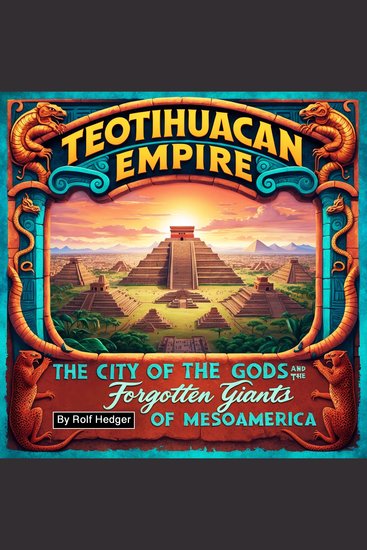
    Teotihuacan, known as the "City of the Gods," remains one of the most enigmatic civilizations of ancient Mesoamerica. Its origins date back to around 400 BCE, when small settlements began to emerge in the Valley of Mexico. Over the centuries, these settlements merged, gradually forming what would become the largest and most influential city of its time. The exact reasons for its rise are still debated, but archaeologists believe that a combination of favorable geography, trade opportunities, and sociopolitical factors contributed to Teotihuacan’s emergence as a dominant power. 
    The valley’s rich volcanic soil provided fertile land for agriculture, supporting crops such as maize, beans, and squash. The region was also strategically located along key trade routes, allowing early inhabitants to engage in commerce with neighboring cultures. As the population grew, so did the need for organization, leading to the development of complex social structures. Unlike other civilizations that revolved around a single ruling dynasty, Teotihuacan appears to have been governed by a collective leadership, possibly a council of elites who controlled different aspects of city life. 
    One of the most intriguing aspects of Teotihuacan’s early history is the origin of its name. The Aztecs, who discovered the abandoned ruins centuries later, named it "Teotihuacan," meaning "the place where gods were born." This suggests that even in ancient times, the city held a sense of divine significance. Mythology and spiritual beliefs were deeply intertwined with its development, as seen in its grand temples and pyramids, which were aligned with celestial movements.
    Show book
  • 10 Ways We Can Advance Social Justice - cover

    10 Ways We Can Advance Social...

    Hannibal B. Johnson

    • 0
    • 0
    • 0
    Social justice matters because we—each of us—matter. Unless we learn to co-exist as equals, we will never live optimally. To denigrate any one of us is to demean all of us. 
    Absent the wholesale embrace of social justice, we risk succumbing to human tendencies to stereotype, "otherize," and scapegoat. Those tendencies, left unchecked, lead to horrific ends. 
    When we see ourselves in others, we understand that our shared humanity eclipses all else. Through our disagreements, we must never doubt the dignity and worth of the other. 
    Certain facts and factors that cause misalignments in the social order—inequality and inequity—social injustice—but there are ways to intervene and interrupt them. This book offers 10 ways we can advance social justice.   
    We pay a cost for failing to internalize and act upon history's lessons. For example, our history teems with examples of fractious relations among racial, ethnic, and cultural groups and an overarching white supremacist ideology that places some at an advantage at the expense of others. Recognizing our shared humanity—and the power of "we"—and rectifying disparities and inequities are among the chief aims of social justice initiatives. 
    Achieving social justice is an aspirational pursuit—an ongoing journey that can be fraught with peril and disappointment. It is nonetheless an odyssey worth taking—a quest so many of us have no choice but to embrace. Introspection, engagement, and advocacy are essential stops along the way. 
    Show book
  • The Legends of the Samurai - Myths and Heroes of Feudal Japan - cover

    The Legends of the Samurai -...

    Odessa Nightshade

    • 0
    • 0
    • 0
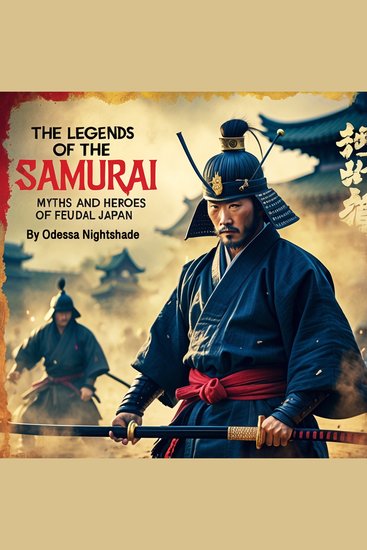
    The samurai have long stood as symbols of discipline, honor, and martial prowess, their legends woven into the very fabric of Japan’s history. Emerging as a distinct warrior class in the Heian period, the samurai gradually rose to power, shaping the political and social landscape of feudal Japan for centuries. Their influence extended beyond the battlefield, deeply embedding itself in Japanese culture, philosophy, and even governance. While many envision the samurai as noble warriors upholding a strict moral code, the reality of their existence was far more complex—marked by fierce loyalty, political intrigue, and the constant struggle for survival.  
      
    At the heart of samurai life was Bushidō, the Way of the Warrior, a code that dictated their principles and behavior. Bushidō emphasized values such as loyalty, honor, self-discipline, and an unwavering acceptance of death. While often romanticized, this code was not a singular, rigid doctrine but rather an evolving philosophy influenced by Buddhism, Confucianism, and Shintoism. Some samurai embodied these ideals to the fullest, becoming paragons of virtue, while others used their martial skills for personal gain, engaging in deception, betrayal, and ruthless ambition. The reality of the samurai was one of contradiction—both noble protectors and fierce conquerors, loyal vassals and rebellious warlords.  
      
    As the samurai class grew in power, their stories became legendary, passed down through generations in both historical records and folklore. Figures like Miyamoto Musashi, the undefeated duelist, or the 47 Ronin, who avenged their fallen lord, continue to capture the imagination of people worldwide. Yet, separating historical fact from myth can be challenging. Many tales have been embellished over time, transformed into romanticized narratives that obscure the grittier truths of samurai life.
    Show book
  • Mughal Empire The: The History of the Modern Dynasty that Ruled Much of India Before the British - cover

    Mughal Empire The: The History...

    Editors Charles River

    • 0
    • 0
    • 0
    In the late 15th century, Western Europe entered the Renaissance, which is often credited with the origins of modern, scientific thought. The Age of Exploration also began around that time, and 1517 is when the Reformation began. Meanwhile, the Islamic world was also quickly evolving around the same time, with the Ottoman Empire expanding into Eastern Europe and wiping the Orthodox Christian Byzantine Empire off the face of the map. And while the Ottomans were establishing themselves as the premier Islamic power with the help of early gunpowder weapons, hundreds of miles away in Central Asia, another “gunpowder empire” was forming.  
    	The Mughals, a group with Turkish and Mongolian roots, also used gunpowder weapons to sweep into northern India, topple the existing Islamic dynasty in Delhi, and eventually subject most of India to their rule. The term “gunpowder empire” was originally coined by Russian scholar V. V. Bartold and popularized by American historians William McNeil and Marshall Hodgson in the mid-20th century to describe the Islamic Ottoman, Safavid, and Mughal empires, which they claimed came to power through gunpowder. Although that core thesis has been challenged by historians in recent years, who argue that gunpowder weapons were a feature or result of the rise of these empires, not the cause for them, the term is still used (Streusand 2011, 3).  
    	To be fair, the Mughals rose through a combination of political acumen and battlefield brutality, and they held onto their empire for hundreds of years in much the same way. In the process, the Mughals developed a state that was unique in many ways, adopting elements of Islamic culture and meshing them with native Indian culture and even Western European culture. When the British conquered India in the mid-19th century, they had the benefit of inheriting the Mughal system, which, despite many problems, proved to be a suitable template for rule over a land as vast and diverse as India.
    Show book
  • F*cked - Being Sexually Explorative and Self-Confident in a World That's Screwed - cover

    F*cked - Being Sexually...

    Krystyna Hutchinson, Corinne Fisher

    • 0
    • 0
    • 0
    Comedians Corinne Fisher and Krystyna Hutchinson started Guys We F*cked: The Anti Slut-Shaming Podcast in 2013, intending to interview guys they'd slept with to learn more about themselves and squash the stigma so often associated with sexual women. As the podcast grew, and Corinne and Krystyna got to know their fans, stories of sexual assault, verbal and emotional abuse, and crippling shame became common topics of discussion along with those humorous conversations highlighting overall sexual confusion among many adults. The podcast is now an community of over a million listeners worldwide, and a place where any and all taboo sex topics are discussed freely, both with celebrity guests and the real people in their lives. 
    Their new book, F*cked, follows that model, as Corinne and Krystyna bring a mix of raw, ridiculous, and serious sexual conversation to the page that will include topics like:Why shame is completely made up and how we can stop giving into itSexual exploration and how it sometimes ends in a trip to the ERStuff we should stop doing: Snooping, nitpicking our bodies, and faking orgasmsAsking your sexual partner uncomfortable questionsHow to get yourself out of an unsafe situationMasturbation, threesomes, porn, sex toys, butt stuffAnd much, much more 
    Corinne and Krystyna are tired of books that pander to women like they’re hot messes, unable to handle their emotions without the assistance of a man, a glass of rosé, and a Xanax. This audiobook will teach the listener, be they male, female, transgender or undecided, that you deal with sh*t, you brush your shoulder off, and you move the f*ck on. In a society where it has, for some reason, become chic to be the victim, they say this pity party ends now.  
    This is a guide to love and sex for women who drink whiskey because they like it, not because it’s a cute thing to say on your Tinder profile. It has no trigger warnings because life doesn’t come with those. It won’t talk down to you or coddle you because you’re better than that. Corinne and Krystyna aren’t going to explain why he’s just not that into you, because it doesn’t f*cking matter. Despite what television, Rom-Coms, and glossy magazines tell you, you’re fine all by yourself. This is the audiobook Bridget Jones should’ve heard instead of writing that sh*tty diary in the first place.
    Show book

  • Narcissistic Abuse Recovery - The Ultimate Guide To Eliminating Toxic Relationships Freeing Yourself From Obsessive Manipulators And Narcissists - cover

    Narcissistic Abuse Recovery -...

    Natalie Kamryn

    • 0
    • 0
    • 0
    Let This Book Show You Exactly How To Recover From The Emotional, And Psychological Damage That Has Been Inflicted On You By A Narcissistic Person In Your Life. Take Your Life And Sanity Back Then Start Building Healthy, Mutually Beneficial Relationships!More precisely, you will discover:The basics of narcissism, including the traits that are common among narcissists and the types of narcissismThe ins and outs of narcissistic abuse, including what narcissistic abuse entails and signs that the abuser in your life might be narcissisticSigns that you might be dating a narcissist and how to move forward, with that knowledge to protect yourselfThe strategies that abusers (including the one in your life) use to get through to you and break you to the point of rendering you powerlessThe effects of abuse and why you need to do somethingHow to exit a narcissistic relationship, even if you feel trappedHow your personality is likely to change after abuseThe most effective way to rebuild yourself after narcissistic abuseThe secret language of narcissists, including how narcissists traumatize, victimize, exploit, and break their victimsWhy narcissists act the way they do and how to overcome and be free from themHow to change your inner dialogue, reduce inner doubt, build self-esteem, love yourself again, and effect a no-contact rule to finally recover from a narcissistHow to not fall for the manipulative tricks of a narcissistic exHow to ultimately thrive after your experience with a narcissist 
    Whether the abuser in your life is a parent, partner, child, friend, sibling, or boss, this book will prove extremely helpful in your journey to healing and personal transformation!
    Show book