




PLAY SAMPLE

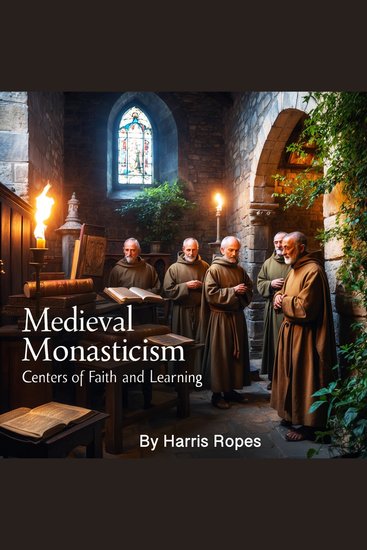
Medieval Monasticism - Centers of Faith and Learning
Harris Ropes
Narrator Saskia Higgins
Publisher: Viola Lamers LLC
Summary
Monasticism, as a religious way of life, emerged from the desire for spiritual purity and devotion. Its origins can be traced to the early centuries of Christianity, when individuals sought solitude and asceticism to deepen their faith. These early monks and hermits withdrew from the distractions of society, dedicating themselves to prayer, fasting, and contemplation. Their practices laid the foundation for organized monastic communities that would later shape religious life in medieval Europe.
Christian asceticism had its roots in the teachings of Jesus and the apostles, who emphasized humility, self-denial, and devotion to God. In the first few centuries after Christ, some Christians chose to live apart from society, embracing a life of solitude in the deserts of Egypt, Syria, and Palestine. Among the most influential of these early ascetics were the Desert Fathers, such as Anthony the Great, who became a model for monastic life. These individuals practiced extreme self-discipline, often enduring harsh conditions to strengthen their spiritual resolve. Their writings and teachings inspired many others to follow their example, leading to the formation of small groups of hermits living near one another.
Over time, these solitary ascetics began to form more structured communities. One of the key figures in this transition was Pachomius, an Egyptian monk who, in the fourth century, established one of the earliest known monastic rules. His guidelines emphasized communal living, regular prayer, and shared labor. Unlike the isolated lifestyle of the early hermits, Pachomian monasteries promoted a balance between solitude and community, setting a precedent for later monastic traditions. This model of coenobitic monasticism—where monks lived together under a common rule—spread throughout the Christian world, influencing later monastic developments.
Duration: about 2 hours (01:49:50)
Publishing date: 2025-03-27; Unabridged; Copyright Year: — Copyright Statment: —




