Begleiten Sie uns auf eine literarische Weltreise!
Buch zum Bücherregal hinzufügen
Grey
Einen neuen Kommentar schreiben Default profile 50px
Grey
Jetzt das ganze Buch im Abo oder die ersten Seiten gratis lesen!
All characters reduced
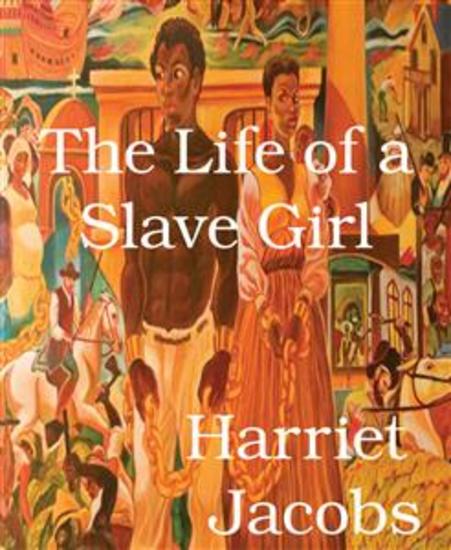
The Life of a Slave Girl - cover

The Life of a Slave Girl

Harriet Jacobs

Verlag: BookRix

  • 0
  • 0
  • 0

Beschreibung

I was born a slave; but I never knew it till six years of happy childhood had passed away. My father was a carpenter, and considered so intelligent and skilful in his trade, that, when buildings out of the common line were to be erected, he was sent for from long distances, to be head workman. On condition of paying his mistress two hundred dollars a year, and supporting himself, he was allowed to work at his trade, and manage his own affairs. His strongest wish was to purchase his children; but, though he several times offered his hard earnings for that purpose, he never succeeded. In complexion my parents were a light shade of brownish yellow, and were termed mulattoes. They lived together in a comfortable home; and, though we were all slaves, I was so fondly shielded that I never dreamed I was a piece of merchandise, trusted to them for safe keeping, and liable to be demanded of them at any moment. I had one brother, William, who was two years younger than myself—a bright, affectionate child. 

Such were the unusually fortunate circumstances of my early childhood. When I was six years old, my mother died; and then, for the first time, I learned, by the talk around me, that I was a slave. My mother's mistress was the daughter of my grandmother's mistress. She was the foster sister of my mother; they were both nourished at my grandmother's breast. In fact, my mother had been weaned at three months old, that the babe of the mistress might obtain sufficient food. They played together as children; and, when they became women, my mother was a most faithful servant to her whiter foster sister. On her death-bed her mistress promised that her children should never suffer for any thing; and during her lifetime she kept her word. They all spoke kindly of my dead mother, who had been a slave merely in name, but in nature was noble and womanly. 

Reader, my story ends with freedom; not in the usual way, with marriage. I and my children are now free! We are as free from the power of slaveholders as are the white people of the north; and though that, according to my ideas, is not saying a great deal, it is a vast improvement in my condition. The dream of my life is not yet realized. I do not sit with my children in a home of my own, I still long for a hearthstone of my own, however humble. I wish it for my children's sake far more than for my own. But God so orders circumstances as to keep me with my friend Mrs. Bruce. Love, duty, gratitude, also bind me to her side. It is a privilege to serve her who pities my oppressed people, and who has bestowed the inestimable boon of freedom on me and my children.
It has been painful to me, in many ways, to recall the dreary years I passed in bondage. I would gladly forget them if I could. Yet the retrospection is not altogether without solace; for with those gloomy recollections come tender memories of my good old grandmother, like light, fleecy clouds floating over a dark and troubled sea.
Verfügbar seit: 19.12.2023.
Drucklänge: 327 Seiten.

Weitere Bücher, die Sie mögen werden

  • 8 Great Smarts - Discover and Nurture Your Child's Intelligences - cover

    8 Great Smarts - Discover and...

    PHD Kathy Koch, John Stonestreet

    • 0
    • 0
    • 0
    Your child is smart, but does he or she believe it?"Smart" is a power word. Children who believe they’re smart excel more in school and approach life with greater confidence. But children who don’t can struggle to apply themselves. Do you wish your child could see how smart he or she is?Find hope in 8 Great Smarts. You’ll be empowered and equipped with new language and creative ideas for how to:Accept and affirm your child’s unique smartsMotivate your child to learn and study with all 8 smartsReawaken any "paralyzed" smartsRedirect misbehavior in new, constructive waysGuide your child spiritually, relationally, and to a good career fit 
    Dr. Kathy Koch loves seeing children flourish and helping parents make it happen—and it’s never too late to start. Now is the time to help your child be all that God designed him or her to be.BONUS: Every book includes a FREE access code for the official 8 Great Smarts Quiz located at: https://www.8greatsmarts.com/.
    Zum Buch
  • Chile - Historical Revolution and Economic Development - cover

    Chile - Historical Revolution...

    Anya Solace

    • 0
    • 0
    • 0
    Chile’s history is a tapestry woven with threads of indigenous heritage, colonial conquest, political revolution, and economic transformation. Stretching along the western edge of South America, Chile’s unique geography—bordered by the Pacific Ocean to the west and the towering Andes to the east—has shaped not only its physical landscape but also its historical trajectory and economic development. The country’s diverse climates, from the arid Atacama Desert in the north to the fertile central valleys and the rugged, windswept terrain of Patagonia in the south, have influenced settlement patterns, agricultural practices, and resource exploitation for centuries. 
    Long before Spanish colonization, Chile was home to numerous indigenous groups, including the Mapuche, who fiercely resisted foreign domination. Their cultural legacy remains an integral part of Chile’s identity, despite centuries of marginalization. The arrival of Spanish conquistadors in the 16th century marked the beginning of a colonial era characterized by the extraction of natural resources, the establishment of a rigid social hierarchy, and the introduction of European institutions. The colonial economy relied heavily on agriculture, mining, and forced indigenous labor, laying the foundation for economic systems that persisted well into the post-independence period. 
    Chile’s struggle for independence from Spain in the early 19th century was part of the broader wave of liberation movements sweeping across Latin America. Achieving independence in 1818 under the leadership of figures like Bernardo O’Higgins and José de San Martín, Chile faced the daunting task of nation-building. The early republican period was marked by political instability and power struggles between conservative and liberal factions, each advocating different visions for Chile’s future.
    Zum Buch
  • The Divine Comedy - Exploring the Mythic Landscapes of Dante's Vision - cover

    The Divine Comedy - Exploring...

    Odessa Nightshade

    • 0
    • 0
    • 0
    Few works in literary history have shaped the cultural and spiritual imagination of the Western world as profoundly as *The Divine Comedy*. Written in the early 14th century by the Florentine poet Dante Alighieri, this epic journey through Hell, Purgatory, and Paradise is more than just a tale of the afterlife—it is a meditation on justice, redemption, and the human soul’s search for divine truth. As both a poet and a visionary, Dante crafted a work that bridges medieval theology, classical influences, and deeply personal reflections, creating a narrative that continues to resonate with readers across centuries.  
      
    To fully appreciate *The Divine Comedy*, it is essential to understand the world that shaped Dante and the literary traditions that influenced him. Born in 1265, Dante lived in a politically tumultuous Italy, marked by factional strife between the Guelphs and Ghibellines, conflicts that would deeply impact his life and writing. Exiled from his native Florence, he poured his exile’s anguish and his longing for justice into the verses of *The Divine Comedy*, transforming personal suffering into an allegorical masterpiece. His work reflects not only his political frustrations but also his devotion to philosophy, theology, and the poetic traditions of Virgil and the classical world.  
      
    At its core, *The Divine Comedy* is an allegory of the soul’s journey toward God. Each of its three realms—*Inferno*, *Purgatorio*, and *Paradiso*—represents stages of moral and spiritual transformation. *Inferno* exposes the consequences of sin, *Purgatorio* explores the trials of purification, and *Paradiso* reveals the ultimate joy of divine enlightenment. This structure serves not only as a vivid depiction of the afterlife but also as a guide for readers seeking moral and spiritual understanding in their own lives. 
    Zum Buch
  • King Arthur - His Life Authenticity Historicity and Legacy - cover

    King Arthur - His Life...

    Kelly Mass

    • 0
    • 0
    • 0
    King Arthur, a legendary figure rooted in medieval history and romance, is often depicted as the British leader who defended Britain against Saxon invaders in the late 5th and early 6th centuries. However, the story of King Arthur is primarily a blend of Welsh and English mythology with elements of literary invention. Most modern historians agree that Arthur is more of a mythical construct than a historical figure. Early sources such as the Annales Cambriae, the Historia Brittonum, and the works of the monk Gildas provide glimpses into Arthur's supposed historical context. Additionally, references to Arthur appear in early poetic works like Y Gododdin, though these allusions remain ambiguous and open to interpretation. 
    Arthur’s significance as a cultural and legendary figure solidified in the corpus of stories known as the "Matter of Britain." Geoffrey of Monmouth’s 12th-century Historia Regum Britanniae (History of the Kings of Britain) was instrumental in elevating Arthur to international fame. Geoffrey’s imaginative narrative portrayed Arthur as a heroic warrior who defended Britain from both human and supernatural foes. Earlier Welsh and Breton tales, predating Geoffrey’s work, often described Arthur as a semi-magical figure associated with the Welsh otherworld, Annwn. However, the extent to which Geoffrey relied on earlier sources versus his own creativity remains unclear.
    Zum Buch
  • When I Consider Your Heavens - How Science and Philosophy Lead Us to God - cover

    When I Consider Your Heavens -...

    Antony Latham

    • 0
    • 0
    • 0
    In this thought-provoking book, Antony Latham shows how science and philosophy provide evidence for the existence of God. There was a beginning of the universe, which requires an explanation beyond itself. The exquisite fine-tuning of the physical laws necessary for life has all the hallmarks of design. Paleontology and biology show unmistakable signs of an intelligence behind life. Consciousness and free-will, inexplicable in purely physical terms, point to something beyond the material. The philosophy of beauty and morality leads us to an author of both. He argues that the universe is ‘open’—not simply the interaction of matter and energy, but a realm where miracles can happen. The evidence for the greatest miracle in history, the resurrection of Jesus, is carefully presented. 
    About the Author: 
    Antony Latham is a retired family doctor with nine years of experience working in hospitals in East Africa. He has authored books on Darwinism and the philosophy of mind, and holds a degree in Medical Law and Bioethics. Currently, he chairs the Scottish Council on Human Bioethics. He and his wife have four children and three grandchildren. They live in the Western Isles of Scotland, where he enjoys sailing and mountaineering.
    Zum Buch
  • The New Middle East - What Everyone Needs to Know® - cover

    The New Middle East - What...

    James L. Gelvin

    • 0
    • 0
    • 0
    In the second edition of The New Middle East, renowned scholar James L. Gelvin explains how in the aftermath of the collapse of the USSR, the American invasion of Iraq, and the Arab uprisings of 2010-11, a new Middle East has emerged. Syria, Libya, and Yemen have become "crisis states," where warlords vie against governments and each other. The economies of Iran, Turkey, and Lebanon, weakened by corruption, sanctions, and neoliberal economic policies, have imploded. Some states have doubled-down on repression, while others intervene in the internal affairs of their neighbors with impunity. 


    This edition explores these hallmarks of the New Middle East, along with the end of American hegemony in the region, the expansion of "conflict zones," the continued centrality of the Saudi-Iranian competition, and the ramifications of the breakdown of the Israel-Palestine peace process. It also highlights the crisis of human security brought on by the COVID-19 pandemic, bad governance, stagnant economies, poor healthcare and educational delivery systems, climate change, food and water insecurity, population growth and imbalance, and the unprecedented displacement of populations. Gelvin outlines the social, political, and economic contours of the New Middle East, illuminating the current crisis in the region and exploring how it is likely to evolve in the decades to come.
    Zum Buch