Join us on a literary world trip!
Add this book to bookshelf
Grey
Write a new comment Default profile 50px
Grey
Subscribe to read the full book or read the first pages for free!
All characters reduced
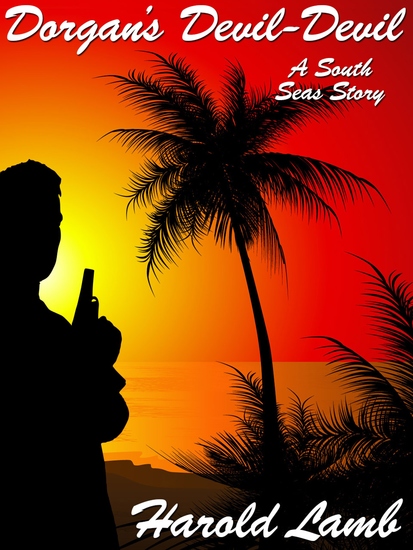
Dorgan's Devil-Devil - cover

Dorgan's Devil-Devil

Harold Lamb

Publisher: Wildside Press

  • 0
  • 0
  • 0

Summary

What was the secret of Dorgan's power over the South Sea island's natives? Classic historical adventure fiction first published in the March 15, 1918 issue of Adventure magazine.
Available since: 07/22/2022.
Print length: 39 pages.
Other books that might interest you

  • Rainbird’s Revenge - cover

    Rainbird’s Revenge

    M. C. Beaton

    • 0
    • 0
    • 0
    When the Duke of Pelham returns to his town house at 67 Clarges Street, he is grimly determined to find a suitable wife—but completely unprepared for what the season has to offer. 
    The duke’s title alone has always brought him more than his share of feminine attention; claiming not to believe in love, he has never been spurned by a lady. The duke’s self-imposed search is soon disrupted by the arrival in London of Miss Jenny Sutherland, a spoiled but beautiful country girl whose vanity is her tragic flaw. According to her guardian Aunt Letitia, lack of competition has made Jenny put on airs; in London, she will get the set-down she sorely deserves. 
    Indeed, at her first important London party, Jenny’s blatant disdain for the duke leads to certain disaster. But no one has counted on the intervention of John Rainbird, the shrewd and resourceful butler at 67 Clarges Street. Rainbird befriends Jenny, suggesting she look in the mirror a little less often. The result is a mischievous scheme that will insure Jenny’s social success and determine the fate of the close-knit family of servants at 67 Clarges Street.
    Show book
  • Legion XXII: Bellatrix - Book 2 - cover

    Legion XXII: Bellatrix - Book 2

    Simon Turney

    • 0
    • 0
    • 0
    Titus Cervianus is no ordinary soldier. And the Twenty Second is no ordinary legion... 
    Egypt, 25 BC. Titus Cervianus marches into the unknown as he and the Twenty Second Legion contend with the armies of the Bellatrix: the Warrior Queen of Kush. The Kushites and the Egyptians are united against the Roman presence in their lands – but there are complex political and military forces at work. Deep in the deserts, Cervianus and his comrades must brace themselves for a furious onslaught as they take on the might of the Bellatrix.
    Show book
  • The Hidden Force - cover

    The Hidden Force

    Louis Couperus

    • 0
    • 0
    • 0
    In the lush, oppressive heat of colonial Java, nothing is as it seems. Behind the polished rituals of Dutch colonial life, a quiet unraveling begins. Governor Van Oudijck believes in order, reason, and control. But something else, something older and more powerful, is working against him. 
    As social tensions rise and his family begins to fall apart, Van Oudijck finds himself at odds not just with those around him, but with an unseen force that defies explanation. 
    The Hidden Force is a sharp, unsettling novel about power, pride, and the invisible threads that shape a crumbling empire. Written in 1900, this haunting story explores the clash between Western arrogance and the spiritual reality of the East. 
    For readers who appreciate layered literary fiction, political undercurrents, and psychological suspense set in colonial environments.
    Show book
  • The Orphanage Girls Come Home - cover

    The Orphanage Girls Come Home

    Mary Wood

    • 0
    • 0
    • 0
    'These heartbreaking but also inspirational tales are full of the grit and hardship that have become hallmarks of a storyteller who writes straight from the heart.' - Lancashire Evening PostHeartfelt and moving, The Orphanage Girls Come Home is the beautiful conclusion to the Orphanage Girls series, set during WW1 and travelling from London's East End to Montreal, Canada.London, 1910. When Amy is chosen to be a part of a programme to resettling displaced children in Canada, her life changes overnight. Her great sadness is having to say goodbye to Ruth and Ellen, the friends who became family to her during the dark days at the orphanage. As she steps on board the ship to Montreal, the promise of a new life lies ahead. But during the long crossing, Amy discovers a terrifying secret.Canada, 1919. As the decades pass, Amy’s Canadian experience is far from the life she imagined. She always kept Ruth’s address to hand – longing to return to London and reunite with her dear friends. With the world at war, it seems an impossible dream . . .Separated by oceans, will Amy the orphanage girl ever come home?The Orphanage Girls Come Home is the third and final book in the Orphanage Girls series, which began with The Orphanage Girls and The Orphanage Girls Reunited. For more beautiful saga writing from Mary Wood, try The Guernsey Girls – available now.
    Show book
  • Jam For The Enemy - Former soldier and journalist that became a revered author and screenwriter - cover

    Jam For The Enemy - Former...

    Edgar Wallace

    • 0
    • 0
    • 0
    Richard Horatio Edgar Wallace was born on the 1st April 1875 in Greenwich, London.  Leaving school at 12 because of truancy, by the age of fifteen he had experience; selling newspapers, as a worker in a rubber factory, as a shoe shop assistant, as a milk delivery boy and as a ship’s cook.  
     
    By 1894 he was engaged but broke it off to join the Infantry being posted to South Africa. He also changed his name to Edgar Wallace which he took from Lew Wallace, the author of Ben-Hur.  
     
    In Cape Town in 1898 he met Rudyard Kipling and was inspired to begin writing. His first collection of ballads, The Mission that Failed! was enough of a success that in 1899 he paid his way out of the armed forces in order to turn to writing full time.  
     
    By 1904 he had completed his first thriller, The Four Just Men. Since nobody would publish it he resorted to setting up his own publishing company which he called Tallis Press. 
      
    In 1911 his Congolese stories were published in a collection called Sanders of the River, which became a bestseller. He also started his own racing papers, Bibury’s and R. E. Walton’s Weekly, eventually buying his own racehorses and losing thousands gambling.  A life of exceptionally high income was also mirrored with exceptionally large spending and debts.  
     
    Wallace now began to take his career as a fiction writer more seriously, signing with Hodder and Stoughton in 1921. He was marketed as the ‘King of Thrillers’ and they gave him the trademark image of a trilby, a cigarette holder and a yellow Rolls Royce. He was truly prolific, capable not only of producing a 70,000 word novel in three days but of doing three novels in a row in such a manner. It was estimated that by 1928 one in four books being read was written by Wallace, for alongside his famous thrillers he wrote variously in other genres, including science fiction, non-fiction accounts of WWI which amounted to ten volumes and screen plays. Eventually he would reach the remarkable total of 170 novels, 18 stage plays and 957 short stories. 
     
    Wallace became chairman of the Press Club which to this day holds an annual Edgar Wallace Award, rewarding ‘excellence in writing’.  
     
    Diagnosed with diabetes his health deteriorated and he soon entered a coma and died of his condition and double pneumonia on the 7th of February 1932 in North Maple Drive, Beverly Hills. He was buried near his home in England at Chalklands, Bourne End, in Buckinghamshire.
    Show book
  • The Moving Finger - A Miss Marple Mystery - cover

    The Moving Finger - A Miss...

    Agatha Christie

    • 0
    • 0
    • 0
    The indomitable sleuth Miss Marple is led to a small town with shameful secrets in Agatha Christie’s classic detective story, The Moving Finger.   
    Lymstock is a town with more than its share of scandalous secrets—a town where even a sudden outbreak of anonymous hate mail causes only a minor stir. 
    But all that changes when one of the recipients, Mrs. Symmington, commits suicide. Her final note says “I can’t go on,” but Miss Marple questions the coroner’s verdict of suicide. Soon nobody is sure of anyone—as secrets stop being shameful and start becoming deadly.
    Show book