Join us on a literary world trip!
Add this book to bookshelf
Grey
Write a new comment Default profile 50px
Grey
Subscribe to read the full book or read the first pages for free!
All characters reduced
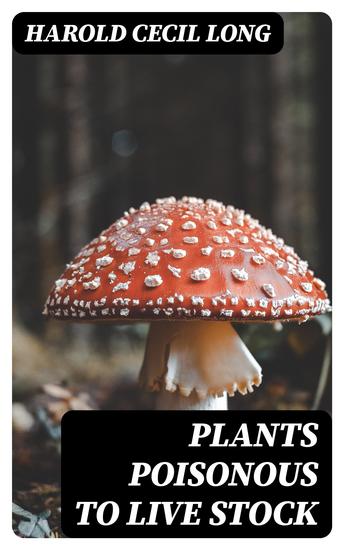
Plants Poisonous to Live Stock - cover

Plants Poisonous to Live Stock

Harold Cecil Long

Publisher: DigiCat

  • 0
  • 0
  • 0

Summary

In "Plants Poisonous to Live Stock," Harold Cecil Long meticulously catalogs the various plant species that pose significant risks to livestock, blending rigorous scientific research with practical guidance. The book employs a clear and accessible literary style, designed for farmers, veterinarians, and agricultural educators, and is infused with detailed descriptions that allow readers to easily identify hazardous flora. Situated within the broader context of agricultural safety and animal husbandry, Long's work not only serves to educate but also emphasizes the vital relationship between botany and livestock welfare, echoing contemporary concerns about sustainable farming practices and animal health management. Harold Cecil Long, a distinguished botanist and agricultural scientist, draws from years of experience in both research and fieldwork, particularly in the American Midwest where the interchange between native and agricultural plants is prevalent. His insights into the ecological systems surrounding livestock emphasize the necessity of knowledge in preventing poisoning, which aligns with his lifelong commitment to improving animal husbandry practices. Long's expertise allows him to advocate effectively for greater awareness among livestock owners and the agricultural community at large. "Plants Poisonous to Live Stock" is an essential resource for anyone involved in livestock management—from farmers looking to ensure the health of their herds to educators teaching safe agricultural practices. Long's comprehensive approach combines scientific rigor with practical advice, making it an indispensable guide for promoting safer environments for livestock.
Available since: 07/21/2022.
Print length: 130 pages.


Other books that might interest you

  • The Smart Nonprofit - Staying Human-Centered in An Automated World - cover

    The Smart Nonprofit - Staying...

    Allison H. Fine, Beth Kanter

    • 0
    • 0
    • 0
    A pragmatic framework for nonprofit digital transformation that embraces the human-centered nature of your organization 


    In The Smart Nonprofit: Staying Human-Centered in an Automated World, a team of dedicated nonprofit thought leaders delivers a discussion of the information and tools nonprofit staffers and board members need to effectively use artificial intelligence without alienating the human stakeholders and donors on whom they rely. 


    Each chapter of the book offers a narrative discussion of how AI affects a particular functional area in an organization that includes case studies and practical tips for the ethical use of AI. You'll discover explorations of: 


    ● The steps you need to take to become a smart nonprofit and how to effectively lead a digitally transformed organization 


    ● How to automate program delivery, fundraising, and the back office 


    ● Likely future developments in AI for nonprofit work, including a more diverse field of programmers and data scientists and data sovereignty 


    Perfect for nonprofit leaders, board members, employees, managers, and founders, The Smart Nonprofit also belongs on the bookshelves of anyone interested in the intersection of leadership and technology.
    Show book
  • The Future of Technology - Trends and Innovations - cover

    The Future of Technology -...

    Craig Dames

    • 0
    • 0
    • 0
    Technology has undergone a remarkable transformation over the past century, reshaping the way humans live, work, and connect. From the invention of the telephone and the light bulb to the rise of smartphones and artificial intelligence, the evolution of modern technology has been defined by rapid innovation and constant reinvention. Each era has built upon the breakthroughs of the previous one, creating a chain of progress that continues to accelerate today. 
    The shift from analog to digital marked a major turning point in technological history. Analog systems, such as early telecommunication devices and vinyl records, relied on continuous signals to transmit information. The digital revolution replaced these with binary systems, allowing data to be stored, processed, and transmitted with unprecedented efficiency. This change laid the groundwork for computers, the internet, and countless digital devices that are now part of everyday life. What once required entire rooms of equipment can now be done with the swipe of a finger on a pocket-sized smartphone. 
    Key milestones have shaped the modern technological landscape. The invention of the microprocessor in the 1970s allowed for the development of personal computers, which soon evolved into powerful tools for both work and leisure. The rise of the internet in the 1990s connected people and information across the globe, shrinking the world into a digital village. In the 2000s, mobile technology and wireless networks enabled a level of connectivity that few could have imagined a generation earlier. These advances have made information accessible to billions and created new platforms for communication, education, and commerce.
    Show book
  • Fungi Farming: A Guide to Mushroom Cultivation - A Comprehensive Guide to Cultivating Mushrooms Indoors and Out - cover

    Fungi Farming: A Guide to...

    Sophia Evans

    • 0
    • 0
    • 0
    The useful and entertaining book "Fungi Farming: A Guide to Mushroom Cultivation: A Comprehensive Guide to Cultivating Mushrooms Indoors and Out" is intended to assist lovers of all skill levels in learning more about the intriguing art and science of mushroom culture. Every crucial stage of mushroom cultivation is covered in this book, from comprehending the fungal life cycle to creating the perfect conditions for successful growth indoors or out. Readers will learn how to grow specialty and medicinal mushrooms, as well as common species like button, shiitake, and oyster mushrooms, with clear instructions and insights. 
    Clear instructions on selecting the best substrates, setting up inoculation techniques, and regulating temperature, light, and humidity to optimize yields are included. In order to teach readers how to recycle items and reduce their environmental impact, each part focuses on sustainable methods. To help you overcome obstacles and get better with every crop, there are also troubleshooting suggestions for typical problems. 
    "Fungi Farming" is ideal for amateurs and those thinking about commercial production since it strikes a balance between practical instruction and technical knowledge, making mushroom farming enjoyable and approachable. You may turn areas into flourishing fungal farms and harvest tasty, nutritious mushrooms from the comfort of your home or garden by following this tutorial, which will prepare you to cultivate a variety of mushrooms with confidence.
    Show book
  • Hands-on ML Projects with OpenCV - cover

    Hands-on ML Projects with OpenCV

    Mugesh S.

    • 0
    • 0
    • 0
    Be at your A game in building Intelligent systems by leveraging Computer vision and Machine Learning. 
    
    KEY FEATURES 
    - Step-by-step instructions and code snippets for real world ML projects. 
    - Covers entire spectrum from basics to advanced concepts such as deep learning, transfer learning, and model optimization
    - Loaded with practical tips and best practices for implementing machine learning with OpenCV for optimising your workflow. 
    
    DESCRIPTION
    This book is an in-depth guide that merges machine learning techniques with OpenCV, the most popular computer vision library, using Python. The book introduces fundamental concepts in machine learning and computer vision, progressing to practical implementation with OpenCV. Concepts related to image preprocessing, contour and thresholding techniques, motion detection and tracking are explained in a step-by-step manner using code and output snippets. 
    
    Hands-on projects with real-world datasets will offer you an invaluable experience in solving OpenCV challenges with machine learning. It’s an ultimate guide to explore areas like deep learning, transfer learning, and model optimization, empowering readers to tackle complex tasks. Every chapter offers practical tips and tricks to build effective ML models. 
    
    By the end, you would have mastered and applied ML concepts confidently to real-world computer vision problems and will be able to develop robust and accurate machine-learning models for diverse applications. 
    
    Whether you are new to machine learning or seeking to enhance your computer vision skills, This book is an invaluable resource for mastering the integration of machine learning and computer vision using OpenCV and Python. 
    
    WHAT WILL YOU LEARN 
    - Learn how to work with images and perform basic image processing tasks using OpenCV. 
    - Implement machine learning techniques to computer vision tasks such as image classification, object detection, and image segmentation. 
    - Work on real-world projects and datasets to gain hands-on experience in applying machine learning techniques with OpenCV. 
    - Explore the concepts of deep learning using Tensorflow and Keras and how it can be used for computer vision tasks. 
    - Understand the concept of transfer learning and how pre-trained models can be leveraged for new tasks. 
    - Utilize techniques for model optimization and deployment in resource-constrained environments. 
    - Implement end-to-end solutions and address challenges encountered in practical scenarios. 
    
    WHO IS THIS BOOK FOR?
    This book is for everyone with a basic understanding of programming and who wants to apply machine learning in computer vision using OpenCV and Python. Whether you're a student, researcher, or developer, this book will equip you with practical skills for machine learning projects. Some familiarity with Python and machine learning concepts is assumed. Beginners too will find this book valuable as it offers clear examples and explanations for every concept. 
    
    TABLE OF CONTENTS 
    Chapter 1: Getting Started With OpenCV 
    Chapter 2: Basic Image & Video Analytics in OpenCV
    Chapter 3: Image Processing 1 using OpenCV
    Chapter 4: Image Processing 2 using OpenCV
    Chapter 5: Thresholding and Contour Techniques Using OpenCV 
    Chapter 6: Detect Corners and Road Lane using OpenCV
    Chapter 7: Object And Motion Detection Using Opencv
    Chapter 8: Image Segmentation and Detecting Faces Using OpenCV
    Chapter 9: Introduction to Deep Learning with OpenCV
    Chapter 10: Advance Deep Learning Projects with OpenCV
    Chapter 11: Deployment of OpenCV projects
    Show book
  • Succulents and Cacti - Low-Maintenance Gardening - cover

    Succulents and Cacti -...

    Gertrude Harris

    • 0
    • 0
    • 0
    Gardening doesn’t have to be complicated, time-consuming, or intimidating. In fact, it can be incredibly simple, even for those with the busiest schedules or the most modest of spaces. That’s where succulents and cacti come in—nature’s low-maintenance marvels. These resilient, often strikingly beautiful plants are not only easy to care for but also bring a sense of calm, creativity, and life to any environment. 
    Succulents and cacti have gained popularity worldwide, and for good reason. With their ability to thrive on minimal water and withstand periods of neglect, they’re ideal for both beginner gardeners and seasoned plant enthusiasts. Their incredible variety—ranging from the soft pastels of echeveria to the spiky grandeur of barrel cacti—makes them perfect for anyone looking to add visual interest and personality to their home or outdoor garden. 
    This book is designed as your practical guide to growing and enjoying succulents and cacti without stress or guesswork. Whether you’re hoping to liven up a sunny windowsill, design a water-wise outdoor landscape, or create a stunning tabletop arrangement, you’ll find the advice and inspiration you need within these pages. We’ll cover everything from choosing the right plants and preparing the perfect soil mix to watering properly, managing pests, and even propagating your favorites to expand your collection. 
    What makes succulents and cacti especially appealing is their adaptability. They flourish in tiny apartments and sprawling gardens alike, can be planted in traditional pots or repurposed containers, and require far less maintenance than most other plant types. For those with busy lifestyles, frequent travel schedules, or even a history of “black thumbs,” these plants offer the perfect entry point into the world of gardening.
    Show book
  • Traditional Home Remedies - The Ancient Alternatives To Modern Medicines - cover

    Traditional Home Remedies - The...

    Owen Jones

    • 0
    • 0
    • 0
    I hope that you will find the information helpful, useful and profitable. 
    From long before the `medical profession` was remotely as reliable as it is today, people relied mostly on herbal cures. Most people had a rudimentary knowledge of the capabilities of of the flora that grew in their neighbourhood, and the older women tended to know more than most. These women were often referred to as wise women. By the way, they were the ones later persecuted by the established churches as witches, 
    The people who had this this superior knowledge of local herbs were heavily relied upon by the local community, and the best of the best would also `import` herbs from further afield. This knowledge has not been lost, but fewer modern men and women are in possession of it than their parents` and grandparents` generations. It could have been said to be dying out 
    However, there has been a revival of interest in the ancient cures, often referred to as traditional, alternative or natural remedies. There are many reasons for this. Some might be a breakdown of trust in the establishment and advertisers; the soaring cost of modern drugs; the increasing difficulty of getting to see a doctor; the side effects of strong chemical drugs; and even an upswell in the desire to return to a less chemical way of life. 
    Whatever the reason for your interest in this topic, I hope you enjoy this booklet. 
    The information in this ebook on various aspects of traditional home remedies and related ideas is organised into 19 chapters of about 500-600 words each.
    Show book