Join us on a literary world trip!
Add this book to bookshelf
Grey
Write a new comment Default profile 50px
Grey
Subscribe to read the full book or read the first pages for free!
All characters reduced
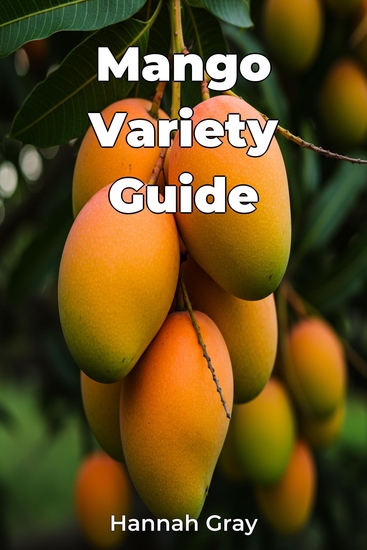
Mango Variety Guide - cover

Mango Variety Guide

Hannah Gray

Translator A AI

Publisher: Publifye

  • 0
  • 0
  • 0

Summary

Mango Variety Guide explores the fascinating world of mangoes, focusing on the incredible diversity of mango varieties, particularly those originating from the Indian subcontinent. This comprehensive guide is an invaluable resource for anyone interested in the science, cultivation, and appreciation of this beloved tropical fruit. The book highlights the importance of understanding mango genetics for conservation and future breeding programs, illuminating the techniques used to optimize fruit production and quality.

 
The book begins with the history and botany of mangoes, progressing to detailed descriptions of various cultivars and cultivation techniques used in different regions. It examines the impact of climate, soil, and pest management on fruit quality. Did you know that mangoes hold immense cultural significance in many societies, representing prosperity and good fortune, or that the Indian subcontinent has been the epicenter of mango cultivation for millennia?

 
The book culminates with a discussion of the future of mango cultivation, including the role of biotechnology and conservation efforts. The guide distinguishes itself through its comprehensive coverage, providing detailed morphological descriptions, horticultural information, and genetic data for each variety. This makes Mango Variety Guide a valuable resource for researchers, growers, and enthusiasts alike, helping them make informed decisions about variety selection, cultivation practices, and conservation efforts.
Available since: 02/27/2025.
Print length: 87 pages.

Other books that might interest you

  • Mixtec Empire - Skilled Artisans and the Masters of Codices in Mesoamerica - cover

    Mixtec Empire - Skilled Artisans...

    Rolf Hedger

    • 0
    • 0
    • 0
    The Mixtec civilization, known as the Ñuu Savi or "People of the Rain," emerged in the rugged mountains and fertile valleys of what is now Oaxaca, Mexico. Their origins date back to the Preclassic period, around 1500 BCE, when small agricultural communities began to flourish in the Mixteca Alta, Mixteca Baja, and Mixteca de la Costa regions. These early settlements were shaped by the challenging geography, with steep hills and limited arable land requiring innovative farming techniques. Over centuries, the Mixtec people developed sophisticated agricultural systems, including terracing and irrigation, which allowed them to sustain growing populations and establish permanent communities. 
    Mythology played a central role in Mixtec identity, reinforcing their connection to the land and legitimizing the rule of their elite class. The Mixtec creation story, recorded in their intricate codices, tells of divine ancestors emerging from a sacred place known as Apoala, a cave associated with the origins of humanity. These ancestors, believed to be both human and divine, established the first Mixtec lineages, which would later claim authority over the various city-states. This mythology was not just a story but a political tool that reinforced the power of Mixtec rulers, linking them directly to the gods and the forces of nature. 
    The early Mixtec communities were organized into small chiefdoms, each ruled by a hereditary elite. These leaders controlled land, resources, and religious ceremonies, ensuring stability and continuity within their societies. Over time, as populations expanded and rivalries grew, these chiefdoms evolved into larger political entities, forming the foundation for the powerful Mixtec city-states that would dominate the region in later centuries.
    Show book
  • The Bargain Paradise - Discovering Earth's Most Economical Dwelling - cover

    The Bargain Paradise -...

    John Harpoon

    • 0
    • 0
    • 0
    An economical dwelling is a home designed with cost-efficiency in mind, blending affordability, functionality, and sustainability. The concept of such a dwelling goes beyond simply being cheap; it involves thoughtful design choices that minimize expenses while maintaining comfort and quality of life. At its core, an economical dwelling aims to reduce the financial burden on its owner without sacrificing the essential aspects of a well-built home. 
    The primary objective of an economical dwelling is to make housing accessible and affordable for a broader population, particularly in an age when housing prices continue to rise in many parts of the world. However, affordability doesn’t mean compromising on the livability or durability of the dwelling. Instead, it highlights the importance of smart choices in materials, space utilization, and design. In such a home, the cost-saving methods employed are balanced with long-term benefits, such as reduced maintenance costs, lower energy consumption, and sustainability. 
    The idea of an economical dwelling often intersects with the broader concepts of sustainable and green living. Sustainable practices focus not only on reducing construction costs but also on minimizing the environmental impact of the home. For instance, energy-efficient designs, the use of recycled materials, and incorporating renewable energy sources like solar panels or wind turbines all contribute to the overall affordability by reducing ongoing living expenses. In addition to these eco-friendly features, the use of minimalistic designs and efficient layouts helps make the best use of available space, which also keeps building costs lower.
    Show book
  • Chavín Civilization - The Religious Center That Unified the Andes - cover

    Chavín Civilization - The...

    Rolf Hedger

    • 0
    • 0
    • 0
    The Chavín civilization, one of the earliest and most influential cultures of ancient Peru, emerged in the Andean highlands around 900 BCE. It was a formative force in pre-Columbian history, laying the groundwork for later civilizations that dominated the region. The rise of Chavín was deeply connected to its strategic location, the innovations of its people, and the unique blend of religious and cultural influences that shaped its identity. 
    The Andean region, with its diverse geography of mountains, valleys, and coastal plains, played a crucial role in the development of early societies. The people who would come to form the Chavín civilization first settled in highland areas, where they mastered agricultural techniques suited to the challenging environment. The cultivation of staple crops such as maize, potatoes, and quinoa allowed for population growth and the establishment of permanent settlements. Llamas and alpacas provided transportation, wool, and meat, further supporting the stability of these early communities. Over time, these settlements evolved into more complex societies, characterized by social hierarchies and specialized labor. 
    One of the key factors that contributed to the emergence of the Chavín civilization was its strategic position at the crossroads of major trade routes. Chavín de Huántar, the civilization’s most important ceremonial center, was located in a valley that connected the coast, highlands, and jungle regions. This prime location allowed Chavín culture to serve as a unifying force in the Andes, facilitating the exchange of goods, ideas, and religious beliefs among different groups. As traders and pilgrims traveled to Chavín de Huántar, they encountered a sophisticated society with an advanced knowledge of art, architecture, and religion, all of which helped spread Chavín influence throughout the region.
    Show book
  • 30 Amazing things to do in Puerto Rico - Pocket Guide to your Dream Vacation with activities from FREE to $20 - cover

    30 Amazing things to do in...

    Natasha Martinez, Natalia Martinez

    • 0
    • 0
    • 0
    NOT just things to do! 
    This is a complete & comprehensive guide with EVERYTHING you need for a great trip. 
    We cover history, facts, culture, what to expect around the islands, food, transportation, costs, directions; ALL the details to make your trip perfect and affordable. 
    AND ALL THE INCLUDED ADVENTURES COST FROM $0 TO $20! 
    A pocket travel guide for vacationers on a budget who don’t wish to compromise the adventure, relaxation, or enchantment of a trip to beautiful Puerto Rico. 
    Avoid expensive tourist traps and discover authentic Puerto Rico on a budget! 
    30 Amazing Things to Do in Puerto Rico is an easy-to-navigate guide for planning your vacation to the Island of Enchantment. Explore beautiful and exciting locations with activities twenty dollars or under—including some that are completely free. Venture into a new flavor-packed world of adventure with suggestions on which dishes to try, and you can build a magical vacation that suits your unique tastes from start to finish. From cultural gems to natural landmarks, you can confidently create amazing memories without the worry of financing your trip. 
    What are you waiting for? Keep Puerto Rico’s most incredible hidden gems right in your pocket and start your dream vacation today! 
    Así Comienza!
    Show book
  • Clutter Connection - Discover Proven Ways on How to Clear Up the Clutter and Live a Simpler and More Organized Life - cover

    Clutter Connection - Discover...

    Janelle Delaney

    • 0
    • 0
    • 0
    Clutter Connection: Discover Proven Ways on How to Clear Up the Clutter and Live a Simpler and More Organized LifeSimplifying may sometimes be overwhelming. The sum of stuff you have in your life and the sum of things you have to do may be too huge a mountain to undertake. The more organized you are the more time you'll have for yourself. Most of us utilize only a small amount of our real capabilities and we can all do so much more. You are able to learn new things. This will give you a new purpose in life and a feeling of accomplishment.This audiobook will teach you different tips on how you can get organized and remove the clutter from your life. You will also learn different ways on how you can simplify your life in the midst of this hectic world we are all living in now. This audiobook will discuss the following topics:-What’s Behind Clutter-The Art Of It-Hints, Tips And Your Style-A Little At A Time-Tips for Simplified Living-And many more!Once you get organized you'll feel great about yourself and how you're spending your new, organized time. If you want to learn more, scroll up and click “add to cart” now!
    Show book
  • Who's Gonna Drive You Home? - 50 days driving Uber in London - cover

    Who's Gonna Drive You Home? - 50...

    Charles Brickfield

    • 0
    • 0
    • 0
    Adapted from the 2015 book Bad Uber, an unintentional antiwork novel. A true account of leaving a worthy career to join the gig economy. 
    As the Uber phenomenon takes over London with its minicab booking app, destroying the trade of the world-famous black cab, trampling history under wheel and smashing prices, Charles Brickfield brings us the life of an Uber driver. 
    This audiobook tracks his first fifty days - from complete novice, to the Christmas party season and New Year's Eve, through to the so called 'Kipper Season'. Brim full of anecdotes delivered with pathos and humour in equal measure, Brickfield offers an authentic voice, not a cynic, just one of the thousands who needed a job and chose to work the night shift, to tickle London’s underbelly as time is called at the bar. Brickfield may be an inept driver, but he is an extremely adept author. 
    As we speak, the map of London is live and the giant game of cat and mouse is in play. 
    Five stars, old boy! Thanks for the ride.
    Show book