Join us on a literary world trip!
Add this book to bookshelf
Grey
Write a new comment Default profile 50px
Grey
Subscribe to read the full book or read the first pages for free!
All characters reduced
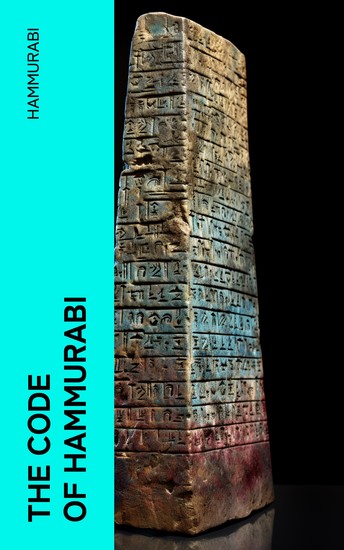
The Code of Hammurabi - cover

The Code of Hammurabi

Hammurabi

Publisher: e-artnow

  • 0
  • 0
  • 0

Summary

The Code of Hammurabi is a Babylonian legal text composed c. 1755–1750 BC. You will love reading the best-organized and best-preserved legal text from the ancient Near East. This important document was copied and studied by Mesopotamian scribes for over a millennium.
Available since: 12/02/2023.
Print length: 24 pages.

Other books that might interest you

  • French History - The 12th-17th Century - cover

    French History - The 12th-17th...

    History Retold

    • 0
    • 0
    • 0
    Immerse yourself in France's captivating past. Discover a nation's journey through time. "French History: The 12th-17th Century" offers a thrilling exploration of an era defined by power, conflict, and culture. 
    Witness the rise of ambitious monarchs and the transformative battles that shaped history. Marvel at the breathtaking architecture and the artistic genius of the French Renaissance. Delve into the lives of legendary figures, such as Joan of Arc, Louis XIV, and Catherine de Medici.Join us on this exhilarating adventure. Experience the epic saga of France's transformation. Uncover the secrets and stories that have forever left their mark on the world.  
    Be captivated, inspired, and educated by this remarkable journey through time. Get your Copy TODAY!
    Show book
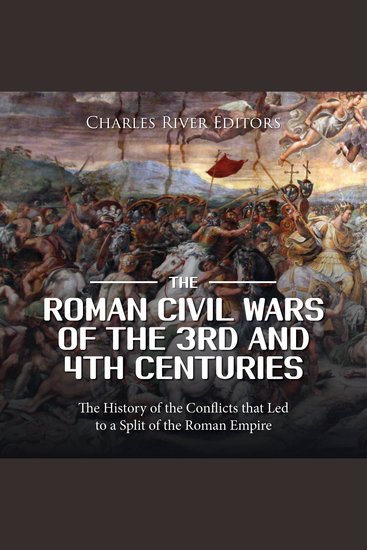
  • Roman Civil Wars of the 3rd and 4th Centuries The: The History of the Conflicts that Led to a Split of the Roman Empire - cover

    Roman Civil Wars of the 3rd and...

    Editors Charles River

    • 0
    • 0
    • 0
    The 50 years following the assassination of Severus Alexander on March 19, 235 CE has been generally regarded by academics as one of the lowest points in the history of the Roman Empire. This stands in stark contrast to the previous 150 years, which included the reigns of the Five Good Emperors and has been universally praised as one of the high points of the empire. Severus Alexander was the last of the Severan emperors, and the subsequent years of crisis (235-285 CE) were characterized by a series of short reigns, usually ending in the violent death of the reigning emperor. 
    At the same time, this period of time also saw the empire beset by threatening forces on all sides. The Romans faced a newly resurgent Persia in the east, as well as significant forces from German tribes on the Rhine and Goths along the Danube. The various conflicts would result in the unprecedented death of a sitting emperor in battle, which took place in 251 with Emperor Decius, and Emperor Valerian was captured in 260 CE.  
    Diocletian's reign would see reforms put into place to achieve the desired end of the Imperial Crisis, and several of the emperors before him may well have had the ability to manage the reform process, but the army’s power and willingness to use and abuse power ensured that few of them truly had a chance to really make their marks. It was the worst period in the history of the Roman Empire to that point, even as it forced the Romans to deal with belligerent foreign powers and problems created by the emergence of increasingly powerful and populous provinces. 
    The pressures created by population growth, both within the empire and outside of it, have been thoroughly researched, but more recently, issues created by climate change have also commanded attention.
    Show book
  • Propaganda Girls - The Secret War of the Women in the OSS - cover

    Propaganda Girls - The Secret...

    Lisa Rogak

    • 0
    • 0
    • 0
    “Naeymi's mesmerizing narration takes listeners into the heart-stopping intrigue and action of nations at war and into the souls of women with cool demeanors and spines of steel.” —AudioFileThe incredible untold story of four women who spun the web of deception that helped win World War II.Betty MacDonald was a 28-year-old reporter from Hawaii. Zuzka Lauwers grew up in a tiny Czechoslovakian village and knew five languages by the time she was 21. Jane Smith-Hutton was the wife of a naval attaché living in Tokyo. Marlene Dietrich, the German-American actress and singer, was of course one of the biggest stars of the 20th century. These four women, each fascinating in her own right, together contributed to one of the most covert and successful military campaigns in WWII. As members of the OSS, their task was to create a secret brand of propaganda produced with the sole aim to break the morale of Axis soldiers. Working in the European theater, across enemy lines in occupied China, and in Washington, D.C., Betty, Zuzka, Jane, and Marlene forged letters and “official” military orders, wrote and produced entire newspapers, scripted radio broadcasts and songs, and even developed rumors for undercover spies and double agents to spread to the enemy. And outside of a small group of spies, no one knew they existed. Until now. In Propaganda Girls, bestselling author Lisa Rogak brings to vivid life the incredible true story of four unsung heroes, whose spellbinding achievements would change the course of history.A Macmillan Audio production from St. Martin’s Press.
    Show book
  • Partition of India and the British Mandate of Palestine The: The Controversial History of Great Britain’s Post-War Partition Plans and the Aftermath - cover

    Partition of India and the...

    Charles River Editors

    • 0
    • 0
    • 0
    British India ultimately covered some 54 percent of the landmass and 77 percent of the population. By the time the British began to contemplate a withdrawal from India, 565 princely states were officially recognized, in addition to thousands of zamindaris and jagirs, which were in effect feudal estates. The stature of each Princely State was defined by the number of guns fired in salute upon a ceremonial occasion honoring one or other of the princes. These ranged from nine-gun to twenty-one-gun salutes and, in a great many cases, no salute at all. 	It stands to reason, therefore, as India began the countdown to independence after World War II, that the Indian Muslim leadership would begin to express anxiety over the prospect of universal suffrage and majority rule. At less than 20 percent of the population, Indian Muslims would inevitably find themselves overwhelmed by the Hindu majority, and as the British prepared to divest themselves of India, ancient enmities between Hindu and Muslim, long papered over by the secular and remote government of Britain, began once again to surface. 
    The Ottoman Empire quickly collapsed after World War I, and its extensive lands were divvied up between the French and British. While the French gained control of the Levant, which would later become modern day nations like Syria, the British were given the Mandate for Palestine from the newly created League of Nations. The British Mandate for Palestine gave the British control over the lands that have since become Jordan, Israel, the West Bank, and the Gaza Strip. The terms of the British Mandate incorporated the language of the Balfour Declaration, recognizing the “historical connection of the Jewish people with Palestine.” The British were also tasked with creating a Jewish state, which the United States Congress endorsed in 1922. 
    Show book

  • Minds I've Met - From Denying to Embracing the Inner Lives of Animals - cover

    Minds I've Met - From Denying to...

    Frans de Waal

    • 0
    • 0
    • 0
    New York Times best-selling author and world-renowned primatologist Frans de Waal traces the dramatic changes in humanity’s perception of animals over the past half-century. 
    How humans think about animals―and our place among them―has undergone a seismic change. Breaking old scientific taboos and never shying away from controversial topics, renowned primatologist Frans de Waal was at the forefront of this revolution, fighting against claims of human exceptionalism. From de Waal’s early studies in the Netherlands through his five-decade professional career in the United States, Minds I’ve Met follows this radical shift in how science perceives animals. De Waal’s pioneering work challenged the traditional view of animals as living machines and contributed to a new image of animals as intentional agents with minds of their own, capable of remarkable cognitive feats, demonstrating empathy and self-awareness, showing emotions and consciousness. His final published work, Minds I’ve Met celebrates animals’ awe-inspiring abilities and traces the complete turnaround in one of the fiercest scientific debates of our time, bringing humans ever closer to the rest of the animal world and animals closer to us.
    Show book
  • The Tensaw River - Alabama's Hidden Heritage Corridor - cover

    The Tensaw River - Alabama's...

    Mike Bunn

    • 0
    • 0
    • 0
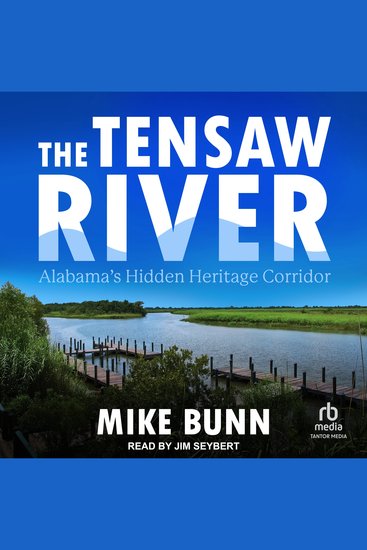
    The Tensaw River introduces one of the American South's richest and most fertile natural features. Author Mike Bunn is director of Historic Blakeley State Park, which is nestled in a prominent bend of the majestic Tensaw River. 


    Forming the eastern boundary of the expansive Mobile-Tensaw Delta, the Tensaw has had little industrial development. Left largely undisturbed, the river flows free and bountiful into the grand estuary of Mobile Bay in ways that would be recognizable to Native Americans centuries ago and to pioneers who arrived before Alabama became a state. 


    Bunn's unforgettable stories in The Tensaw River trace the construction and occupation of the Bottle Creek site, an important mound complex built by Southeastern Native Americans a millennia ago. Nearby Blakeley is an antebellum ghost town whose lost memories tease the imagination. During the Civil War, the boom of artillery fire in the battle that sealed the fate of the city of Mobile echoed along the bends in the Tensaw. 


    Located near popular travel destinations, the Tensaw's "Forgotten Cultural Heritage Corridor" is a gateway to the enchanting beauty of—and humankind's relationship to—the landscape of the American South.
    Show book