Join us on a literary world trip!
Add this book to bookshelf
Grey
Write a new comment Default profile 50px
Grey
Subscribe to read the full book or read the first pages for free!
All characters reduced
Writers of Knickerbocker New York - cover

Writers of Knickerbocker New York

Hamilton Wright Mabie

Publisher: Good Press

  • 0
  • 0
  • 0

Summary

In "Writers of Knickerbocker New York," Hamilton Wright Mabie meticulously examines the vibrant literary culture that blossomed in New York during the early 19th century. With a rich narrative style that blends biographical details and critical analysis, Mabie illuminates the lives and works of key figures of the Knickerbocker Group, including Washington Irving, James Fenimore Cooper, and William Cullen Bryant. This book not only serves as a literary homage but also situates these authors within the broader context of American Romanticism, exploring how their narratives shaped and reflected the evolving American identity amidst the backdrop of urbanization and cultural expansion. As a prominent critic and essayist of his time, Hamilton Wright Mabie drew from his own experiences as an advocate for American literature and a keen observer of its societal impact. His passion for the written word and the cultural atmosphere of New York infused his exploration of these writers, revealing not only their artistic contributions but also the intricate relationship between their work and the dynamic world that influenced them. This book is an essential read for students of American literature and history, as it uncovers the complexities of early American writers who forged a literary legacy in New York. Mabie's insightful analyses, combined with his engaging prose, make "Writers of Knickerbocker New York" a valuable resource for anyone wishing to grasp the significance of these literary pioneers in shaping American culture.
Available since: 03/02/2025.
Print length: 150 pages.

Other books that might interest you

  • Finding Hildasay - How One Man Walked the UK's Coastline and Found Hope and Happiness - cover

    Finding Hildasay - How One Man...

    Christian Lewis

    • 0
    • 0
    • 0
    In his darkest depression, one idea brought Christian Lewis out of the depths - and into a new life. Finding Hildasay, read by the author, is a brutal and beautiful true story of depression, survival, walking, and the meaning of home.‘Now I was finally out of the force of the wind, my body began to warm – the part where the real pain sets in. I’d felt it plenty of times before on this journey, but this time it was different. As I began to regain feeling in my fingers and toes, it burned so strongly that I just sat in tears of pain.’Ex-paratrooper Christian Lewis had hit rock bottom, suffering with depression so severe he would shut himself in his bedroom for weeks. Then while surfing – his only respite – he cast his eyes along the coastline and realized it was the only place he really wanted to be.Making an impulsive decision to set himself a challenge – walk the entire coastline of the UK – Chris gave himself a few days to rustle up a tent and walking boots, then left for good with just a tenner in his pocket and two days’ worth of food. Little did he know at the time just how long it would take to cross the finish line – and the encounters that lay ahead that would turn his life around.Five years later, Chris has navigated the West Coast, Northern Ireland, the hard-rock cliffs of Scotland and the perimeters of the Scottish Islands . He spent three months on an uninhabited island called Hildasay, where there was no fresh water or food. It was there, the most barren his route had become, that the more pride and respect he found within himself – and the more remarkable his journey became. Happiness and hope was just around the corner.
    Show book
  • The Tales and Tails of a Yorkshire Vet - All in a day's work for Peter Wright - cover

    The Tales and Tails of a...

    Peter Wright

    • 0
    • 0
    • 0
    The nation’s best-loved vet looks back at the funniest, most absurd or heart-breaking animal encounters and situations he has been in over his long and highly successful career. 
    "My mentor and former boss Alf Wight said that the life of a vet is never dull and how true he was. It is funny looking back that he found fame through his James Herriot books, and now his former surgery and myself have been taken to the nation’s heart once again through our show The Yorkshire Vet. 
    "It just shows what a nation of animal lovers we are and these past few years have been particularly challenging for all of us with the Coronavirus outbreak. But what it has shown me is the comfort and support our pets give us in times like these. All the same, it was this, along with recent changes to my working life that gave me an opportunity to reflect, so I want to look back at some of my favourite cases and share them with you."
    Show book
  • Summary: Going Infinite - The Rise and Fall of a New Tycoon By Michael Lewis: Key Takeaways Summary and Analysis - cover

    Summary: Going Infinite - The...

    Brooks Bryant

    • 0
    • 0
    • 0
    DISCLAIMER: THIS IS NOT THE OFFICIAL BOOK. 
    This is a summary, and it does not accompany the official 
    'Going Infinite: The Rise and Fall of a New Tycoon' by Michael Lewis is a captivating exploration of the enigmatic Sam Bankman-Fried, the world's youngest billionaire and a crypto sensation often likened to Gatsby. Michael Lewis delves into the intriguing life of this unassuming figure who rose to Forbes billionaire status practically overnight. Sam Bankman-Fried, known for his casual attire and peculiar behavior in Zoom meetings, becomes the subject of Lewis's scrutiny as the author unravels the complex world of high-frequency trading, cryptocurrencies, philanthropy, bankruptcy, and the legal system. 
    In this compelling narrative, Lewis provides listeners with both a psychological portrait and a thrilling financial roller-coaster ride, showcasing the unconventional journey of a maverick who refused to abide by conventional rules and was allowed to chart his own course—until his world came crashing down. 'Going Infinite' is Michael Lewis at his finest, offering a mesmerizing account of a character whose ascent and subsequent downfall serve as an educational and thought-provoking exploration of the modern financial landscape.
    Show book
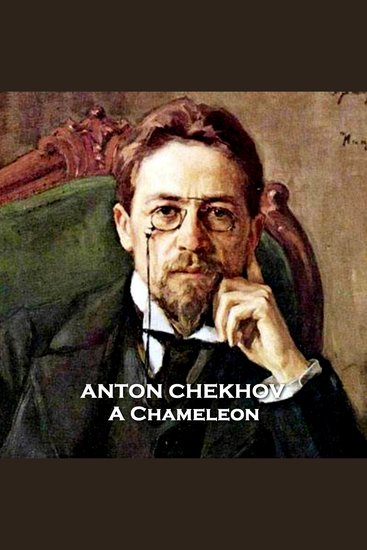
  • A Chameleon - From their pens to your ears genius in every story - cover

    A Chameleon - From their pens to...

    Anton Chekhov

    • 0
    • 0
    • 0
    Anton Pavlovich Chekhov was born on 29th January 1860 in Taganrog, on the south coast of Russia.  
    His family life was difficult; his father was strict and over-bearing but his mother was a passionate story-teller, a subject Chekhov warmed to. As he later said; ‘our talents we got from our father, but our soul from our mother’.  
    At school Chekhov was distinctly average. At 16 his father mis-managed his finances and was declared bankrupt. His family fled to Moscow. Chekhov remained and eked out a living by various means, including writing and selling short sketches to newspapers, to finish his schooling. That completed and with a scholarship to Moscow University obtained he rejoined his family. 
    He was able to help support them by selling satirical sketches and vignettes of Russian lifestyles and gradually obtained further commissions. In 1884, he qualified as a physician and, although it earned him little, he often treated the poor for free, he was fond of saying ‘Medicine is my lawful wife, and literature is my mistress.’ 
    His own health was now an issue as he began to cough up blood, a symptom of tuberculosis.  Despite this his writing success enabled him to move the family into more comfortable accommodation.  
    Chekhov wrote over 500 short stories which included many, many classics including ‘The Kiss’ and ‘The Lady with a Dog’.  His collection ‘At Dusk’ won him the coveted Pushkin Prize when was only 26.  
    He was also a major playwright beginning with the huge success of ‘Ivanov’ in 1887.   
    In 1892 Chekhov bought a country estate north of Moscow. Here his medical skills and money helped the peasants tackle outbreaks of cholera and bouts of famine. He also built three schools, a fire station and a clinic.  It left him with less time for writing but the interactions with real people gained him detailed knowledge about the peasantry and their living conditions for his stories.  
    His most famous work, ‘The Seagull’ was received disastrously at its premiere in St Petersburg. It was later restaged in Moscow to highlight its psychological aspects and was a huge success. It led to ‘Uncle Vanya’, ‘The Three Sisters’ and ‘The Cherry Orchard’.  
    Chekhov suffered a major lung hemorrhage in 1897 while visiting Moscow. A formal diagnosis confirmed tuberculosis and the doctors ordered changes to his lifestyle.  
    Despite a dread of weddings the elusive literary bachelor quietly married the actress Olga Knipper, whom he had met at rehearsals for ‘The Seagull’, on 25th May 1901. 
    By May 1904 with his tuberculosis worsening and death imminent he set off for the German town of Badenweiler writing cheerful, witty letters to his family and assuring them his health was improving.  
    On 15th July 1904 Anton Chekhov died at Badenweiler.  He was 44.
    Show book
  • Bury my Heart at Wounded Knee - A Native Tribe Story about the American West - cover

    Bury my Heart at Wounded Knee -...

    Harry Montgomery

    • 0
    • 0
    • 0
    The history of the American West is woven with the stories of lands that were once home to indigenous peoples whose lives were irrevocably transformed by the arrival of European settlers. The beginning of this contact was marked by curiosity, fear, and misunderstanding, as both sides struggled to comprehend the profound differences in their cultures and ways of life. Initially, this period was characterized by cautious encounters where indigenous communities and the newcomers exchanged gifts, ideas, and sometimes even skills. However, as explorers, traders, and missionaries increasingly set foot in native territories, the dynamics began to shift dramatically. 
    For many Native tribes, these early interactions brought both opportunity and challenge. The appearance of strangers from across the vast and mysterious ocean introduced new technologies and worldviews that were entirely foreign to the indigenous people. The initial exchange was not always violent, yet it set in motion a gradual process of disruption. Encounters with the newcomers soon revealed differences in attitudes toward land ownership and resource management. Where Native tribes had long held a spiritual connection to the land, considering it a shared, communal resource, European settlers arrived with the concept of individual property rights, leading to disputes and tensions that would only grow over time. 
    As the settlers journeyed further into the heart of the West, their presence ignited both awe and anxiety among the Native populations. The natural beauty and abundance of the land captured the imaginations of many settlers, yet it also raised concerns among indigenous communities about the lasting impact on the ecosystems and the delicate balance that had sustained them for generations.
    Show book
  • Tolkien For Beginners - cover

    Tolkien For Beginners

    Louis Markos

    • 0
    • 0
    • 0
    Tolkien For Beginners will introduce the reader to the multilayered depth and breadth of Tolkien’s tales of Middle-earth, what critics, following Tolkien’s lead, refer to collectively as his legendarium. J.R.R. Tolkien sweeps us away to a distant time and place that is at the same time, our own time and place. He takes us to a world where difficult choices must be made and are made, where character is defined by those choices, and where redemption is possible though not always embraced. The Lord of the Rings taps a deep root in the human psyche. There is much death, destruction, and defeat in Tolkien’s world, but there is even more friendship, courage, and hope. What one remembers when one finishes reading The Lord of the Rings is not the vice of the villains, as strong and as well drawn as it is, but the virtue that empowers the heroes to resist it, even at the cost of their own lives.  It will be the goal of Tolkien For Beginners to introduce the reader to the multilayered depth and breadth of Tolkien’s tales of Middle-earth. To do justice to the full dimensions of that legendarium, author Louis Markos will speak in two voices: that of the storyteller who loves the stories he tells and that of the critic who seeks to identify and explicate key themes from those stories. In his telling and analysis, he will treat the legendarium both as a collection of secondary-world myths with their own integrity and as a reflection of Tolkien’s Catholic worldview.
    Show book