


The Invention Of Typography
Hamilton Frederick W.
Casa editrice: Author
Sinossi
The Invention Of Typography By Frederick W Hamilton

Language English
Disponibile da: 22/03/2022.

Casa editrice: Author
The Invention Of Typography By Frederick W Hamilton Language English
Langston Hughes is a widely celebrated African American writer and important leader of the 1920s Harlem Renaissance. Deeply inspired by the great poet Walt Whitman, Hughes’ own writings gave voice to the Black community in the American literary canon. His assertion that “I, too, sing America” echoes through history and continues to be a battle cry in the fight for fair representation and equality.

The Weary Blues, published in 1926, was Hughes’ first collection of poetry. He was only twenty-four years old at the time, but his insights carry wisdom beyond his years. Hughes made his literary debut at the height of Jim Crow when racial segregation ran deep through American society. Through the pain and hardship, there is also an unshakable pride in his African American heritage.

Enjoy the rich notes and rhythms of Hughes’ distinct “jazz poetry” style, brought to life in this extraordinary InAudio production.
Mostra libro
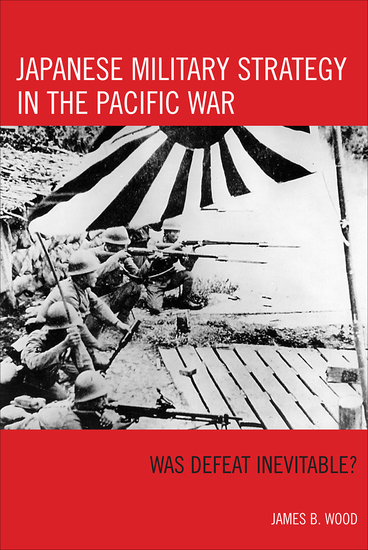
In this provocative history, James B. Wood challenges the received wisdom that Japan's defeat in the Pacific was historically inevitable. He argues instead that it was only when the Japanese military prematurely abandoned its original sound strategic plan—to secure the resources Japan needed and establish a viable defensible perimeter for the Empire—that the Allies were able to regain the initiative and lock Japanese forces into a war of attrition they were not prepared to fight. The book persuasively shows how the Japanese army and navy had both the opportunity and the capability to have fought a different and more successful war in the Pacific that could have influenced the course and outcome of World War II. It is therefore a study both of Japanese defeat and of what was needed to achieve a potential Japanese victory, or at the very least, to avoid total ruin. Wood's argument does not depend on signal individual historical events or dramatic accidents. Instead it examines how familiar events could have bMostra libro

What could possibly go wrong in a wealthy matriarch's country home when her dilettante son, his restless wife, and his widowed brother live there together? Strong Passions, rooted in the beguiling times of Edith Wharton's "old New York," recounts the true story of a tumultuous marriage. In 1862, Mary Strong stunned her husband, Peter, by confessing to a two-year affair with his brother. Peter sued Mary for divorce for adultery—the only grounds in New York—but not before she accused him of forcing her into an abortion and having his own affair with the abortionist. She then kidnapped their young daughter and disappeared.


The divorce trial Strong v. Strong riveted the nation during the final throes and aftermath of the Civil War, offering a shocking glimpse into the private world of New York's powerful and privileged elite. Barbara Weisberg presents the chaotic courtroom and panoply of witnesses who provided contradictory and often salacious testimony. She then asks us to be the jury, deciding each spouse's guilt and the possibility of a just resolution.


Social history at its most intimate, Strong Passions charts a trial's twists and turns to portray a family and country in turmoil as they faced conflicts over women's changing roles, male custody of children, and men's power—financial and otherwise—over wives.
Mostra libro
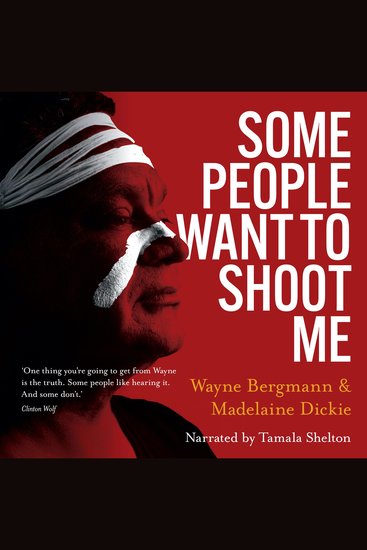
‘I’ve spent the majority of my life fighting for the rights of Traditional Owners. This has put me in the firing line. But I chose this job, I chose this political path. My family did not.’ – Wayne Bergmann
It’s Broome, 2010. Nyikina man Wayne Bergmann has just received a death threat. His wife has watched a friend cross the road to avoid speaking with her. His children are subject to intense schoolyard bullying. Bergmann, a boilermaker by trade, and lawyer, is chief executive of the Kimberley Land Council during the controversial James Price Point gas hub negotiations. It’s an event that will tear the Broome community apart. Wayne’s story starts on Nyikina country and encompasses backbreaking station work, buried treasure, a Swedish bone thief and traditional magic love songs. His is an electrifying tale of resilience, determination and optimism, which shows what it takes to be an Aboriginal person walking in two cultures in a country where racism runs deep.
Mostra libro
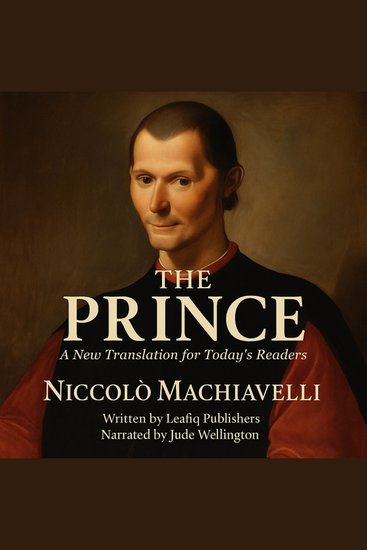
Timeless wisdom. Modern language. Powerful insight.
For over five centuries, The Prince has stood as one of the most influential works on power, politics, and human nature. Yet for many readers, the original text can feel distant—locked in the language and context of the Renaissance.
This new audiobook translation brings Machiavelli’s brilliant ideas into the 21st century with clarity and force. Written in clear, modern English, it captures the sharp wit, realism, and boldness of Machiavelli’s voice—without the heavy, old-fashioned phrasing that often clouds his message.
Whether you’re a leader, entrepreneur, student, or thinker, this fresh translation will help you:Understand how power really works—in politics, business, and everyday life.Learn Machiavelli’s timeless lessons on leadership, strategy, and persuasion.Hear The Prince the way it was meant to be heard—direct, daring, and utterly relevant.
Perfect for modern listeners, this audiobook offers an accessible experience that respects Machiavelli’s original intent while making it engaging, practical, and easy to follow.
Includes:A faithful yet modern translation for today’s readers and listeners.A short introduction explaining Machiavelli’s world and why his ideas still matter.
Discover why “Machiavellian” has come to define cunning leadership—and why The Prince remains essential listening for anyone who seeks to understand power.
Mostra libro
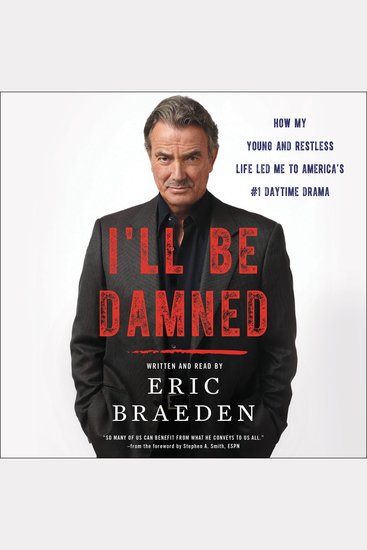
In this startling candid and poignant memoir, the legendary Emmy Award-winning star of The Young and The Restless, America's #1 soap opera, chronicles his amazing life, from his birth in World War II Germany to his arrival in America to his rise to humanitarian and daytime superstar for the past thirty-five years.
For nearly four decades, fans have welcomed the star of television’s number-one daytime show, The Young and the Restless, into their living rooms. While they’ve come to know and love the suave Victor Newman, few truly know the man behind the character, the supremely talented Eric Braeden. I'll Be Damned is his story—a startling and uplifting true tale of war, deprivation, determination, fame, and social commitment that spans from Nazi Germany to modern Hollywood.
Braeden’s journey from a hospital basement in Kiel to the soundstages of Los Angeles has taught him more about joy, heartbreak, fear, dignity, loss, love, loneliness, exhilaration, courage, persecution, and profound responsibility to the global community than he could have hoped to learn in several lifetimes. Growing up in the years after Germany’s defeat, Braeden knew very little about the atrocities of his parents’ generation, until he arrived in America as a teenager—a discovery that horrified and transformed him. Trying to redress the wrongs of his homeland, he has dedicated his life to humanitarian work—even forming the German American Culture Society—working for decades to show the world that what we share as humans is far more important than what separates us from one another.
Told with openness, candor, humor, heart, and occasional raw vulnerability, I’ll Be Damned reveals a man committed to making the world a better, more loving place. I’ll Be Damned will be a treasured keepsake for Y&R fans, and is an inspiring testament to the goodness within us all.
Mostra libro





