Join us on a literary world trip!
Add this book to bookshelf
Grey
Write a new comment Default profile 50px
Grey
Subscribe to read the full book or read the first pages for free!
All characters reduced
Prejudices First Series - Enriched edition - cover

Prejudices First Series - Enriched edition

H. L. Mencken

Publisher: DigiCat

  • 0
  • 0
  • 0

Summary

In "Prejudices, First Series," H. L. Mencken presents a collection of essays that keenly dissect contemporary American culture, politics, and societal norms during the early 20th century. Mencken's literary style is characterized by his sardonic wit and incisive critiques, employing a blend of observational humor and profound cynicism. The essays reflect a broader literary context of modernism and the rise of critical realism, often engaging with the tensions between traditional American values and the evolving cultural landscape. Through sharp prose and eloquent rhetoric, Mencken challenges the prevailing prejudices of his time, addressing topics such as the American way of life, democracy, and the hypocrisy of public sentiment. Born in 1880 in Baltimore, Mencken emerged as one of the most influential literary figures in America, serving as an editor and journalist. His upbringing in a German-American community profoundly influenced his perspectives on American society, inspiring him to critique the mediocrity he perceived around him. Mencken's unique voice and unrestrained critique make "Prejudices, First Series" an essential work for understanding the cultural dynamics of his era. This collection is highly recommended for readers seeking astute social commentary blended with humor and irony. Mencken's fearless challenge against societal norms renders this book not only intellectually stimulating but also entertaining, making it an invaluable addition to the libraries of both casual readers and scholars alike.

In this enriched edition, we have carefully created added value for your reading experience:
- A comprehensive Introduction outlines these selected works' unifying features, themes, or stylistic evolutions.
- The Author Biography highlights personal milestones and literary influences that shape the entire body of writing.
- A Historical Context section situates the works in their broader era—social currents, cultural trends, and key events that underpin their creation.
- A concise Synopsis (Selection) offers an accessible overview of the included texts, helping readers navigate plotlines and main ideas without revealing critical twists.
- A unified Analysis examines recurring motifs and stylistic hallmarks across the collection, tying the stories together while spotlighting the different work's strengths.
- Reflection questions inspire deeper contemplation of the author's overarching message, inviting readers to draw connections among different texts and relate them to modern contexts.
- Lastly, our hand‐picked Memorable Quotes distill pivotal lines and turning points, serving as touchstones for the collection's central themes.
Available since: 06/13/2022.
Print length: 141 pages.


Other books that might interest you

  • Man In My Head Has Lost His Mind The (What Makes Us Conscious?) - A thought experiment exploring consciousness and free will identity and the moral self - cover

    Man In My Head Has Lost His Mind...

    Carter Blakelaw

    • 0
    • 0
    • 0
    The howl of the bedside clock-radio carves through your dreams like a buzz-saw through butter, and you are awake. In another place. 
    Never mind the bright yellow sunlight that flecks your pillow and warms your face; you are rudely awake, and resent it. Gah! 
    You roll onto your side, cantilever your legs over the side of the bed and plant your feet squarely on the carpet. You rub your face. Massage your neck. Oh, what it is to be alive!--and conscious--oh oh oh, indeed. 
    But what is it to be alive, and conscious? 
    Alive, we have some inkling of; you eat, you sleep, you exercise. You stay healthy and keep your body going as best you can. But conscious? What even is that? 
    A good question is what that is, and a question for which this book has an answer. 
    So in this text, first I set the scene:Did our consciousness evolve?Does consciousness give us free will?Which animals do we think are conscious?Where does consciousness go when we sleep?How does consciousness deliver meaning?What might a theory of consciousness look like? 
    Then I propose:A model for consciousness at the macro scaleA mechanism for consciousness at the micro scale 
    Finally, I suggest some real world tests that science will one day be able to perform which will either corroborate or invalidate the theory I present here. This is a workable, testable theory. Science and philosophy demand nothing less. 
    A must-listen for the curious-minded, which you are, are you not? So listen on...
    Show book
  • The Day Nina Simone Stopped Singing - cover

    The Day Nina Simone Stopped Singing

    Darina Al Joundi, Mohamed Kacimi

    • 0
    • 1
    • 0
    The Homeland actress’s “recollections of her unconventional youth in war-torn Beirut are heartbreaking yet humorous . . . in this unique” memoir (Publishers Weekly).   Raised in 1970s Lebanon on Charles Baudelaire, A Clockwork Orange, and fine Bordeaux, Darina Al-Joundi was encouraged by her unconventional father to defy all taboos. She spent her adolescence defying death in Beirut nightclubs as bombs fell across the city. The more oppressive the country became, the more drugs and anonymous sex she had, fueling the resentment directed at her daily by the same men who would spend the night with her.   As the war dies down, she begins to incur the consequences of her lifestyle. On his deathbed, her father’s last wish is for his favorite song, “Sinnerman” by Nina Simone, to be played at his funeral instead of the traditional suras of the Koran. When she does just that, the final act of defiance elicits a catastrophic response from her surviving family members.   In this dramatic true story, Darina Al-Joundi is defiantly passionate about living her life as a liberated woman, even if it means leaving everyone and everything behind in this “beautifully taut and relentlessly unemotional” memoir (Kirkus).
    Show book
  • Enjoy Self-publishing - Have fun earn money quit worrying - cover

    Enjoy Self-publishing - Have fun...

    Patty Jansen

    • 0
    • 0
    • 0
    I've self-published for over ten years. I've seen the industry start, take off and mature. I've seen tactics, companies and people come and go.  
    However, over that time, a few important principles have always held true, but in the morass of advice of varying quality it can be hard to separate the wheat from the chaff.  
    In 2017, I wrote the Unboxed books, a series of four books about how to publish sustainably, and by that I mean in a manner so that you can keep doing it long-term, and how to use your mailing list to set up a self-perpetuating sales vehicle.  
    While the strategies haven't changed, many of the peripheral situations have. In short: we have far more and better tools, but far more competition, not only from other authors on the sales front, but also from services that entice us to spend ever more money before we publish.  
    This book is my ultimate guide to what you need, what you can try, and what is likely to be a waste of your money and time.  
    Over more than 500 pages I talk about the unvarnished experience of self-publishing and selling books while keeping control of my catalogue and not funding anyone's private jet in advertising costs.  
    I wrote this book to pay it forward to the community. I don't sell courses. I don't do affiliate marketing. I have no vested interest in anyone's self-publishing journey. Except for this: I want you to enjoy it.
    Show book
  • Exploring the Poles: The History of the Initial Expeditions that Attempted to Reach the North Pole and South Pole - cover

    Exploring the Poles: The History...

    Editors Charles River

    • 0
    • 0
    • 0
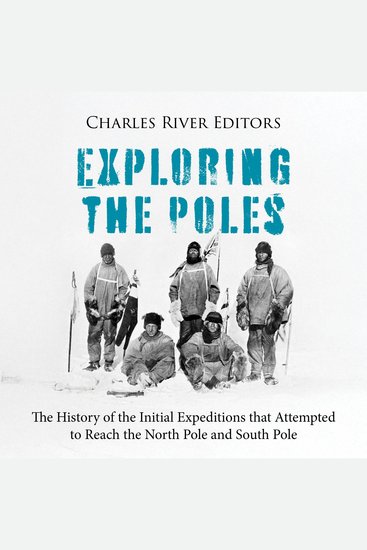
    Exploration of Earth’s wilderness areas became an international obsession in the late 19th and early 20th centuries, as economically advantaged nations, in particular European powers and the United States were well equipped to mount exhaustive expeditions. From previously inaccessible forests and jungle country to the world’s great mountain ranges, adventurers sought out the greatest extremes of climate and terrain in a race to plant the first flag where humanity struggled to survive. 
    	An earlier wave of explorers led to the opening of the New World, and early polar expeditions saw ancient ships of various nations sail along the coastlines of Greenland and within reach of the Arctic and Antarctic continents. Many 19th century figures approached the polar region with an eye to traversing it. Most notable among them was British explorer Sir James Clark Ross, who took the Erebus and the HMS Terror to the southernmost coastlines of the planet. Ross is probably the first explorer to realize that Antarctica was a continent and not just a large chain of islands, and he discovered the section of the shelf that was to become the Victoria Barrier. Asian nations also took part in Antarctic exploration when Nobu Shirase of Japan mounted his 1911 expedition, while Sir Edgeworth David, a Welsh-Australian, was the first person to successfully reach the summit of Mt. Erebus. Richard Evelyn Byrd is believed to be the first pilot to cross the Antarctic continent, and even well past the era of great polar expeditions, British figures such as Edmund Hillary, conqueror of Mount Everest, made several expeditions to the South Pole. 
    	Nevertheless, the golden age of polar exploration of the furthermost continents did not reach its zenith until the turn of the 20th century, and national rivalries abounded between the major seafaring nations of the world.
    Show book
  • Coach's Hand - BDSM Lite - cover

    Coach's Hand - BDSM Lite

    Randy Manners

    • 0
    • 0
    • 0
    There are many perks to being the university’s swimming coach. 
      
    Chiseled, young bodies. Rock-hard back ends. Bulging and barely covered packages. Only the beginning to a very wet and sloppy happy ending for Coach Johnson. 
      
    When his star swimmer cramps up before their big meet, Coach Johnson knows the perfect solution to get his young, innocent athlete to relax — a full body massage — inside and out. 
      
    Will Matt’s first time at the hands of his trusted coach be just the remedy, or will he leave with a sore rear and a sore throat?
    Show book
  • Mughal Empire - The Taj Mahal Legacy - cover

    Mughal Empire - The Taj Mahal...

    Rolf Hedger

    • 0
    • 0
    • 0
    The Mughal Empire emerged as one of the most powerful and influential dynasties in Indian history, leaving a lasting impact on culture, architecture, and governance. Its foundation was laid by Babur, a descendant of both Timur and Genghis Khan, who established Mughal rule in the early 16th century. Babur's military prowess and strategic vision enabled him to defeat the Delhi Sultanate in the First Battle of Panipat in 1526. This victory marked the beginning of Mughal dominance in the Indian subcontinent. However, Babur’s reign was short-lived, and it was his grandson, Akbar, who truly solidified the empire’s foundation. 
    Akbar ascended the throne at a young age and quickly proved himself to be an exceptional leader. His reign, which lasted from 1556 to 1605, was marked by territorial expansion, administrative reforms, and a commitment to cultural and religious harmony. Unlike previous rulers, Akbar recognized the diversity of India and sought to integrate different communities into his empire. He abolished the jizya tax on non-Muslims, promoted interfaith dialogue, and appointed talented individuals from various backgrounds to key positions in his administration. His policy of religious tolerance and inclusive governance earned him the loyalty of many, contributing to the stability and prosperity of the empire. 
    One of Akbar’s most remarkable achievements was the establishment of an efficient administrative system. He divided his empire into provinces, each governed by appointed officials who reported directly to the central authority. This system ensured effective governance and facilitated tax collection, trade, and law enforcement. Additionally, Akbar introduced a standardized revenue system that helped regulate the economy and promote agricultural growth. His emphasis on merit-based appointments created a well-organized bureaucracy that endured long after his reign.
    Show book